


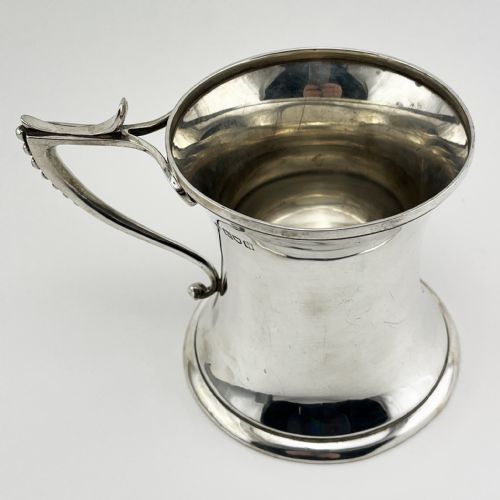


Engraved Silver Christening Mug
An engraved silver christening mug is a traditional gift marking a birth or early childhood, combining solid metalwork with personal commemoration.
Engraved Silver Christening Mug
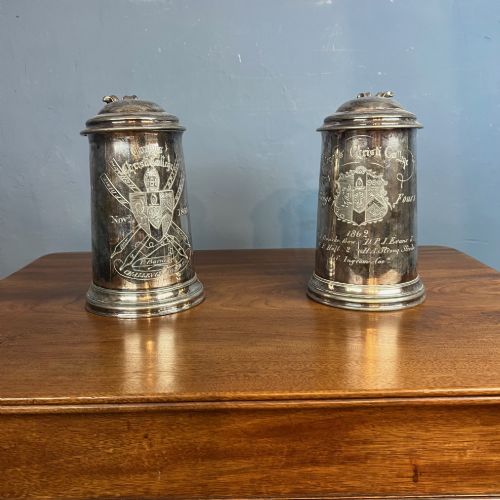
An engraved silver christening mug is a small vessel commissioned to mark the birth or early years of a child. The examples gathered under this phrase span periods from the reign of George IV through the Victorian and Edwardian eras into the twentieth century, taking the form of cups, tankards and mugs.
Most pieces seen here belong to the Victorian era and the subsequent decades leading up to the interwar period. Makers worked in sterling silver, silver plate, and occasionally white metal or silver gilt, shaping small handled vessels designed for domestic display or daily use.
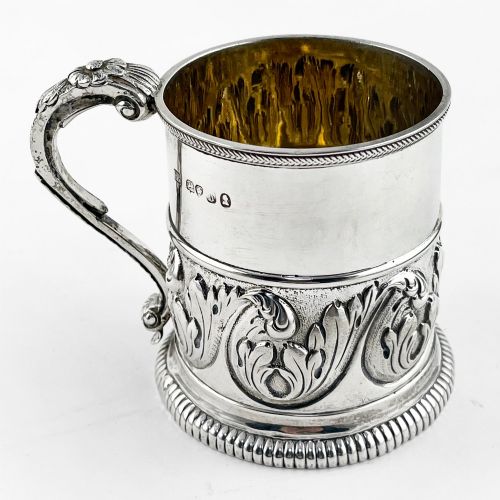
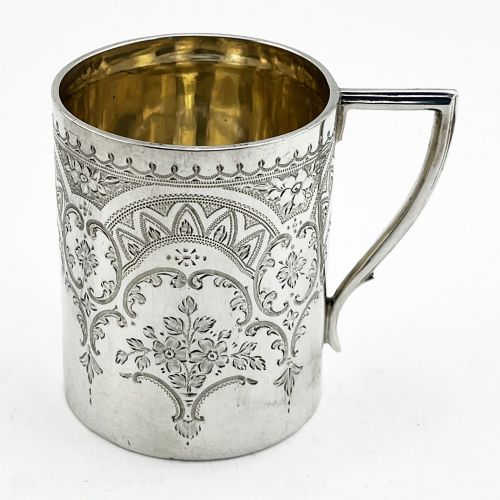
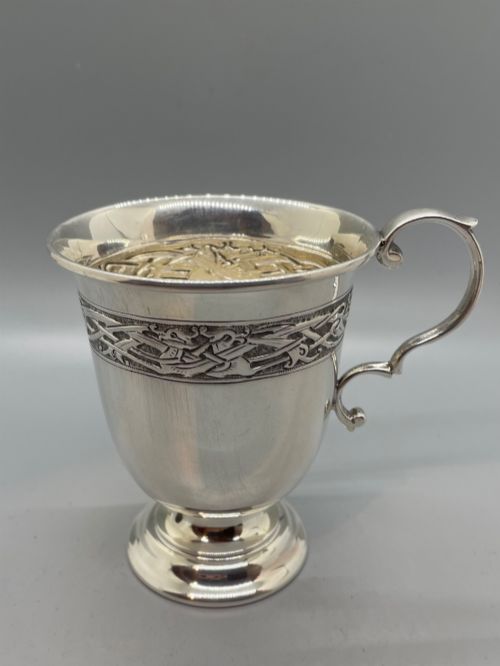
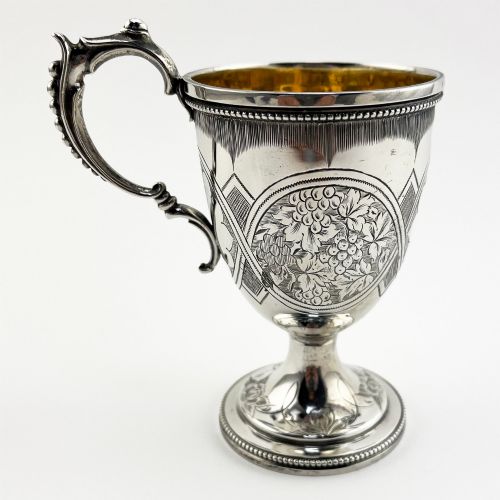
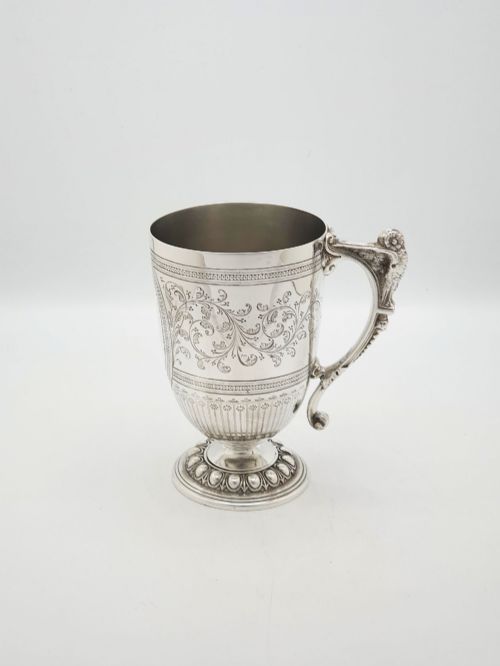
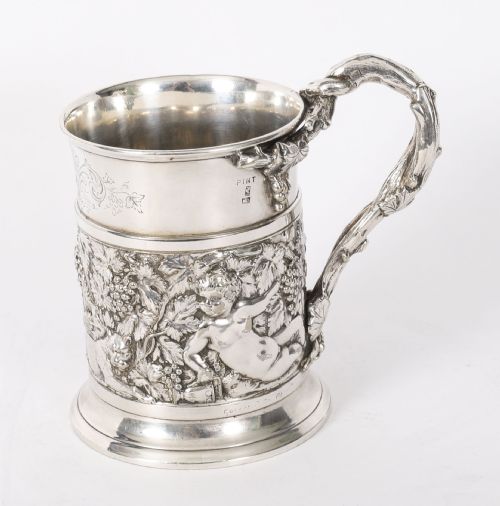
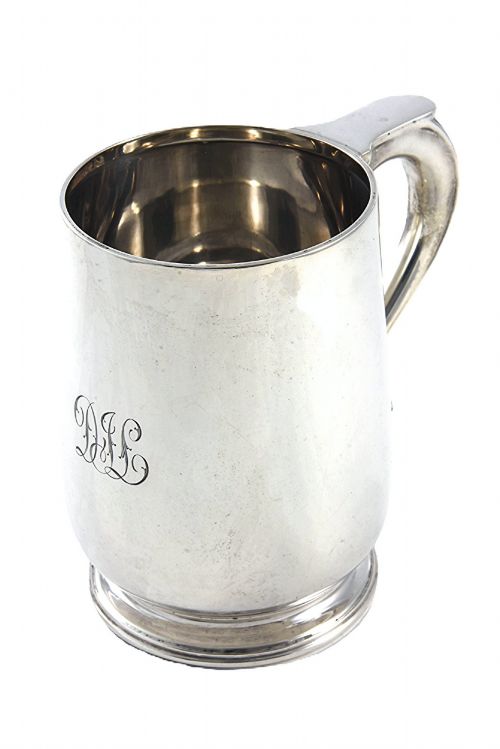
Forms vary from straight-sided tankards to rounded mugs, often ornamented with floral engraving, embossed motifs, or scroll handles. Novelty handles, such as an owl figure, appear alongside more restrained Arts and Crafts designs.
How they were made
Silversmiths shaped sterling silver and silver plate through techniques involving hammering, spinning, and soldering the body to a flat base. Handles were cast separately and joined by hand to the main vessel.
Decoration relies on hand engraving, embossing, and chasing to produce floral patterns or inscribed names and dates. Gilding interiors adds a contrasting layer of gold to the silver surface.
Engraved Silver Christening Mug Retail Price Guide 2026
Typical asking prices for engraved silver christening mug among the pieces listed under this phrase on Sellingantiques today, from the lower quarter to the upper quarter. They describe what is for sale here now, not the wider market.
Listings span the Victorian era, George V period, and Edwardian years, utilising sterling silver, silver plate, and gold plate.
What varies in quality
Quality rests on the weight of the metal and the precision of the silversmith's hand. Heavier gauge sterling silver provides a more substantial feel in the hand than thinner plated alternatives.
The crispness of the engraved decoration and the balance of the applied handle distinguish standard production items from finer workshop pieces.
Joseph Gloster·G R Collis·R E Stone·William Bateman
The Engraved Silver Christening Mug Glossary
- Sterling silver
- An alloy containing a high proportion of pure silver, standard for British tableware and christening items. It carries hallmarks to verify its purity and origin.
- Silver gilt
- Silver that has been coated with a thin layer of gold on its interior or exterior surface. This technique protects the silver from tarnishing where liquids are held.
- Hallmark
- A set of stamped marks indicating the metal standard, assay office, maker, and year of manufacture. These symbols provide the primary evidence for dating a piece.
- Chasing
- A metalworking technique where the silversmith pushes the metal from the front using hammers and punches to create raised surface designs without removing material.
- Embossing
- The process of raising a design in relief from the reverse side of the metal sheet. It creates pronounced decorative contours on the body of the mug.
Engraved Silver Christening Mug: Frequently Asked Questions
Were these mugs meant for daily use?
Many engraved silver christening mugs were produced as lasting keepsakes rather than practical tableware, intended to sit on a shelf or mantelpiece to mark a birth. Their small size and precious material made them ornamental mementoes handed down through families.
At the same time, solid sterling silver and durable silver plate meant the pieces were robust enough to handle occasional use. Over time, handling and cleaning softened the sharp edges of the original engraving.
How can I tell the date of a mug?
Dating relies primarily on the stamped hallmarks found on the base or rim of sterling silver pieces. These official marks record the assay office, the standard of the metal, and a date letter corresponding to the exact year of manufacture.
Stylistic clues such as floral engraving, Victorian shapes, or Arts and Crafts framing provide additional context when hallmarks are rubbed or absent. Silver plated items often rely on maker marks and period styling rather than precise date letters.
What is the difference between sterling and plated mugs?
Sterling silver items consist of solid silver alloy throughout, conforming to strict legal standards of purity guaranteed by official assay offices. These pieces hold intrinsic metal value alongside their craftsmanship.
Silver plated mugs feature a base metal, such as nickel silver or white metal, coated with a thin layer of silver. While they replicate the appearance of solid silver, they lack the solid weight and precious metal content of sterling pieces.
Why do some mugs have gilded interiors?
Gilding the inside of a silver mug applied a protective layer of gold over the reactive silver surface. This prevented acidic liquids from tarnishing the interior or leaving a metallic taste.
The bright gold finish also provided a decorative contrast against the polished silver exterior when the vessel was displayed or used during family gatherings.