

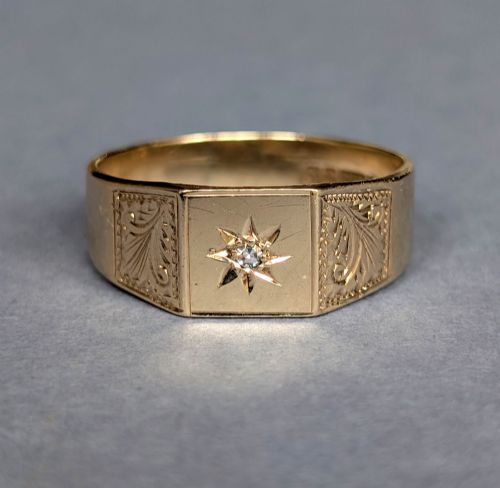
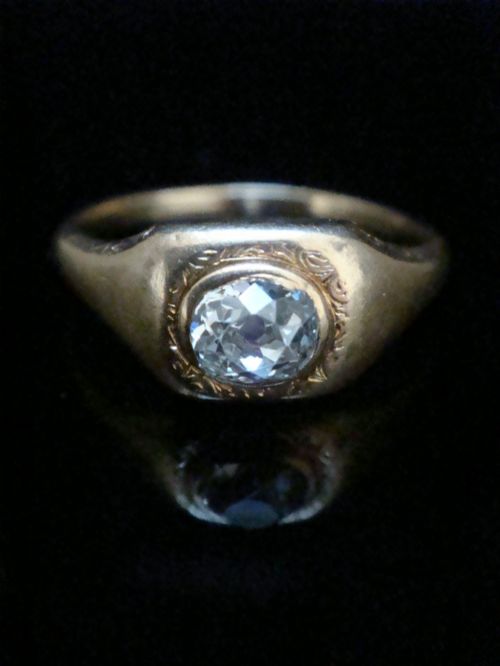


Engraved Signet Ring
An engraved signet ring carries a personal mark pressed in stone or metal, offering tactile history you can wear every day.
Engraved Signet Ring
When you search for an engraved signet ring, you encounter pieces that span from the medieval period through to the mid-twentieth century. The selection ranges from robust bronze bands bearing ships, waves and crosses to refined eighteenth and nineteenth-century gold rings set with carved carnelian, agate and hardstone.
You are most likely to meet gold examples from the Georgian and Edwardian eras alongside earlier bronze iterations. Many feature crisp monograms, heraldic crests or allegorical figures intended to make a personal statement.
How they were made
Gold and bronze form the structural backbone of these pieces, shaped into solid bands and heavy settings. Goldsmiths and metalworkers cast or hammered the metal before hand-engraving crests, initials or symbols directly into the surface.
Carved hardstones such as carnelian and agate were meticulously intaglio-engraved, sinking the design below the surface so the stone could double as a wax seal. Certain iterations incorporate delicate hairwork, paper and ink elements behind glass or within locket-style mounts.
Engraved Signet Ring Retail Price Guide 2026
Typical asking prices for engraved signet ring among the pieces listed under this phrase on Sellingantiques today, from the lower quarter to the upper quarter. They describe what is for sale here now, not the wider market.
The listings span multiple centuries, uniting pre-sixteenth century medieval bronze with eighteenth-century hardstone and twentieth-century gold.
What varies in quality
The standard of an engraved signet ring rests upon the crispness of the hand-carved detail and the depth of the intaglio. Superior examples display sharp, confident lines in the metal or stone that retain their legibility after centuries of use.
Heavier gold weight and well-chosen natural stones such as bloodstone or agate elevate a piece above simpler bronze or lighter gold specimens. The harmony between the original engraving and the structural integrity of the band defines the tier of the piece.
The Engraved Signet Ring Glossary
- Intaglio
- A design carved into the surface of a gemstone or metal so that an impression left in wax creates a raised relief. This technique allowed signet rings to function practically as personal stamps.
- Carnelian
- A brownish-red variety of quartz chalcedony frequently used for intaglio seals during the Georgian era. Its warm tone made it a favoured choice for gentleman and gentlewoman signet rings.
- Monogram
- Two or more letter initials combined or interlaced in a single design to represent a name or family. These were routinely engraved onto the face of gold signet rings.
- Bronze
- A copper alloy widely utilised for earlier medieval signet rings. It patinates deeply over centuries, providing a dark and tactile surface finish.
Engraved Signet Ring: Frequently Asked Questions
Can I still use an antique signet ring to seal wax?
Many antique intaglio rings are carved specifically for this purpose and will impress cleanly into warm wax. Ensure the stone is secure in its setting before applying pressure.
Softer stones like carnelian or agate handle repeated sealing well, provided you clean away wax residue gently after use.
How do I care for a gold signet ring daily?
Gold requires minimal maintenance, but antique settings benefit from gentle cleaning with warm soapy water and a soft brush. Avoid harsh chemical dips, especially if the ring contains hair or paper elements.
Take the ring off during heavy manual work to protect crisp hand-engraving and soft intaglio stones from accidental impact.
What does a heart motif mean on an Edwardian signet ring?
Heart motifs in Edwardian jewellery typically symbolise affection, sentimentality or romance. When combined with hairwork, they often served as memorial or token pieces.
These rings blend the traditional utility of a signet with deeply personal remembrance, making them distinct from standard heraldic designs.
How can I tell a medieval bronze ring from a Georgian one?
Medieval bronze rings display simpler, heavier casting with rudimentary symbols like crosses, ships or waves. Their metal often exhibits a deep, ancient patination.
Georgian and later pieces are predominantly fashioned from gold and feature sophisticated intaglio hardstones or refined monogram engravings with clear stylistic hallmarks.