



Engraved Fish Knife
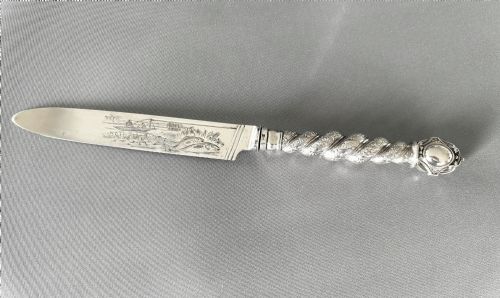
An engraved fish knife brings nineteenth-century dining ceremony to the table, combining heavy sterling silver or silver plate with intricate blade decoration.
Engraved Fish Knife
When you search for an engraved fish knife, you encounter specialised dining implements designed for the nineteenth-century table. These pieces range from single serving knives and forks to complete boxed sets intended for formal courses.
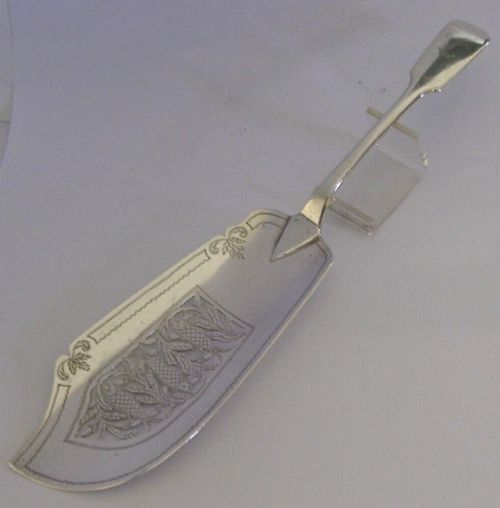
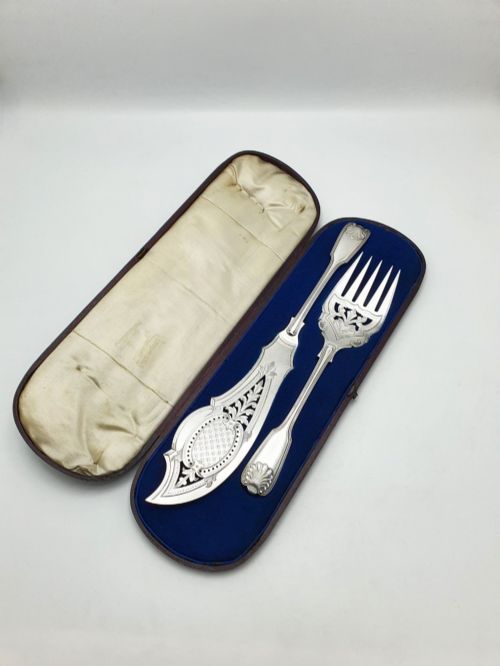
The items seen here span the Victorian and George IV periods, taking the form of fish servers, slices, and carving cutlery. Originating largely from English and Irish makers, these tools reflect the elaborate dining habits of the eighteen-hundreds.
You are most likely to meet silver-plated or sterling silver versions featuring ornate blade decoration. Many incorporate natural materials in the handles, offering a tangible link to period craftsmanship.
Materials and construction
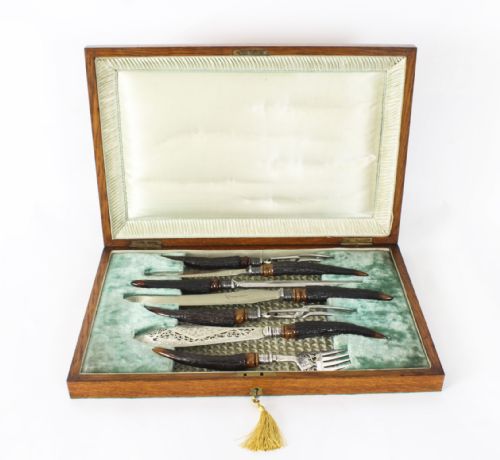
Makers shaped these items from sterling silver and silver plate, frequently pairing metallic blades with natural handles. Stag antler, horn, wood, velvet, and mother-of-pearl appear in the construction of grips, providing textured contrast to the polished metal.
Blades and servers received detailed decoration through manual engraving, piercing, and pattern stamping such as the Fiddle and Queens designs. Steel often formed the working edges of carving sets, while fitted cases lined with velvet preserved the complete service.
Engraved Fish Knife Retail Price Guide 2026
Typical asking prices for engraved fish knife among the pieces listed under this phrase on Sellingantiques today, from the lower quarter to the upper quarter. They describe what is for sale here now, not the wider market.
The inventory spans the nineteenth century, focusing on Victorian and George IV periods from 1800 to 1899.
Assessing quality and distinction
The standard of an engraved fish knife rests upon the crispness of its surface decoration and the integrity of its materials. Deep, clear hand-engraving on a heavy sterling silver blade elevates a piece above standard silver-plated production.
Harmony between the handle material and the metalwork distinguishes superior sets, especially those retained within their original fitted cases. The inclusion of matching forks or complete serving pairs indicates a higher tier of domestic dining ware.
Charles Boyton
The Engraved Fish Knife Glossary
- Fish Slice
- A broad, flat serving utensil with a pierced blade designed to lift delicate portions of fish. It often forms the main piece in a Victorian serving set.
- Sterling Silver
- A high-purity silver alloy containing specified proportions of silver and other metals for durability. Pieces made from this material often bear hallmarks indicating assay office and date.
- Silver Plate
- A base metal coated with a thin layer of silver through electroplating or older techniques. This method offered the appearance of solid silver at a lower cost.
- Queens Pattern
- A decorative nineteenth-century cutlery style featuring shell and floral motifs along the handle borders. It denotes formal nineteenth-century dining preferences.
- Fiddle Pattern
- A domestic flatware style characterised by a stem that widens gracefully toward a rounded terminal resembling a fiddle. It was widely used during the Georgian and Victorian eras.
Engraved Fish Knife: Frequently Asked Questions
What is an engraved fish knife used for?
These instruments were specifically created to portion and serve fish during formal nineteenth-century meals. The broad blade allowed the user to slide beneath delicate flesh without breaking it.
Unlike standard table cutlery, the specialised shape accommodated the anatomy of whole fish courses. Engraving on the surface added ornamental distinction to the dining service.
How do I date a silver fish server?
Dating relies heavily on official hallmarks stamped into sterling silver pieces, which indicate the year of assay and the maker. Stylistic clues such as Fiddle or Queens patterns also point to specific decades.
Victorian and George IV examples often exhibit distinct manufacturing traits and C-scroll or floral engraving. Fitted cases and registry marks provide further chronological context.
Are antler handles original to these sets?
Stag antler and horn were frequently utilised by nineteenth-century makers for carving and serving cutlery handles. They provided a secure grip and a robust, tactile contrast to bright silver blades.
Such natural materials show age through minor shrinkage or surface patination over time. Their presence is characteristic of nineteenth-century sporting and dining aesthetics.
How should I store boxed fish servers?
Fitted presentation boxes lined with velvet protect the metal and handles from physical damage when not in use. Keeping the set in a stable environment prevents humidity from affecting the interior lining and wooden structure.
Regular, gentle air circulation helps preserve both the silver and the organic handle materials. Avoid abrasive cleaners that might wear away the historic surface engraving.