








Engraved Firearm
An engraved firearm brings together mechanical ingenuity and ornamental craft, offering a tangible piece of military or domestic history.
Engraved Firearm
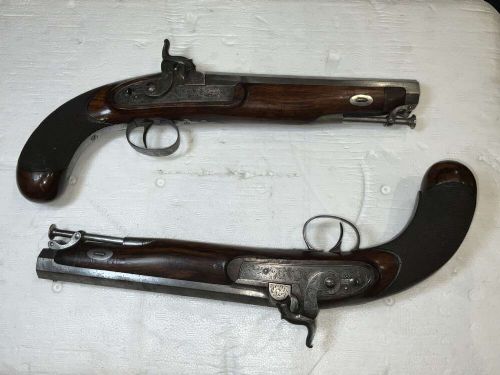
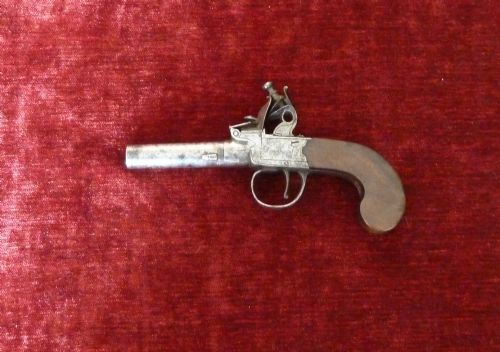
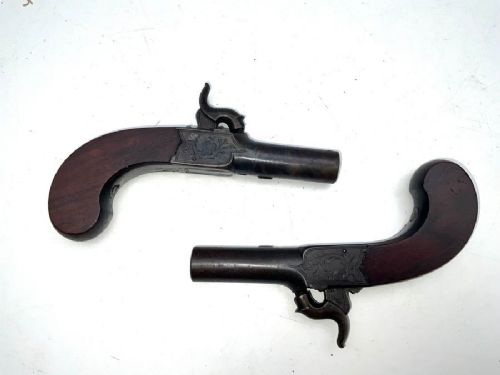
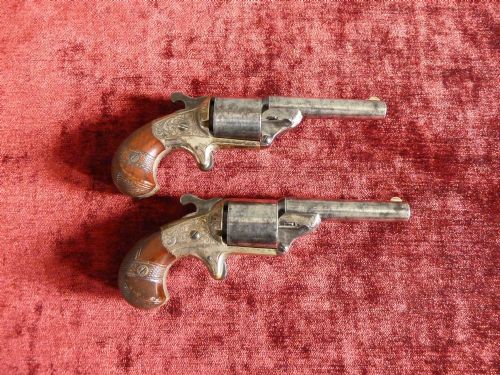
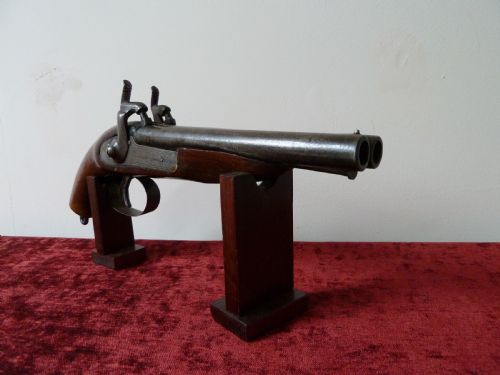
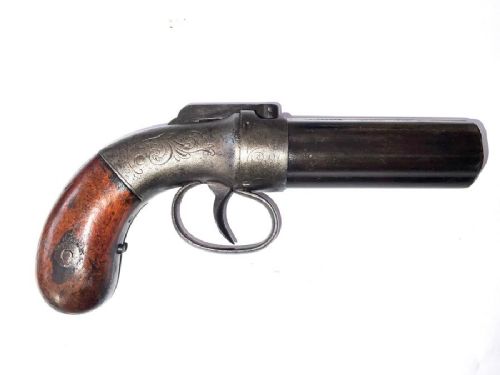
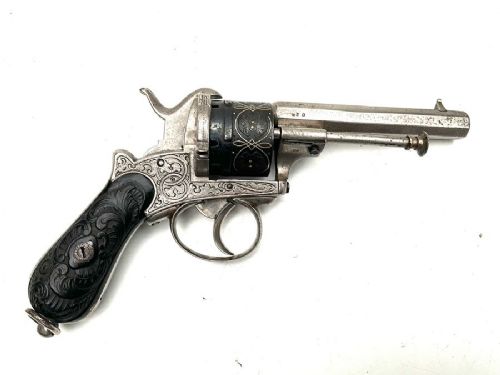
When searching for an engraved firearm, collectors encounter pieces spanning from the seventeenth to the nineteenth century, including pocket pistols, revolving firearms, and heavy holster models. These weapons range from domestic pocket protectors to military sidearms, originating from British, European, and regional workshops.
The specimens on this page lean heavily toward eighteenth-century flintlocks and mid-nineteenth-century percussion models. Buyers frequently meet pocket pistols, box-lock variations, and robust martial pieces displaying varied ornamental metalwork.
Geographic styles vary widely across these listings, stretching from London and Birmingham makers to Scottish Highland scroll-butt pieces and Balkan Ottoman snaphaunce designs. Each regional school brings distinct stock shapes and mounting traditions to the lock and barrel.
How they were made
The construction of these arms relies on forged steel and iron for barrels and lock mechanisms, paired with stocks shaped from dense hardwoods such as walnut. Metal surfaces receive hand-cut decoration through engraving, chasing, or inlay work using brass and silver.
Stocks feature detailed carving or wire inlay, particularly in French and regional European pieces where silver wire forms intricate scroll patterns. Brass mounts and engraved bands appear frequently on Balkan and Ottoman examples to secure and decorate the wooden frame.
Engraved Firearm Retail Price Guide 2026
Typical asking prices for engraved firearm among the pieces listed under this phrase on Sellingantiques today, from the lower quarter to the upper quarter. They describe what is for sale here now, not the wider market.
Pocket pistols and holster forms dominate the current selection of engraved weaponry.
What varies in quality
Quality rests primarily in the crispness of the metal engraving and the integration of decorative mounts with the wooden stock. Superior examples demonstrate confident, deep chisel work on the lock plates and hammers rather than shallow, hurried surface scratching.
The overall balance of the piece, the retention of original finishes, and the legibility of maker signatures or proof marks separate standard utility pieces from master-grade commissions. Finer specimens maintain sharp contours on both the iron components and the surrounding woodwork.
John Campbell of Doune·Auguste Francotte Liège·Thomas Henshaw London·Meyer And Mortimer·Allen And Thurber
The Engraved Firearm Glossary
- Flintlock
- An ignition mechanism utilising a flint held in a cock to strike a steel frizzen, creating sparks to ignite the priming powder. This system dominated European firearms from the seventeenth into the early nineteenth century.
- Percussion cap
- A small metal cup containing fulminate of mercury placed on a nipple, which explodes when struck by the hammer to fire the charge. This mid-nineteenth-century innovation replaced the earlier flint system for greater reliability.
- Box-lock
- A firearm design where the breech and lock frame are forged as a single unit, often placing the hammer centrally or underneath. This configuration provides a streamlined profile common in pocket and muff pistols.
- Turn-off barrel
- A barrel designed to unscrew from the frame for muzzle loading with a pre-patched ball, eliminating the need for a ramrod. This feature appears frequently on eighteenth-century Queen Anne style pistols.
- Snaphaunce
- An early flintlock mechanism utilising an independently sliding frizzen cover that opens automatically as the cock falls. It represents an important transitional step in the evolution of firearm ignition.
Engraved Firearm: Frequently Asked Questions
How do I care for an antique metal finish?
Maintain a stable environment with low humidity to prevent active corrosion on steel and iron surfaces. Apply a very light coat of microcrystalline wax or specialised gun oil to protect the metal without damaging original patination.
Avoid abrasive cleaners or modern chemical solvents that strip historical finishes and erode delicate hand engraving. Soft cotton cloths suffice for routine dust removal during handling.
Can these antique pistols still be fired?
Most pieces on the market are sold strictly as historical artefacts or collector items rather than functional weapons. Testing antique metallurgy carries significant safety risks due to potential micro-fractures in aged steel and iron.
Professional inspection by a qualified gunsmith is mandatory before attempting any live firing. In many instances, the internal mechanisms are best preserved through careful inactivity.
What is a muff pistol?
A muff pistol is a small, easily concealed firearm designed to fit inside a lady's fur muff during the eighteenth and nineteenth centuries. These compact weapons provided personal security for travellers navigating unlit city streets.
Despite their diminutive size, they utilised standard box-lock or turn-off barrel configurations found on larger service arms.
How do I distinguish flintlock from percussion?
A flintlock uses an external hammer holding a piece of flint that strikes a steel frizzen to generate sparks. The priming powder sits in an open pan exposed to the elements.
A percussion piece replaces the flint and pan with a hollow nipple that receives a small explosive metal cap struck directly by the hammer. This enclosed system offered superior weather resistance in the field.