





Engraved Blue Glass
Engraved blue glass brings vibrant cobalt colour and precise wheel-cut decoration into domestic displays, offering tactile richness that catches the light on any dining table.
Engraved Blue Glass
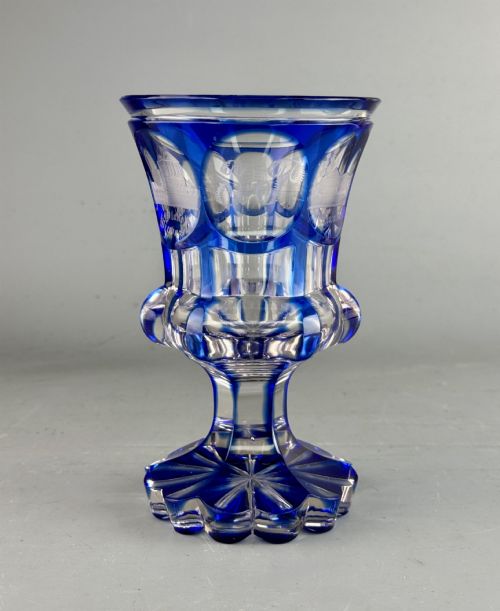
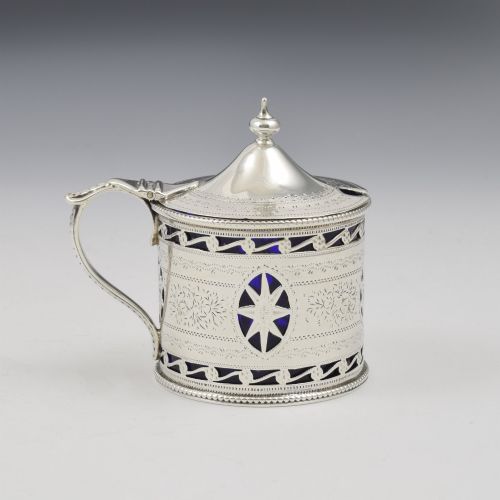
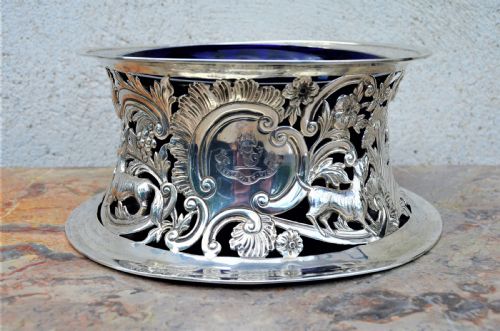
Engraved blue glass spans tableware and glassware items originating from the Victorian period through to the early twentieth century. You will most frequently encounter table vessels such as jugs and stemware alongside condiment pots paired with sterling silver mounts.
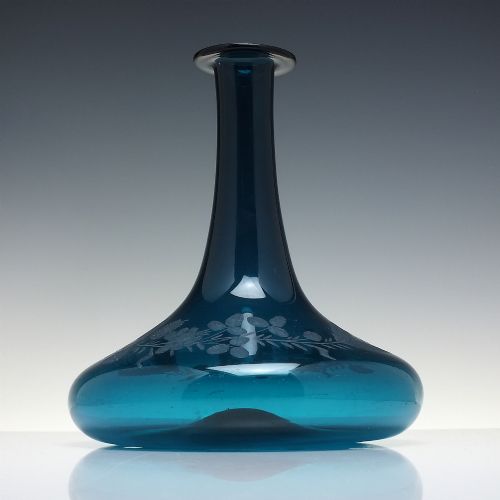
These items range from richly coloured cobalt vessels to teal glass jugs bearing intaglio or wheel-engraved ornamentation. Examples incorporate historical influences, including Islamic Revival motifs and Georgian styling.
Makers from various European workshops utilised deep-toned mineral glass matrices to achieve their characteristic appearance. The surviving pieces demonstrate a domestic utility that transitioned into decorative display.
How they were made
Glassmakers produced these vessels using lead crystal or cobalt glass matrices blown into forms and subsequently finished by hand. The rich blue coloration derives from metallic oxides introduced during the molten stage.
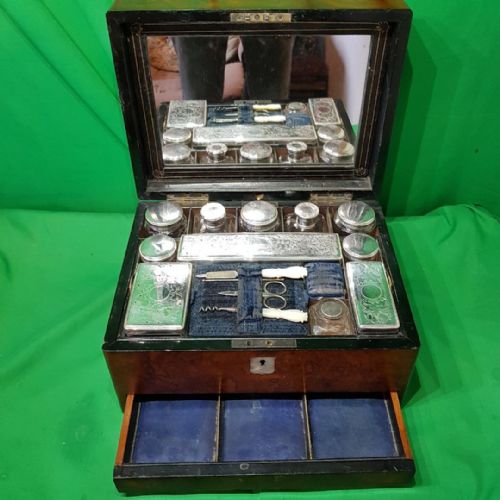
Engravers applied surface ornamentation using rotating abrasive wheels to cut intaglio motifs directly into the cooled glass. Metalworkers then fitted sterling silver lids, rims, or pierced mounts to vessels such as mustard pots.
Engraved Blue Glass Retail Price Guide 2026
Typical asking prices for engraved blue glass among the pieces listed under this phrase on Sellingantiques today, from the lower quarter to the upper quarter. They describe what is for sale here now, not the wider market.
The listings on this site record items spanning the Victorian, Edwardian, and George V periods, featuring cobalt glass, lead crystal, and sterling silver.
What varies in quality
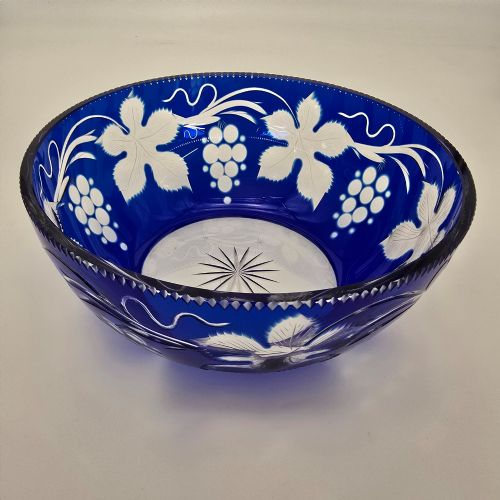
The precision and depth of the wheel-cut engraving dictate the visual sophistication of each piece, distinguishing shallow surface scratching from crisp, deeply carved intaglio work. Clarity within the cobalt glass matrix and the weight of the material also establish the standard of manufacture.
The integration of sterling silver mounts, where present, reveals differences in craftsmanship through the delicacy of piercing and the security of the hinge fittings. Maker signatures or attribution, such as work by Lobmeyr, add documented provenance to the finished vessel.
Nathan & Hayes·William Neale & Son·Charles Stuart Harris·Lobmeyr
The Engraved Blue Glass Glossary
- Intaglio
- A design carved into the surface of the glass so that the image sits below the outer plane. This technique requires steady hand control against a rotating wheel.
- Cobalt glass
- Glass coloured deep blue through the addition of cobalt oxide to the molten batch. It creates a rich, translucent tone that absorbs and refracts light.
- Sterling silver
- An alloy consisting of silver and other metals, predominantly copper, standardising at a purity level of ninety-two point five percent. It provides durable mounts for glass condiment pots.
- Islamic Revival
- A nineteenth-century design movement that drew inspiration from traditional Middle Eastern art and architecture. Makers applied these decorative tropes to European glass and metalwork.
Engraved Blue Glass: Frequently Asked Questions
What is engraved blue glass?
Engraved blue glass comprises tableware and decorative vessels manufactured from cobalt or teal-coloured glass featuring hand-cut surface decoration. These items date primarily from the Victorian and Edwardian eras.
Many examples combine the coloured glass body with sterling silver mounts or lids, particularly in condiment vessels and mustard pots.
How were these glass items used?
These vessels served functional roles in domestic dining, holding mustards, condiments, and liquids on the dining table or sideboard. Their vibrant colour made them prominent decorative accessories in period interiors.
Over time, many transitioned into cabinet pieces or collector's items due to the fine detail of their wheel-engraved motifs.
How do I care for antique glass?
Clean these pieces gently using lukewarm water and mild, non-abrasive detergent, avoiding harsh scrubbing around engraved areas or silver mounts. Dry them immediately with a soft lint-free cloth to preserve the finish.
Keep them away from sudden temperature fluctuations to protect the integrity of the glass matrix and any historical metal fittings.
How can I date these pieces?
Dating relies on stylistic markers, glass manufacturing techniques, and hallmarks stamped onto any attached silver components. Victorian and Edwardian examples often feature distinct stylistic cues like floral intaglio or revivalist motifs.
Makers' marks on the silver mounts provide specific workshop attribution and assay office dates for the completed object.