
English Wooden Chairs
English wooden chairs span centuries of domestic life, offering robust construction and enduring functional forms that suit modern interiors.
English Wooden Chairs
English wooden chairs encompass a wide variety of seating forms designed for dining, hall use, and general domestic tasks. Buyers searching for English wooden chairs encounter everything from formal mahogany dining sets to vernacular country seating.
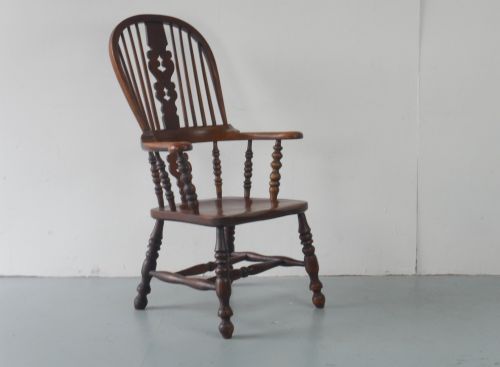
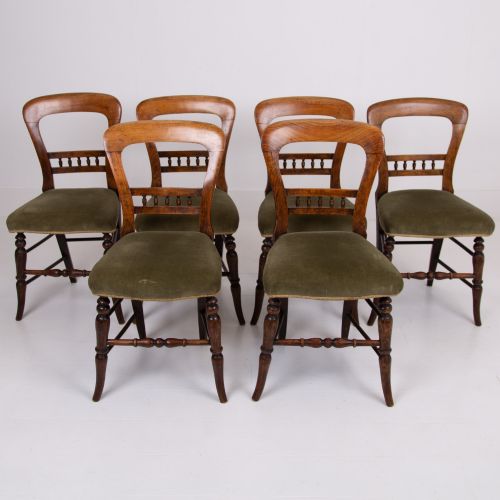
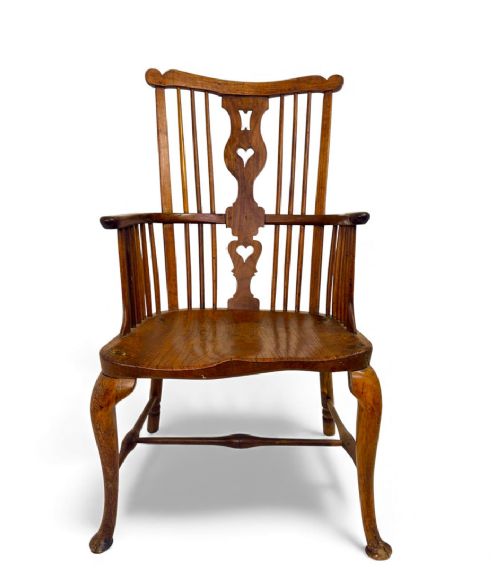
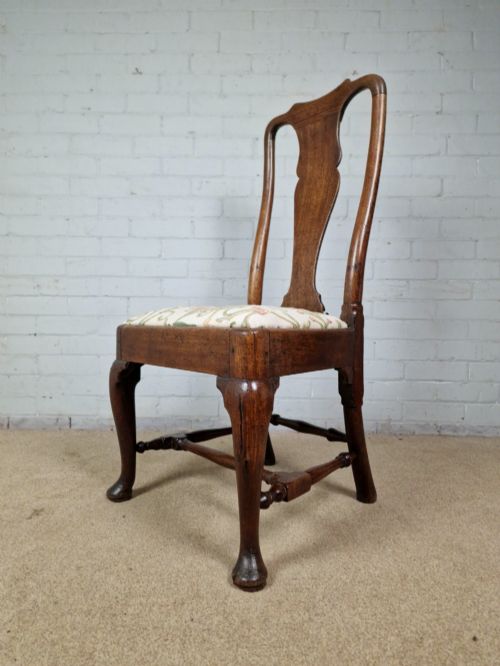
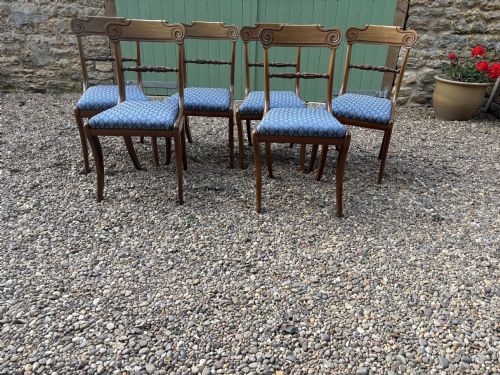
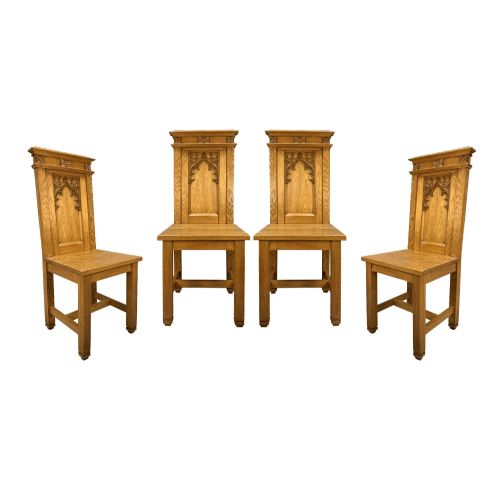
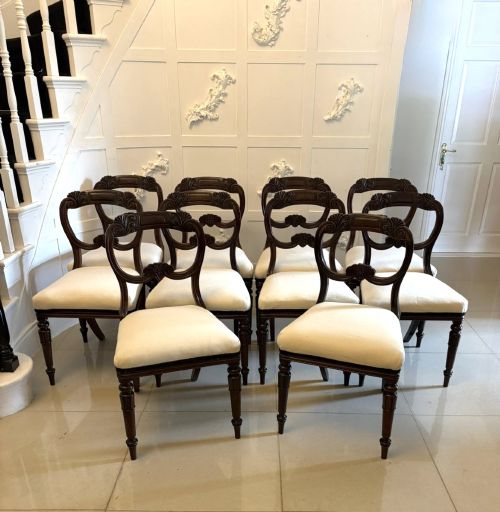
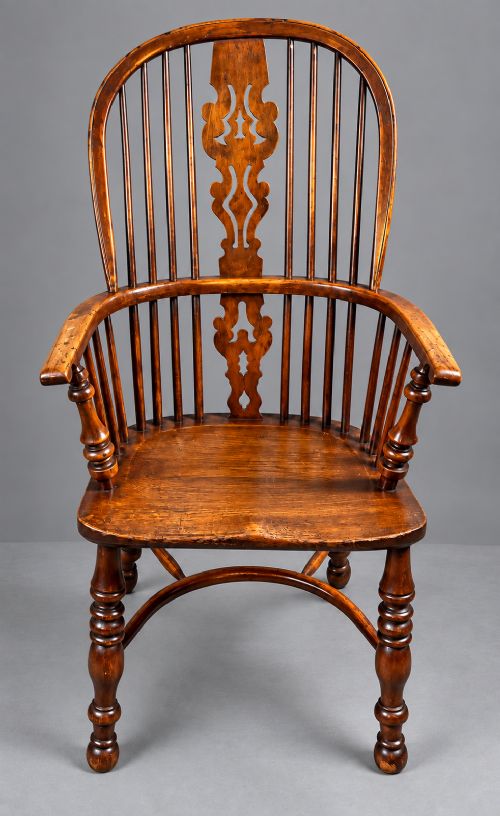
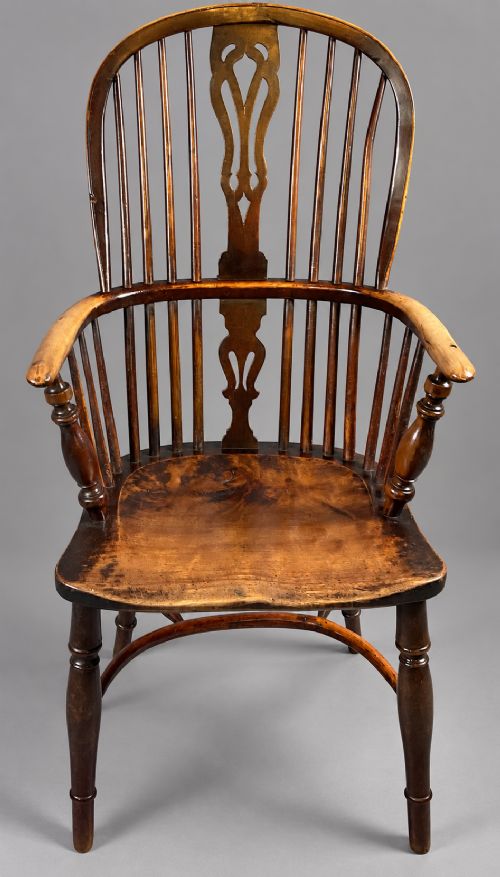
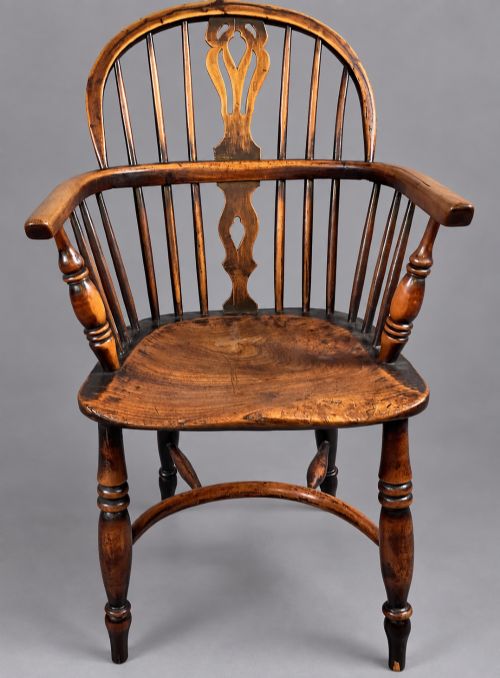
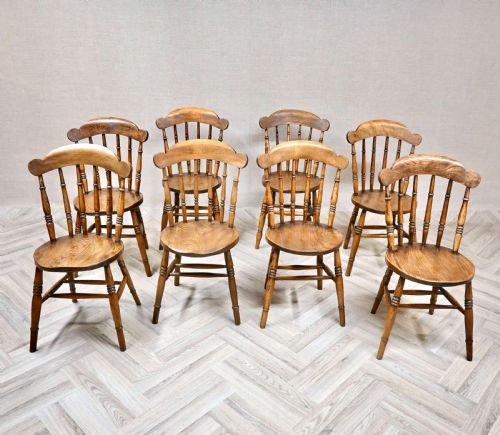
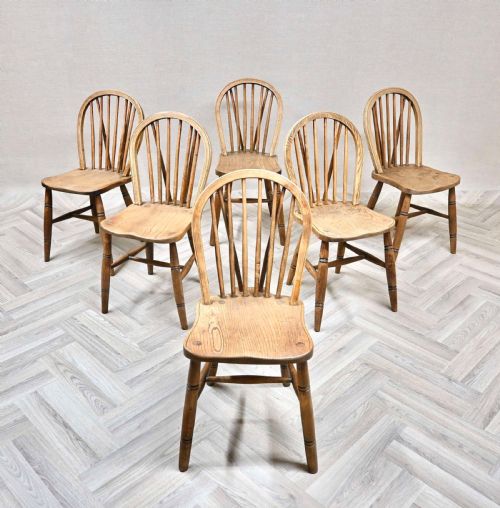
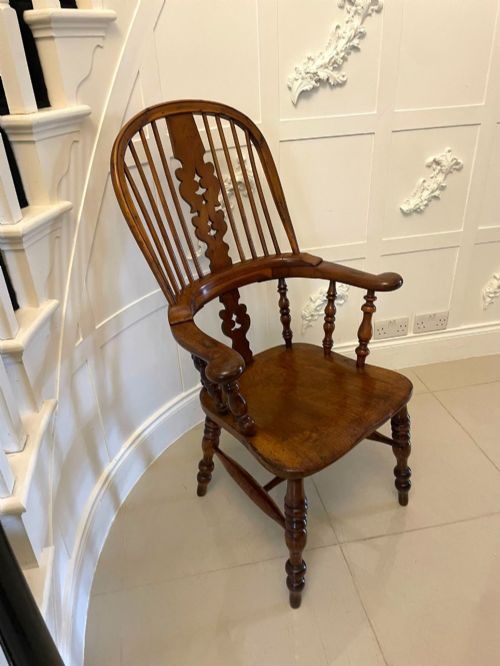
The most common examples on this page are Windsor armchairs and kitchen chairs originating from regional centres like High Wycombe and the Thames Valley. These vernacular pieces sit alongside formal Georgian and Victorian mahogany dining and hall chairs.
Materials range from native hardwoods like elm, ash, beech, oak, and yew to imported timbers such as mahogany. Makers utilised these woods according to their local availability and structural properties.
Materials and Construction
Country chairs often combine multiple native timbers within a single piece, using ash for bent frames, elm for solid shaped seats, and beech for turned spindles. This mixed construction provides structural resilience where different parts experience varying stresses.
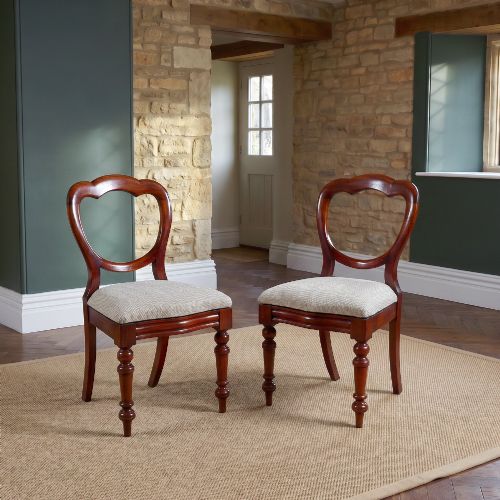
Formal dining furniture relies on homogeneous timbers like mahogany and oak, shaped through cabinet-making techniques including mortise and tenon joinery and carved ornamentation.
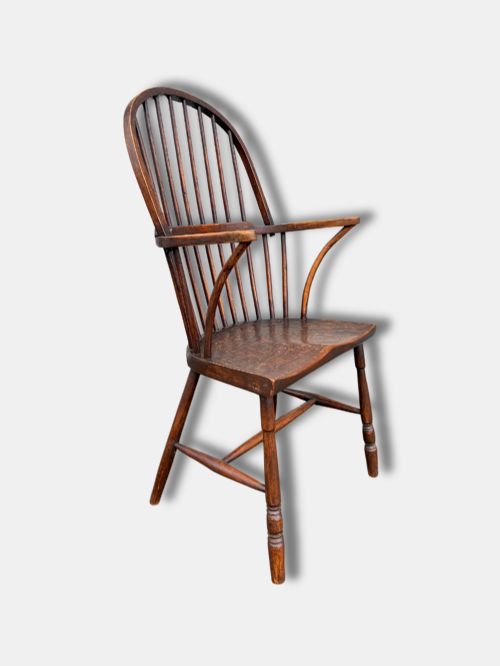
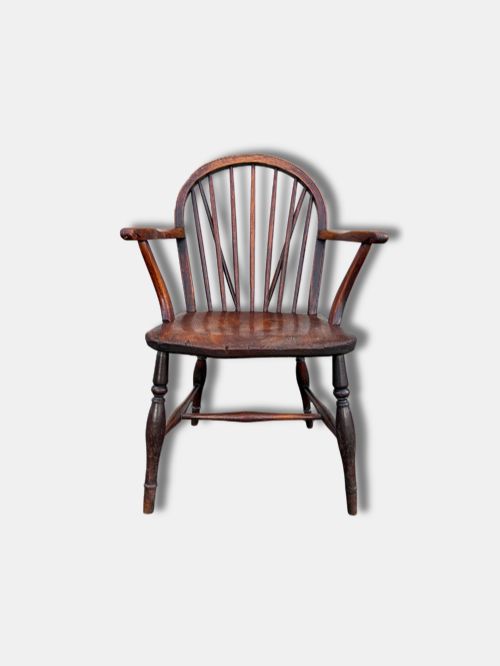
Windsor seating utilises stick-back construction, where turned spindles and legs are wedged directly into a thick wooden seat plank.
Listings feature traditional English timber species including elm, beech, ash, oak, yew, and mahogany across the 18th, 19th, and early 20th centuries.
Assessing Quality in Seating
Quality in these chairs relates to the integrity of the timber selection, the crispness of turned or carved details, and the survival of original surfaces. Pieces made from desirable woods like figured yew or rich mahogany command attention for their visual depth.
Structural stability depends on tight joints and the preservation of the original wedged or pinned construction without excessive modern intervention.
Gabbitass of Worksop·William Morris·Rossetti
The English Wooden Chairs Glossary
- Windsor chair
- A chair built with a solid wooden seat into which the legs and back spindles are tenoned directly. These vernacular seats often feature bentwood hoops or comb backs.
- Carver
- An armchair, typically designed as part of a set to sit at the head of a dining table. They share stylistic traits with accompanying single chairs.
- Balloon back
- A rounded, oval chair back popular during the Victorian period, frequently seen in mahogany dining seats. The curved top rail resembles a silhouette of a balloon.
- Penny seat
- A saddle-shaped wooden seat base associated with traditional kitchen and Windsor chairs. The indentation provides ergonomic comfort for the sitter.
English Wooden Chairs: Frequently Asked Questions
How do I identify a Windsor chair?
Windsor chairs are characterised by distinct stick-back construction where spindles and legs are fitted directly into a solid timber seat. They often feature an arched backrest supported by a central splat or multiple turned uprights.
Regional variations include hoop backs, low backs, and broad arms, reflecting local construction traditions found across the English countryside.
How are different wood types used?
Cabinet makers and country bodgers selected timbers based on their specific mechanical properties. Elm provided a tough, split-resistant surface for solid chair seats.
Ash and beech offered flexibility for steam-bent hoops and strength for turned legs, while mahogany and oak served formal dining and hall environments.
Are these chairs suitable for daily dining?
Many historical wooden chairs remain entirely functional for everyday seating around a modern dining table. Robust vernacular chairs and mahogany dining sets were built to endure heavy domestic use.
Buyers should ensure structural joints remain secure and seat heights align comfortably with contemporary table dimensions.