


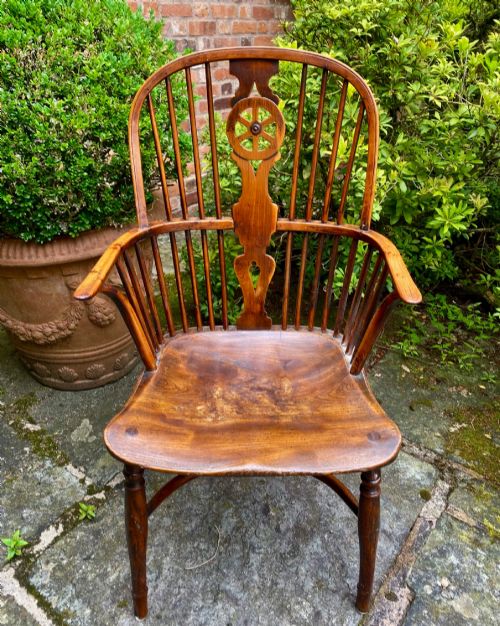
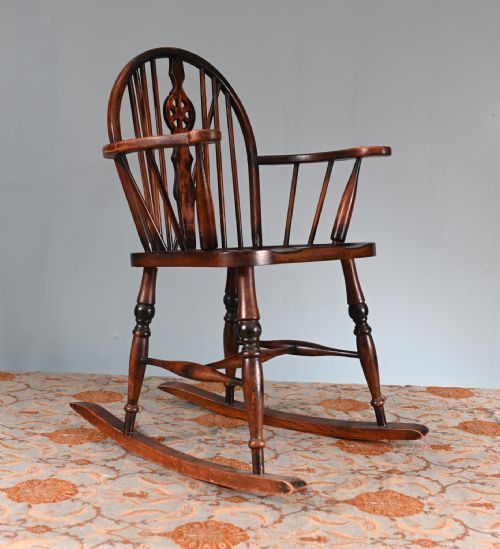


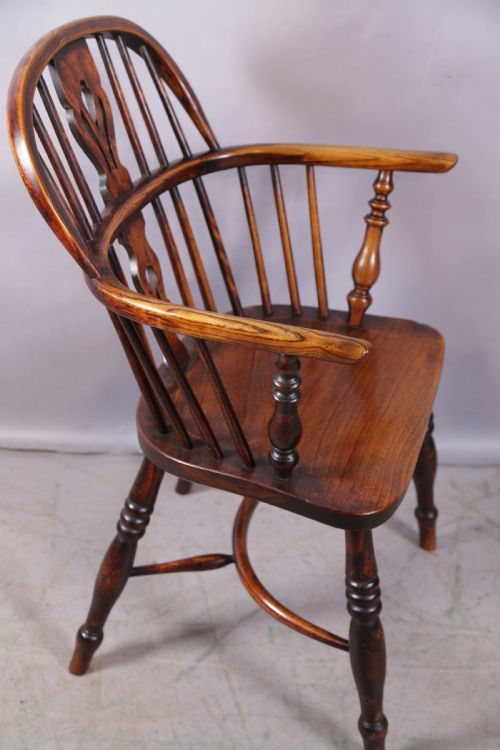


English Wheelback Armchair
An English wheelback armchair brings vernacular character to a room, offering sturdy timber construction and a supportive pierced splat that defined generations of country seating.
English Wheelback Armchair
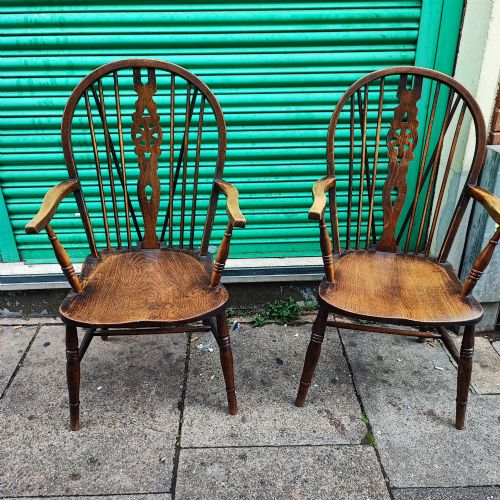
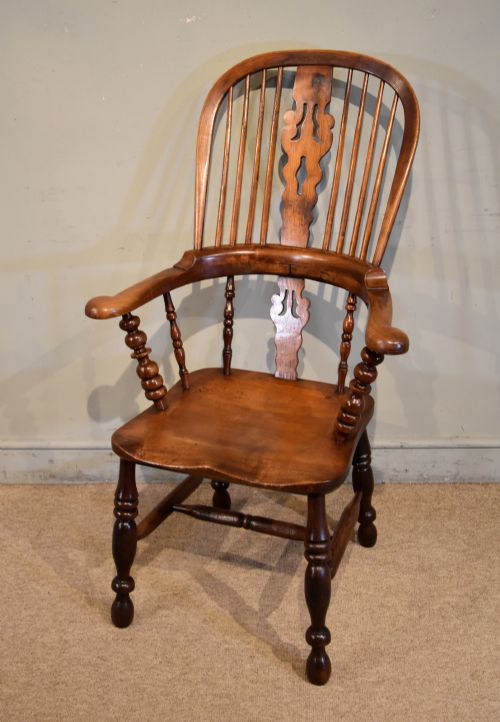
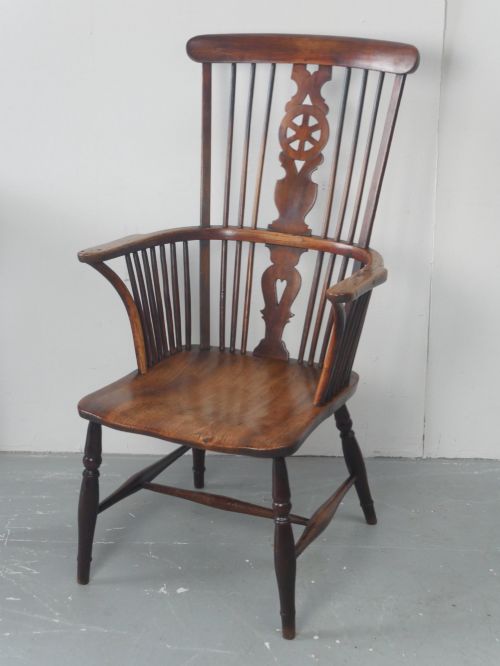
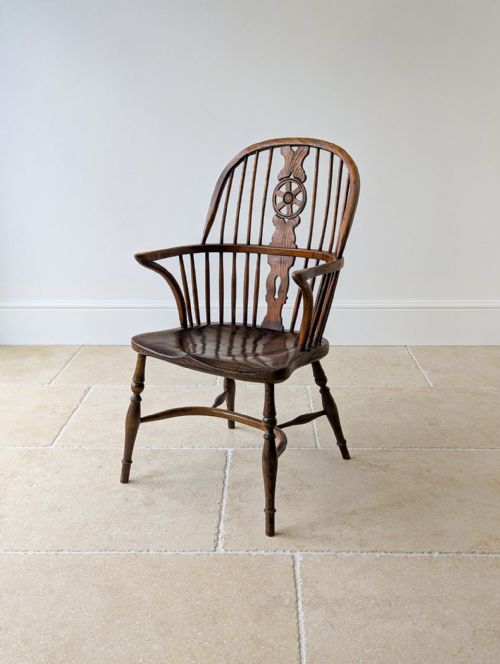
An English wheelback armchair is a traditional Windsor form featuring a pierced wheel motif carved or cut into the central splat of the backrest. These seats emerge from periods spanning the Georgian era through the Victorian period and into the early twentieth century.
The versions most commonly met on this page belong to the nineteenth century and the Georgian period, often associated with English country or vernacular traditions. They appear primarily as armchairs, alongside occasional rocking chairs and kitchen armchairs.
Makers constructed these chairs primarily to provide robust, comfortable seating for everyday domestic use in farmhouses, kitchens, and country houses. Their design combines a shaped solid wooden seat with steam-bent framework and traditional spindle supports.
Materials and Construction
Craftsmen built these armchairs using a combination of native timbers, most frequently pairing elm for the solid sculpted seat with ash, beech, or yew for the framework and spindles. Yew wood appears in regional examples, such as those originating from the Thames Valley.
The construction relies on Windsor chair techniques, where individual spindles, legs, and arm supports are wedged and pegged directly into holes bored through the thick wooden seat slab. Steam-bending was utilised to create the curved back bow and the continuous armrail.
English Wheelback Armchair Retail Price Guide 2026
Typical asking prices for english wheelback armchair among the pieces listed under this phrase on Sellingantiques today, from the lower quarter to the upper quarter. They describe what is for sale here now, not the wider market.
Many of these sturdy kitchen armchairs survived generations of family life simply because the elm seats were too heavy for anyone to throw away.
Distinctions in Quality
The quality of an English wheelback armchair rests on the selection of timber and the depth of figure in the wood, particularly within elm seats and yew grain. Well-figured timbers and contrasting woods for the arms and legs elevate a piece above standard utility versions.
Proportion and the execution of the central wheel carving also determine the merit of the chair, separating straightforward workshop production from refined vernacular examples. The comfort of the shaped seat and the integrity of the spindle joints complete the assessment.
Fred Walker
The English Wheelback Armchair Glossary
- Wheelback
- A style of Windsor chair back where the central wooden splat is pierced and carved in the shape of a spoked carriage wheel. This decorative feature became popular in nineteenth-century country seating.
- Windsor chair
- A chair built with a solid wooden seat into which the legs, back spindles, and arms are separately inserted. They rely on stick-construction methods rather than a continuous frame.
- Splatted back
- A chair back featuring a central vertical slat of wood positioned between the supporting spindles. In wheelback chairs, this flat component bears the carved wheel motif.
- Thames Valley
- A regional English style of Windsor chair making known for the use of yew wood and generous proportions. Pieces from this area often exhibit high technical skill and distinct timber selection.
- Sticking
- The shaping of wooden components using hand tools to create rounded profiles on spindles and armrests. It ensures a smooth grip and comfortable contact points.
English Wheelback Armchair: Frequently Asked Questions
What is an English wheelback armchair?
An English wheelback armchair is a traditional wooden seat characterised by a Windsor framework and a pierced wheel design in the central back splat. These chairs were produced across the Georgian, Victorian, and early twentieth-century periods using native hardwoods.
They serve as practical seating with a distinct country aesthetic, combining a sculpted elm seat with steam-bent armbows and spindle backs.
How do I identify a Georgian wheelback armchair?
Georgian examples are identified by their earlier timber patination, hand-carved details, and construction methods typical of the eighteenth and early nineteenth centuries. They often feature generous proportions and combinations of ash and elm.
Closer inspection of the joint pegging and the wear patterns on the seat helps distinguish these earlier pieces from later nineteenth-century or twentieth-century revivals.
Where were wheelback chairs made?
These armchairs were made across various English regions by local wheelwrights, carpenters, and specialised Windsor chair makers. Certain areas, such as the Thames Valley, developed distinct regional characteristics including the use of yew wood.
Production took place in rural workshops rather than large urban factories, resulting in local variations in timber choice and wheel carving designs.
How should I live with an antique armchair?
Living with an antique armchair involves placing it away from direct heat sources and rapid temperature fluctuations to protect the timber and joints. Regular dusting and occasional maintenance of the wood surface help preserve the antique finish.
These sturdy chairs are suited for daily use in living spaces, studies, or dining rooms, provided they are placed on level flooring to prevent strain on the legs and stretchers.