




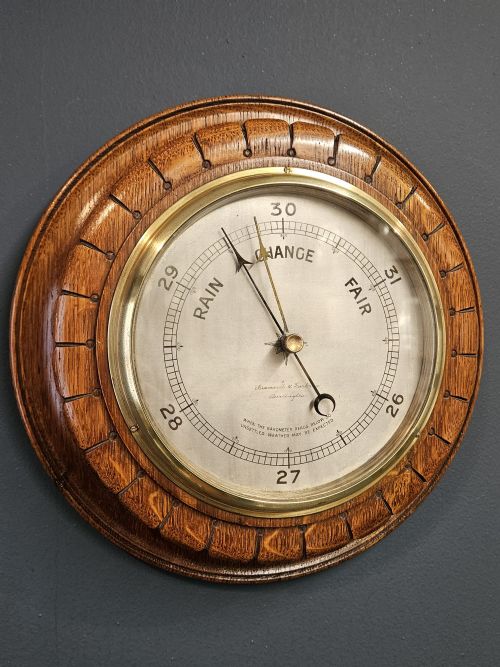
English Weather Barometer
An English weather barometer measures atmospheric pressure to track meteorological changes, housing precision scientific mechanisms inside timber cases that reflect centuries of cabinet-making skill.
English Weather Barometer
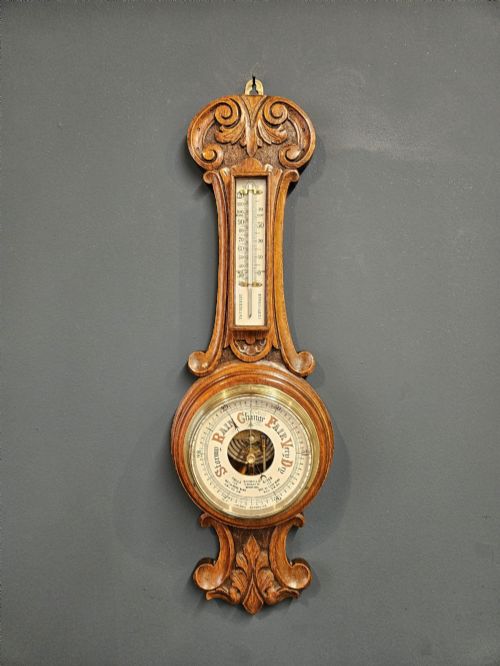
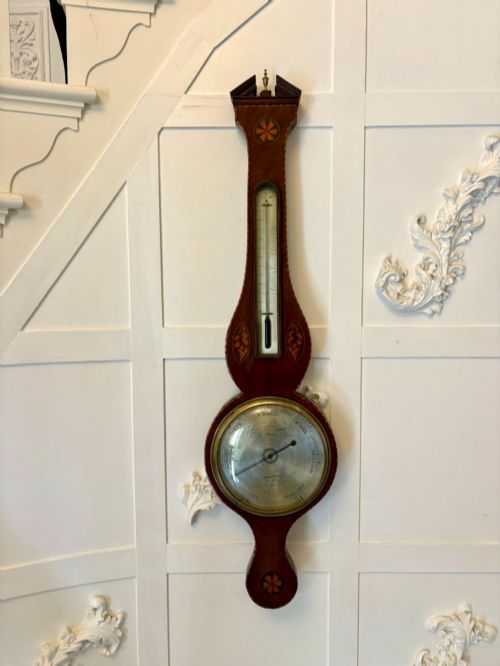
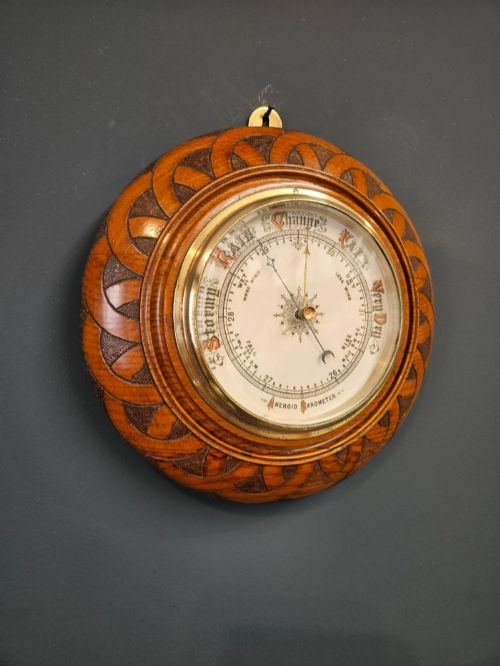
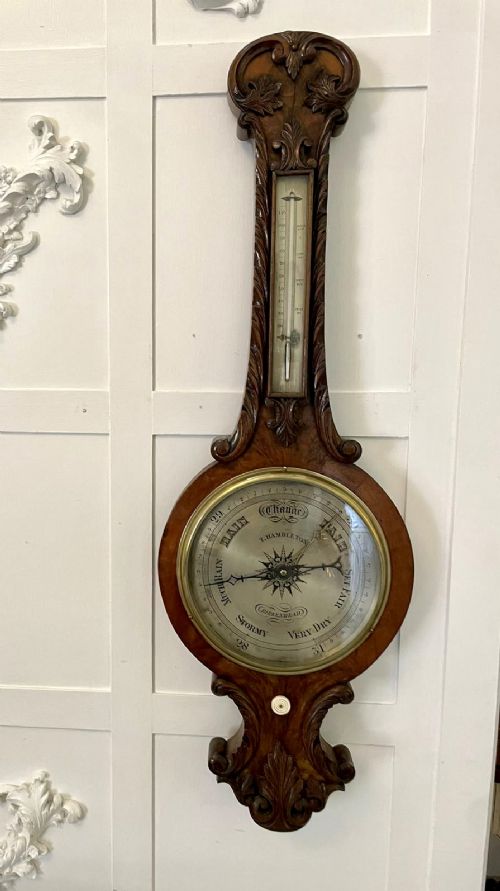
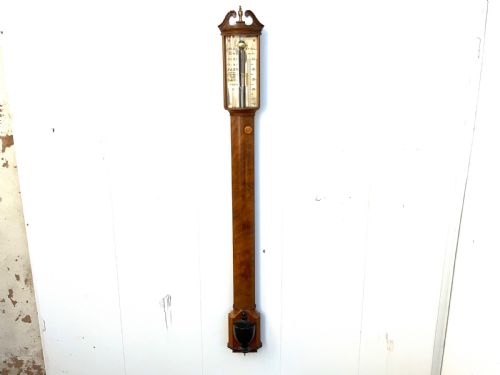
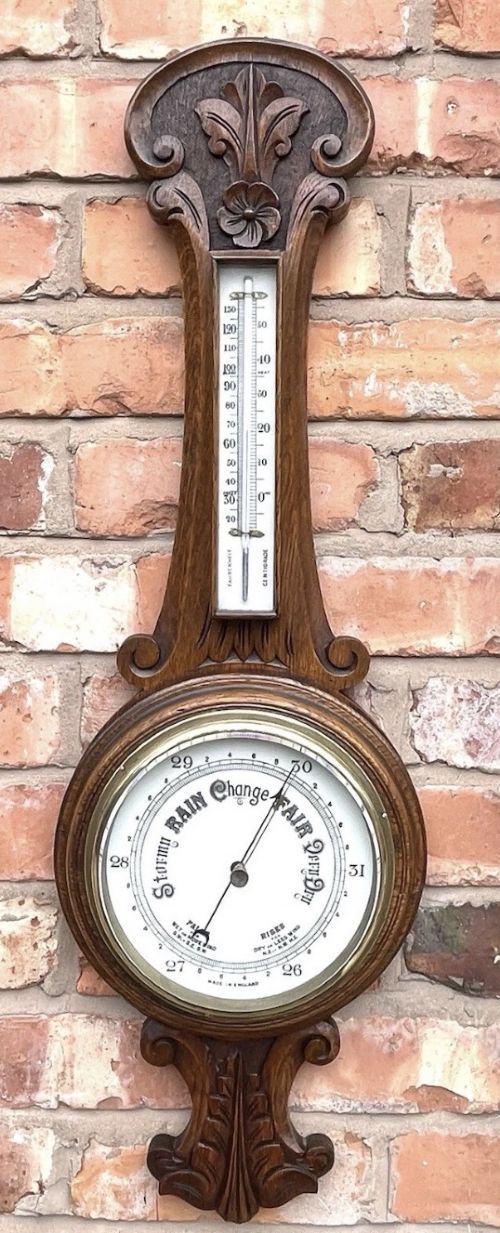
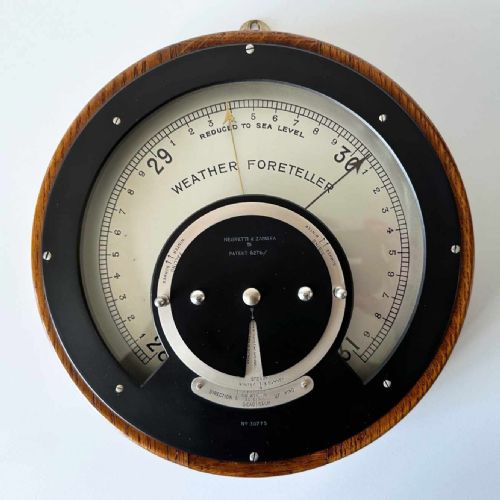
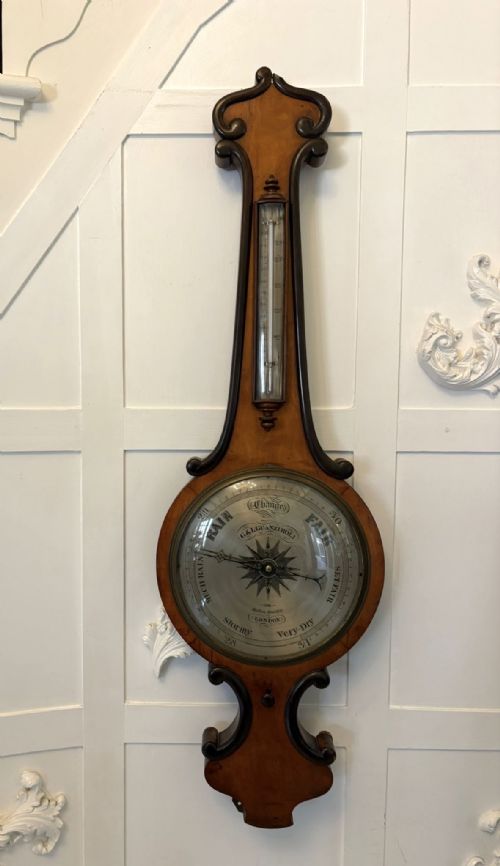
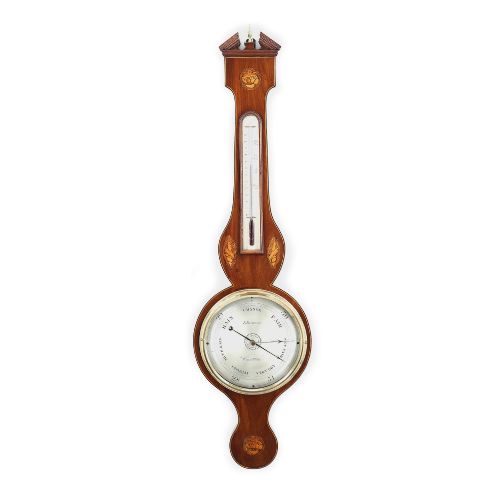
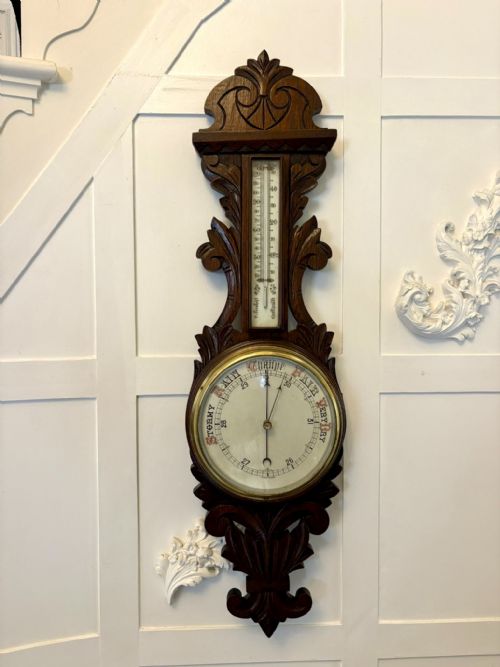
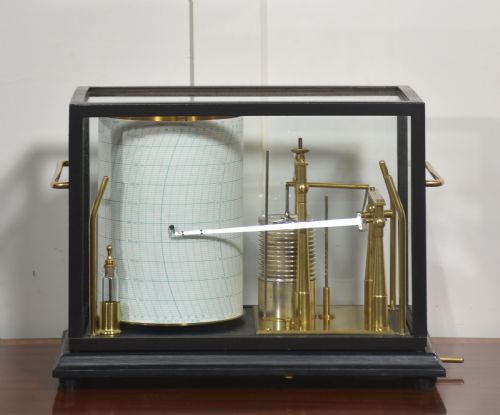
An english weather barometer appears in several distinct forms across this selection, spanning stick barometers, wheel barometers, aneroid models, and mechanical barographs housed in timber cases. These pieces range from the Georgian era through the Victorian period and into the Edwardian and interwar years.
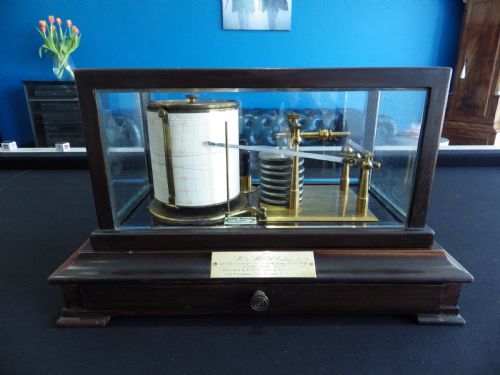
The most frequent form encountered on this page is the banjo or wheel barometer, alongside wall-mounted aneroid instruments and mahogany-cased barographs. Makers utilised local workshops and established London firms to produce instruments that served both practical meteorological duties and domestic decoration.
Examples from the 18th and 19th centuries display regional British cabinet-making traditions, utilising native and exotic woods shaped into stick patterns or curved frames. Collectors find both mercury-based columns and spring-driven aneroid dials spanning the Victorian and Edwardian decades.
Standards of craftsmanship
Quality rests in the crispness of timber carving, the choice of figured veneers like burr walnut, and the legibility of engraved silvered metal dials. Superior examples feature signed movements by noted makers and robust brass fittings rather than cast-iron replacements.
The integration of secondary instruments, such as integrated thermometers or chart drawers with bevelled glass, separates standard domestic pieces from higher-grade scientific apparatus. Well-executed shell inlay and balanced proportions distinguish finer Georgian and Victorian workshops.
English Weather Barometer Retail Price Guide 2026
Typical asking prices for english weather barometer among the pieces listed under this phrase on Sellingantiques today, from the lower quarter to the upper quarter. They describe what is for sale here now, not the wider market.
Several examples include built-in chart drawers designed to hold spare paper cylinders for recording historical pressure patterns.
Short And Mason·Negretti And Zambra·W Watson And Sons·J Hughes London·Casella London
The English Weather Barometer Glossary
- Aneroid barometer
- An instrument that measures atmospheric pressure using a flexible-walled metal capsule rather than liquid mercury. The expansion and contraction of the sealed vacuum chamber moves a mechanical pointer across a graduated dial.
- Barograph
- A recording meteorological instrument that draws a continuous line of atmospheric pressure onto a rotating paper chart driven by a clockwork drum. These devices typically sit inside a multi-glass wooden case equipped with a storage drawer for spare charts.
- Stick barometer
- A tall, narrow instrument featuring an exposed vertical glass tube filled with mercury, mounted against a wooden backboard. This form allows direct observation of barometric height without mechanical amplification.
- Wheel barometer
- A banjo-shaped wall instrument where pressure changes in a concealed siphon tube cause a glass float to move a pulley and needle. The circular dial at the base displays the primary weather readings.
- Silvered metal dial
- A brass or copper face treated with a silver compound to produce a matte, reflective surface that receives fine engraved lettering and graduations. These dials provide high contrast for reading meteorological scales.
English Weather Barometer: Frequently Asked Questions
How do I read an old barometer?
Read the main pointer against the engraved weather words on the dial, then use the manual set hand to mark the current pressure position. Observing whether the needle moves above or below that marker indicates rising or falling pressure.
Changes shown on the dial or recorded chart reveal approaching weather shifts over subsequent hours. Comparing successive readings provides the local forecast without needing modern electronics.
Are these old barometers still accurate?
Many surviving instruments retain functional mechanisms and respond reliably to current atmospheric pressure changes. Aneroid dials and mercury tubes can be calibrated against known local readings if adjusted properly.
Minor discrepancies may occur due to age or mechanical wear in the internal linkages. Routine servicing by a specialist helps maintain precision in historical scientific instruments.
Where should I hang a wall barometer?
Position the instrument on an interior wall away from direct sunlight, heating vents, and damp exterior stone. Stable indoor temperatures prevent warping of the wooden case and protect delicate internal metal components.
Ensure the mounting point supports the weight securely, particularly for heavier mahogany or oak cased models. Eye-level placement allows easy viewing of the dial graduations and thermometer scales.
How do I identify the period of a barometer?
Examine the timber species, case silhouette, and dial typography to determine the era of manufacture. Georgian models often feature simple stick or wheel shapes with string inlay, while Victorian examples display heavier carvings and burr veneers.
Signatures on the silvered dial provide direct links to recorded makers and active operational dates. Patent references and style conventions further narrow down the decade of production.