





English Walnut Vitrine
An English walnut vitrine brings warmth and elegance to a room while keeping prized possessions safely in view.
English Walnut Vitrine
An English walnut vitrine is a glazed display piece designed to showcase collections, books, and decorative objects behind glass. These cabinets combine timber frames with transparent panels to protect contents from dust while allowing full visibility from the room.
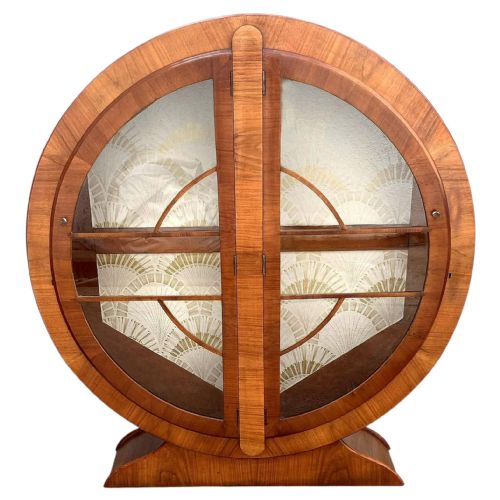
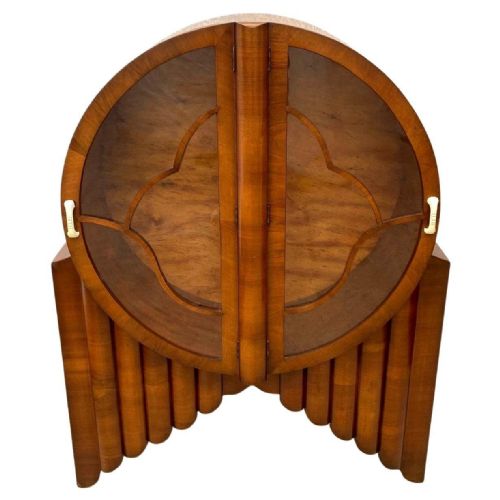
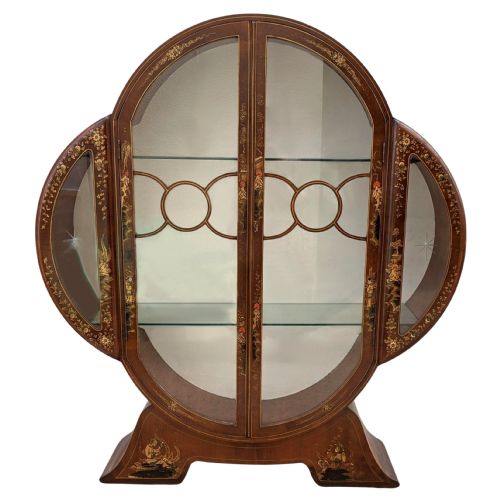
The pieces available here span several distinct eras, with Art Deco examples from the 1930s dominating alongside earlier Victorian and Regency designs. Forms range from circular display units and rocket cabinets to traditional pier cabinets and bookcases.
Makers utilised rich walnut veneers and solid timbers to achieve striking grain patterns across the cabinet facades. Interiors often feature lined surfaces in materials such as velvet to complement the displayed objects.
Materials and Construction
Cabinet makers relied heavily on walnut timber, valued for its deep colour and decorative grain, sometimes pairing it with contrasting woods like sycamore or mahogany. Selected sections of veneer were applied to structural carcases to create symmetrical patterns across the doors and panels.
Glazing techniques defined the visual character of these cabinets, incorporating leaded glass panes or large clear sheets held by timber or brass framing. Additional ornamentation included ormolu mounts, painted details, and fitted brass hardware.
Interior shelving was constructed to support books or delicate display items, whilst backing materials such as velvet provided a tactile contrast to the polished exterior woodwork.
English Walnut Vitrine Retail Price Guide 2026
Typical asking prices for english walnut vitrine among the pieces listed under this phrase on Sellingantiques today, from the lower quarter to the upper quarter. They describe what is for sale here now, not the wider market.
Rocket cabinets from the 1930s brought aerodynamic curves straight into the home.
Judging Quality and Craftsmanship
Quality in an English walnut vitrine rests upon the selection of the timber veneer and how symmetrically the grain patterns match across the doors and panels. Finer examples display thoughtful book-matching that turns the natural growth rings into deliberate decoration.
The execution of the glazing and metalwork marks the difference between standard production and superior craftsmanship, visible in neat lead cames, precise brass hinges, and well-fitted ormolu mounts. Structural integrity in the joints and the smooth operation of glazed doors indicate careful original manufacture.
The English Walnut Vitrine Glossary
- Vitrine
- A glass-fronted cabinet or display case designed specifically for showing porcelain, curiosities, or books. These pieces typically feature extensive glazing on the front and sides.
- Pier Cabinet
- A low, narrow cabinet traditionally built to fit the wall space between windows, often featuring a glazed door for displaying small collections. They became particularly popular during the Victorian period.
- Veneer
- A thin slice of decorative timber applied to a sturdier secondary wood base to provide a figured surface. Walnut veneers were extensively utilised for their rich grain patterns.
- Lead Came
- A slender rod of lead with a grooved profile used to hold individual small panes of glass together in leaded windows and cabinet doors. This technique allows for geometric or decorative glazing patterns.
English Walnut Vitrine: Frequently Asked Questions
What is an English walnut vitrine used for?
An English walnut vitrine serves primarily to display and protect valuable collections, ceramics, or books behind glass doors. The glazed panels keep dust away while allowing objects to be viewed easily from across the room.
These cabinets function well in reception rooms, libraries, and hallways where both storage and decorative presentation are required.
How do I date a walnut display cabinet?
Dating a cabinet involves examining the overall style, construction methods, and hardware choices present in the piece. Art Deco examples from the 1930s often feature rounded silhouettes, circular forms, and dramatic grain matching.
Victorian and Regency pieces display different proportions, often incorporating architectural mouldings or turned supports that reflect the design preferences of the nineteenth century.
Where should I place a vitrine in my home?
A vitrine requires a stable wall location away from direct sunlight, which can fade both the timber finish and the displayed contents. Placing the cabinet in a room with consistent temperature helps protect the walnut veneer and internal materials like velvet.
Because these pieces feature glass panels, positioning them where they receive indirect natural light or gentle interior illumination enhances the visibility of the items inside.
How do I care for antique walnut furniture?
Maintaining walnut furniture involves dusting regularly with a soft, dry cloth and avoiding harsh chemical polishes that can damage the antique finish. Keeping the cabinet away from extreme heat sources prevents the timber and veneers from drying out or warping.
Occasional application of appropriate wax preserves the lustre of the walnut and helps protect the surface from minor scuffs during daily use.