





English Walnut Slope
An English walnut slope is a tactile desk or box for correspondence, prized for rich grain and practicality.
English Walnut Slope
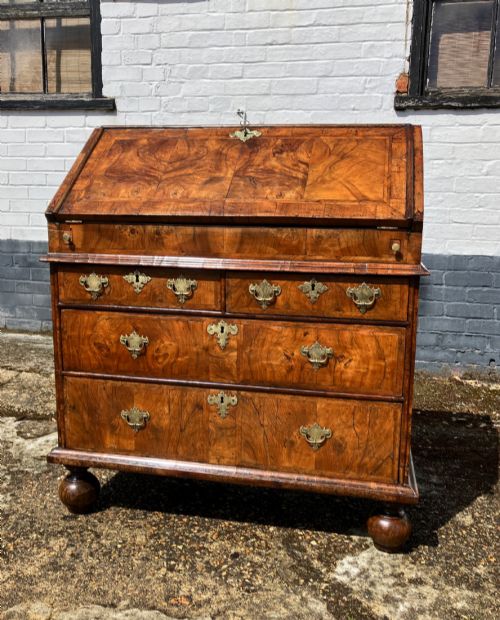
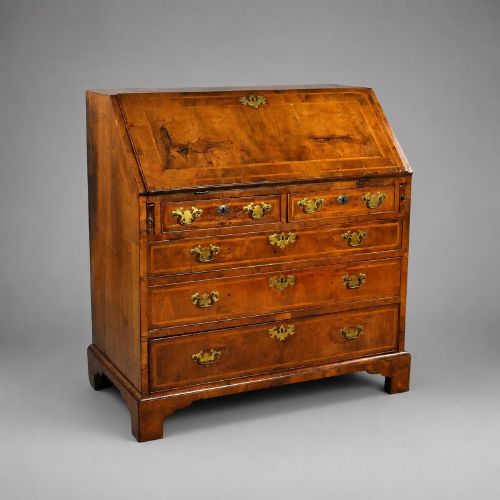
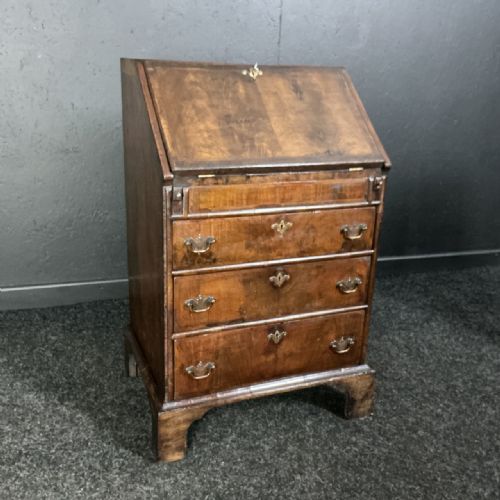
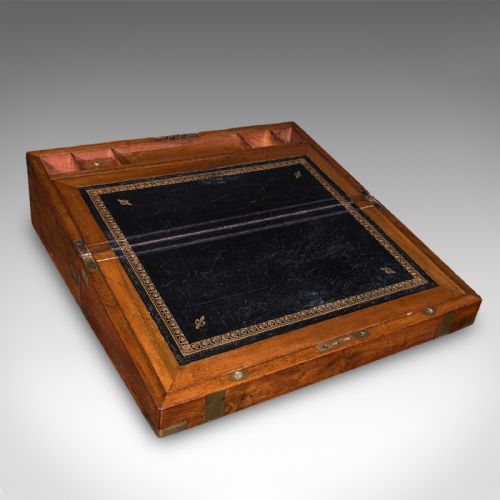
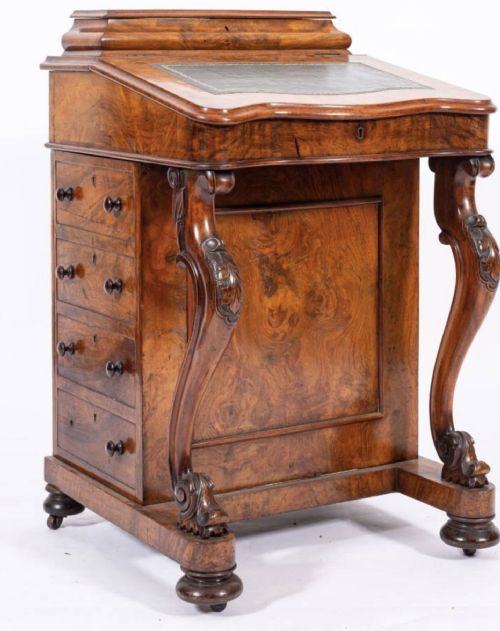
An english walnut slope brings together compact writing boxes, Davenport desks, and full bureaux spanning the Georgian, Victorian, and Regency periods. The forms range from portable correspondence boxes fitted with brass to kneehole bureaux and Davenport desks designed for the parlour or study.
Visitors to this page most frequently encounter Victorian burr walnut pieces alongside earlier Georgian and 18th-century bureaux. These objects combine sloped writing surfaces with internal stationery compartments, drawers, and occasionally leather or baize writing liners.
How they were made
Cabinet makers utilised figured walnut and burr walnut veneers applied over secondary timbers such as oak, creating striking patterns across the lids and drawer fronts. Brass hardware, including escutcheons, campaign mounts, and hinges, provided structural reinforcement and functional contrast against the dark wood.
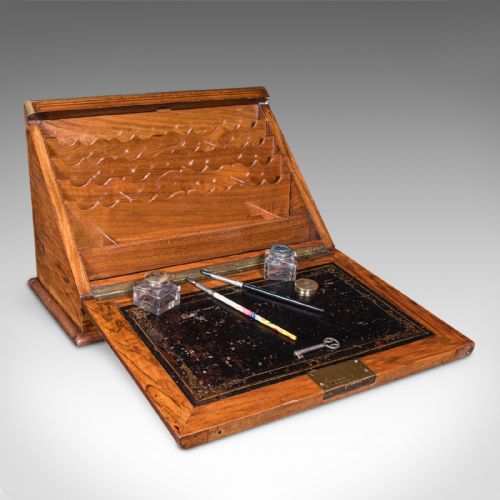
Interiors often incorporated inlaid wood, glass inkwells, and fitted compartments designed for stationery and correspondence. Skilled joinery ensured that hinged slopes and secret drawers operated smoothly within the solid timber frameworks.
English Walnut Slope Retail Price Guide 2026
Typical asking prices for english walnut slope among the pieces listed under this phrase on Sellingantiques today, from the lower quarter to the upper quarter. They describe what is for sale here now, not the wider market.
Listings span the Georgian, Regency, and Victorian periods, utilising walnut, burr walnut, oak, and brass.
What varies in quality
The standard of an english walnut slope rests upon the choice of timber veneer and the precision of the cabinet work. Highly figured burr walnut and symmetrical grain matching distinguish finer examples from plain constructions.
Internal complexity and the integration of specialised fittings, such as secret compartments or hand-painted porcelain panels, elevate the standing of a piece. Original brasses and well-preserved secondary woods further mark out superior workshops.
Mappin and Webb
The English Walnut Slope Glossary
- Burr walnut
- A prized timber harvested from growths on walnut trees, showing swirling, knotted grain patterns. It is frequently utilised for decorative veneer on high-status Victorian and Georgian writing slopes.
- Davenport desk
- A compact Victorian form of writing desk featuring a sloped top above a pedestal of drawers. These pieces often incorporate side drawers and stationary compartments.
- Bureaux
- Writing desks featuring a sloping flap that opens to reveal internal pigeonholes and small drawers. This form bridges the gap between portable boxes and permanent study furniture.
- Campaign writing box
- A portable desk designed for travel, strengthened with brass corners and recessed handles. These boxes open to provide a solid writing surface away from home.
- Baize
- A coarse woollen material traditionally used to line writing surfaces within slopes and desks. It offers a soft texture suitable for quill or pen work.
English Walnut Slope: Frequently Asked Questions
How do I use a writing slope?
The hinged lid of the box folds down toward the user to create an angled writing surface. Inside, small drawers and pigeonholes hold inkwells, paper, and pens.
Many slopes include a leather or baize insert on the writing surface to provide a smooth pad for handwriting.
Where were these desks placed?
Portable slopes sat upon dining tables or desks, allowing owners to write in any room of the house. Larger bureaux and Davenport desks remained fixed in studies, parlours, or bedrooms.
Campaign versions travelled with officers and gentlemen during the Regency and Victorian eras.
How do I date an english walnut slope?
Dating relies on the construction style, hardware, and secondary timbers. Georgian and 18th-century pieces often feature clean bureau lines, whilst Victorian examples frequently employ burr walnut veneers and Davenport forms.
Details such as brass campaign mounts or Aesthetic Movement decoration point toward specific mid-to-late nineteenth-century decades.