





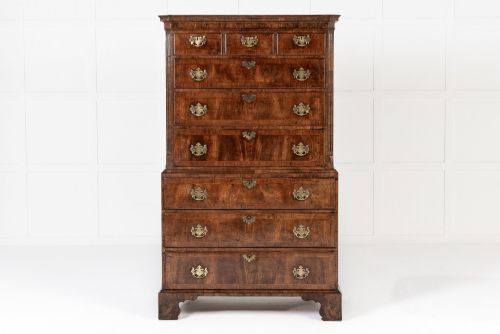

English Walnut Highboy
These english walnut highboy pieces are tall storage furniture combining lower stands and upper chests, prized for their rich timber grain.
English Walnut Highboy
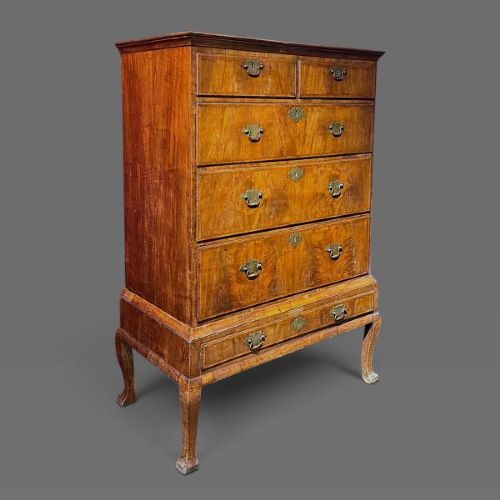
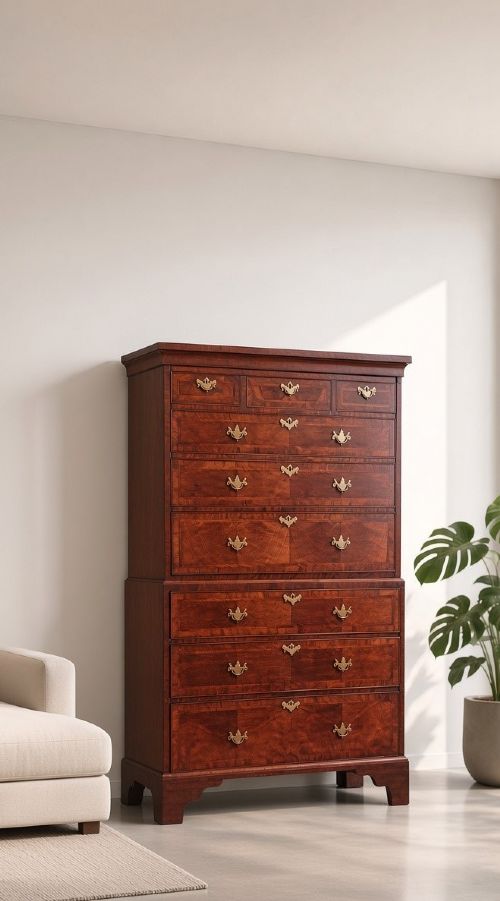
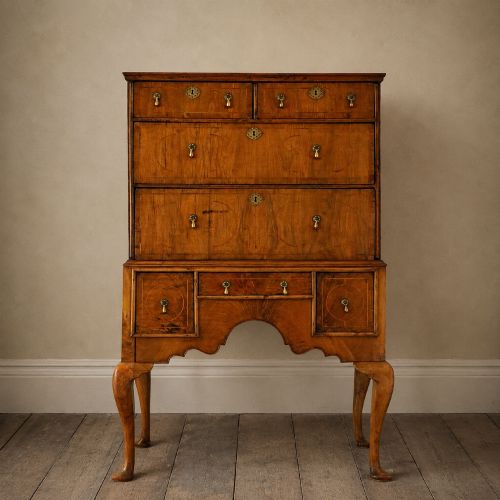
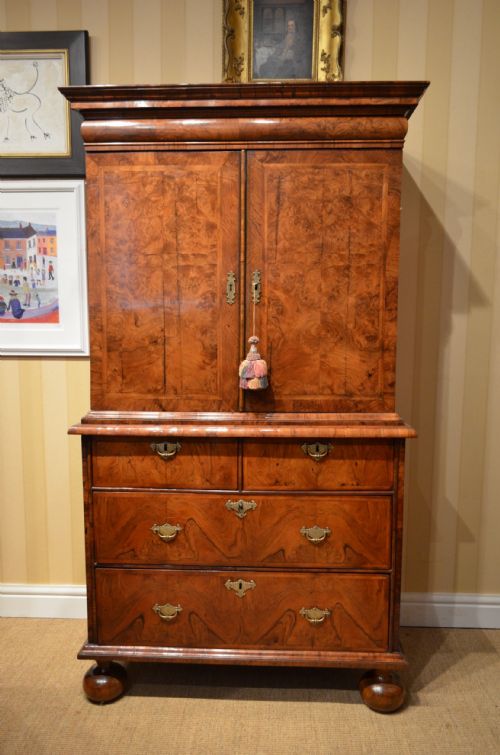
An english walnut highboy is a substantial piece of case furniture, typically encountered here as a chest on stand, chest on chest, or cabinet on chest. These tall forms divide visually and structurally into an upper section of multiple drawers resting upon a lower supporting frame or chest base.
The pieces span several distinct historical periods, featuring examples from the seventeenth century through the georgian era, alongside later nineteenth-century interpretations and twentieth-century revivals. Queen Anne, William and Mary, and George II styles dominate the older selections, bringing characteristic proportions and silhouette lines to the category.
Makers utilised various descriptive terms across these periods, meaning tallboys, chests of drawers on stands, and cabinets appear under related headings. The core function remains consistent: providing vertical storage while displaying decorative wood surfaces in domestic interiors.
Materials and Construction
Cabinetmakers constructed the primary carcasses using solid oak and softwoods, then applied figured walnut veneers, burr walnut, or oyster veneers to the visible exterior surfaces. Crossbanding and stringing lines often frame drawer fronts and panel borders, adding geometric contrast to the figured grain.
Brass drop handles, batten escutcheons, and drawer pulls secure the operational parts, fixed with traditional pins or threaded wires. Stands frequently employ cabriole legs, spiral turnings, or bracket feet depending on the prevailing style of the period.
English Walnut Highboy Retail Price Guide 2026
Typical asking prices for english walnut highboy among the pieces listed under this phrase on Sellingantiques today, from the lower quarter to the upper quarter. They describe what is for sale here now, not the wider market.
Listings feature walnut, burr walnut veneer, oak, and olivewood across seventeenth-century, georgian, and victorian periods.
Assessing Quality and Execution
The calibre of timber selection dictates visual distinction, with symmetrical burr patterns and matched flame walnut veneers marking out superior examples. Fine execution shows in the crispness of crossbanding, the tightness of veneer joints, and the retention of original brass hardware.
Structural integrity depends upon the relationship between the upper chest and its lower stand, particularly where stands are associated or of a later date. Superior craftsmanship appears in the dovetail joinery of internal drawers and the harmonious balance of proportions between the upper and lower tiers.
The English Walnut Highboy Glossary
- Chest on stand
- A two-part form consisting of a chest of drawers elevated on a separate frame with legs. This configuration creates a lighter visual profile than a single solid block of drawers.
- Chest on chest
- A tall storage unit formed by stacking a smaller chest directly upon a wider lower chest of drawers. Often referred to as a tallboy in various period contexts.
- Burr walnut
- Timber harvested from walnut tree growths that produce complex, swirling grain patterns. Cabinetmakers sliced this wood into thin veneers for decorative drawer fronts and panel surfaces.
- Crossbanding
- A decorative technique where narrow strips of veneer are laid perpendicular to the surrounding grain. This frames the perimeter of drawer faces and tabletops.
- Oyster veneer
- Circular slices cut transversely from small branches or twigs, creating small elliptical patterns resembling oyster shells. These pieces fit together to form mosaic-like surfaces on seventeenth-century furniture.
English Walnut Highboy: Frequently Asked Questions
What is an english walnut highboy?
An english walnut highboy is a tall storage furniture piece comprising an upper chest section mounted on a lower stand or secondary chest base. These items utilise walnut timber and veneer surfaces across various historical periods.
They serve primarily as bedroom or parlour storage, offering numerous drawer compartments within a vertical footprint that saves floor space.
How do I date a highboy?
Dating relies on examining stylistic markers such as leg shapes, handle designs, and construction methods. William and Mary pieces often show turned trumpet legs, whereas Queen Anne examples favour cabriole forms.
Secondary woods like oak in drawer linings and the presence of hand-cut dovetails further help confirm the manufacturing era of the carcass.
Where were these pieces used?
These tall chests stood in principal bedchambers, dressing rooms, and formal withdrawing rooms of large houses. Their height made them suitable for storing linens, garments, and personal valuables.
In contemporary rooms, they function effectively in hallways, living spaces, and bedrooms where vertical storage is required without sacrificing floor area.
What is an associated stand?
An associated stand is a lower support base that was joined to an upper chest at a later date, rather than being its original factory pairing. This practice occurred during repairs or stylistic updates.
Collectors identify associated stands by inspecting timber types, mounting joints, and finish consistency between the upper cabinet and lower support frame.