

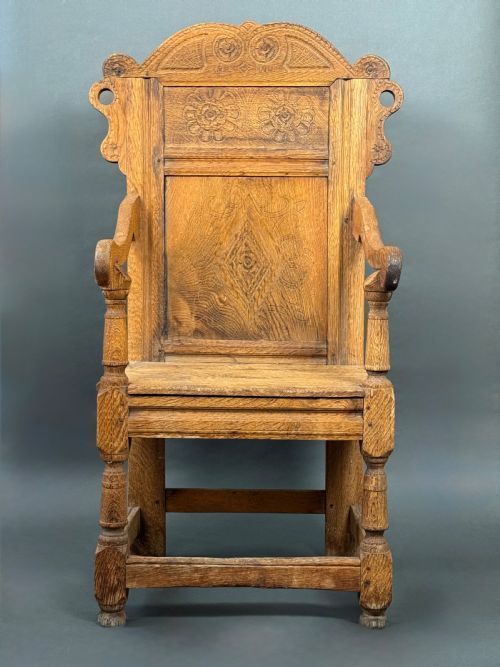


English Wainscot Chair
An English wainscot chair is a heavy, panelled wooden seat built to last centuries, prized for its austere sixteenth and seventeenth century character.
English Wainscot Chair
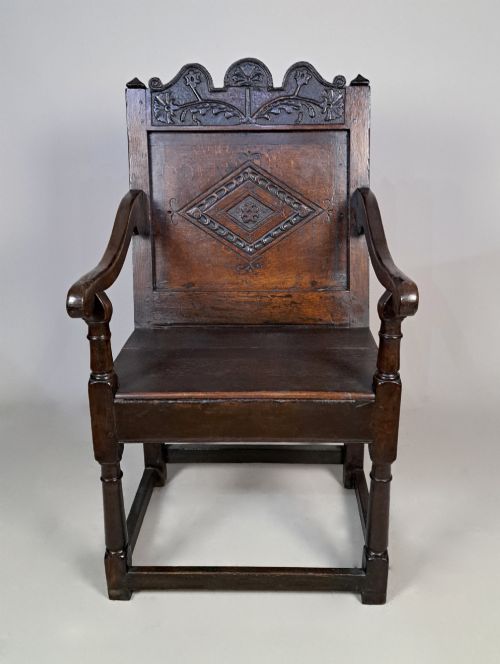
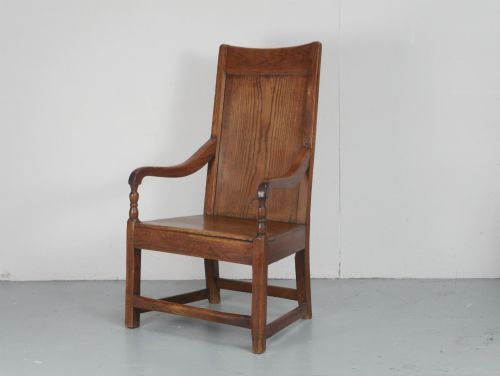
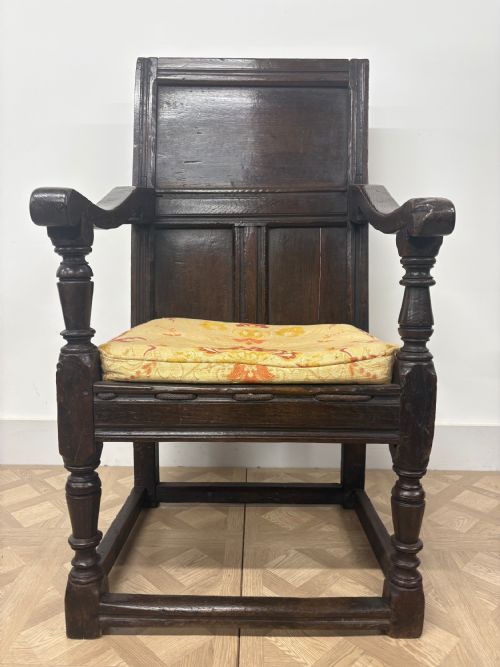
An English wainscot chair represents a pinnacle of early domestic seating, constructed solidly from timber with panelled backs rather than upholstered padding. The versions you meet most frequently on this page date from the seventeenth century, alongside occasional sixteenth-century Elizabethan examples and eighteenth-century continuations.
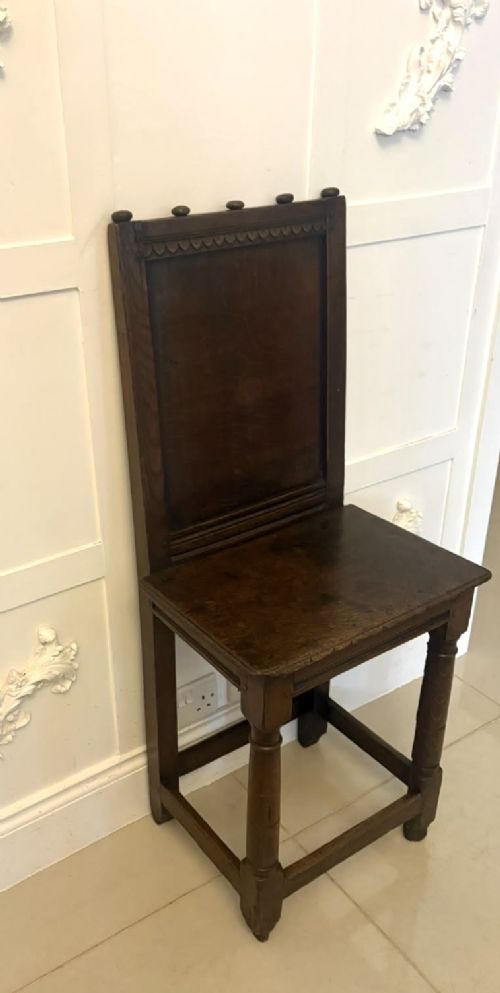
These pieces primarily take the form of armchairs, though the inventory also encompasses side chairs, backstools, and master's armchairs. Regional variations emerge across the listings, with specific pieces originating from Lancashire, Cheshire, and South Yorkshire.
The form evolved from box chairs and heavy joined furniture, serving as principal seats of authority within a household. Their straightforward timber construction defines early English furniture, offering a direct tangible link to the domestic interiors of the period.
Distinguishing quality
Quality in an English wainscot chair rests on the crispness of the hand carving and the integrity of the original joined frame. Pieces with deeply carved back panels, well-defined arm scrolls, and minimal timber replacement command greater respect among collectors.
Proportion and regional distinctiveness also elevate certain examples above standard vernacular output. A master's armchair or a documented regional piece from Yorkshire or the West Country exhibits a bolder architectural presence than simpler provincial variants.
English Wainscot Chair Retail Price Guide 2026
Typical asking prices for english wainscot chair among the pieces listed under this phrase on Sellingantiques today, from the lower quarter to the upper quarter. They describe what is for sale here now, not the wider market.
Listings span the sixteenth, seventeenth, and eighteenth centuries, executed entirely in solid oak across various regional English styles.
The English Wainscot Chair Glossary
- Wainscot chair
- A heavy wooden armchair with a panelled back, constructed primarily of oak during the sixteenth and seventeenth centuries. The term originally referred to fine grade oak imported from the continent before becoming associated with panelled furniture.
- Backstool
- An early form of upholstered or panelled seat without arms, essentially a chair built on the height and scale of an armchair minus the armrests. These appear frequently alongside standard armchairs in seventeenth-century English households.
- Joined oak
- Furniture constructed using mortise and tenon joints fitted together by specialist carpenters known as joiners, superseding older pegged board construction. This technique provided the essential structural skeleton for heavy chairs.
- Strapwork
- A carved decorative motif resembling flat bands or ribbons folded, interlaced, and crossed in geometric patterns. Cabinet makers carved these directly into the wooden back panels of seventeenth-century seating.
- Crest rail
- The horizontal topmost member of a chair back, often shaped, carved, or arched on seventeenth-century examples. It forms the visual crown of the panelled back.
English Wainscot Chair: Frequently Asked Questions
How do I date an English wainscot chair?
Dating relies on examining the construction methods, tool marks, and stylistic motifs carved into the oak panels. Seventeenth-century examples typically display pegged joints and regional strapwork carvings distinct from later copies.
Changes in armrest profiles and the height of the panelled back also help distinguish Elizabethan and Jacobean periods from later eighteenth-century revivals.
Where were these chairs used in a home?
In early households, a wainscot chair sat at the head of the dining table or beside the hearth as the primary seat for the head of the house. Their weight and imposing presence marked them out from lesser joint stools and benches.
Today, they function well as hall chairs or accent pieces in studies and living rooms, where their solid timber architecture commands attention.
Are these chairs comfortable to sit in?
These pieces were built for posture and authority rather than relaxed lounging, featuring upright wooden backs and solid seats. Modern users often add a simple loose cushion to soften the seat for everyday use.
Their ergonomic design reflects the formal posture and heavy clothing styles customary in sixteenth and seventeenth-century England.