

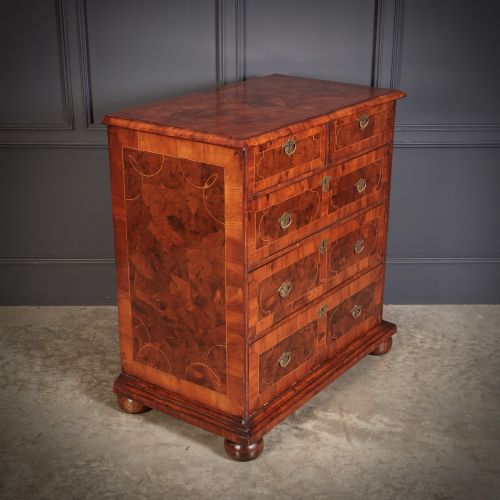


English Veneer Furniture
English veneer furniture brings warmth and intricate grain patterns into a room, offering centuries of cabinet-making skill.
English Veneer Furniture
English veneer furniture encompasses case pieces and tables finished with thin slices of decorative timber, primarily emerging from the late seventeenth century through the Georgian era and into the Art Deco period. These items showcase elaborate wooden surfaces applied over solid foundational woods, creating striking patterns that solid timber cannot achieve.
Buyers browsing this selection most frequently encounter walnut, oak, and olivewood examples from the William and Mary era alongside later Georgian bureaux and occasional tables. These forms highlight the evolution of domestic storage and writing surfaces across successive British design movements.
Construction and materials
Cabinet-makers applied thin layers of timber, such as walnut, olivewood, and laburnum, onto secondary woods like oak using early animal glues. This method allowed craftsmen to utilise richly figured sections of timber efficiently.
Many early pieces feature oyster veneers, formed by cross-cutting small branches to produce circular or oval motifs arranged in decorative patterns. Inlays of boxwood and hardware in brass frequently complement these detailed wooden surfaces.
English Veneer Furniture Retail Price Guide 2026
Typical asking prices for english veneer furniture among the pieces listed under this phrase on Sellingantiques today, from the lower quarter to the upper quarter. They describe what is for sale here now, not the wider market.
Assessing quality
Quality rests upon the preservation of the delicate wooden surface and the intricacy of the grain arrangement. Pieces that maintain their original patination and balanced proportions command greater attention from collectors.
The sophistication of the underlying construction and the complexity of the timber selection distinguish standard items from superior examples. Skillful historical repairs retain the integrity of the piece better than modern replacements.
The English Veneer Furniture Glossary
- Veneer
- A thin layer of finely figured wood applied to a solid core to create decorative surfaces. This technique maximises scarce and visually striking timbers.
- Oyster veneer
- Slices of wood cut transversely from small branches or roots, creating circular patterns resembling oyster shells. Craftsmen arranged these closely together to form elaborate geometric designs.
- Chest on stand
- A case piece consisting of an upper chest section elevated on a separate frame with legs. This form became popular during the late seventeenth century.
- Bureau
- A sloping desk enclosing pigeonholes and small drawers, often positioned above a chest of drawers. These writing cabinets gained prominence during the early eighteenth century.
English Veneer Furniture: Frequently Asked Questions
What is oyster veneering?
Oyster veneering involves slicing small branches across the grain to produce circular pieces with distinctive ring patterns. These small sections are laid closely together to cover large surfaces in decorative motifs.
This technique was particularly favored during the seventeenth century on walnut, olivewood, and laburnum pieces.
How do I care for antique veneer?
Keep wooden pieces away from direct sunlight and steady heat sources to prevent the glue underneath from drying out and releasing the surface timber. Maintaining consistent room humidity protects the delicate grain.
Apply traditional wax sparingly and polish with a soft cloth to preserve the natural finish.
What distinguishes William and Mary pieces?
William and Mary furniture typically displays rich walnut surfaces, elaborate marquetry, and trumpet or inverted cup turning on legs. These items often feature structured forms like chests on stands and cabinets.
Cabinets from this era emphasise fine joinery and decorative grain arrangements over simple utility.
Are Georgian bureaux different from earlier desks?
Georgian bureaux generally present cleaner exterior lines and varied timber choices such as mahogany and yew wood compared to earlier seventeenth-century models. They reflect a shift towards structural refinement while retaining practical internal compartments.
These writing desks often feature fitted drawer arrangements and bracket feet.