


English Upholstered Settee
An english upholstered settee brings deep comfort and traditional craft to a room, offering generous seating rooted in centuries of British design.
English Upholstered Settee
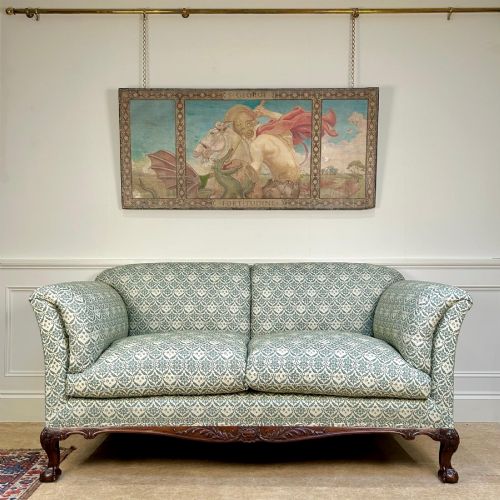
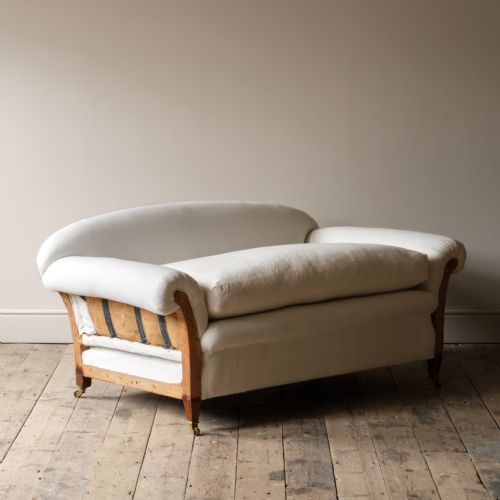
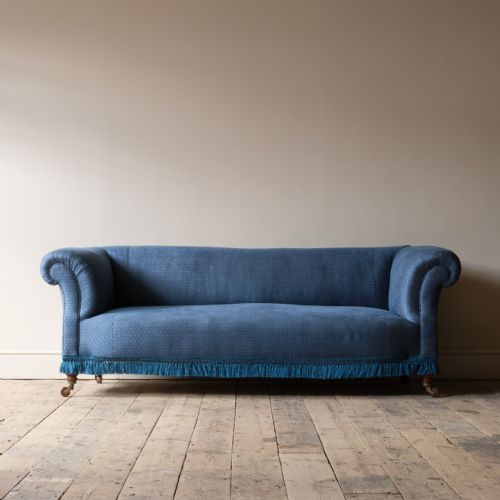
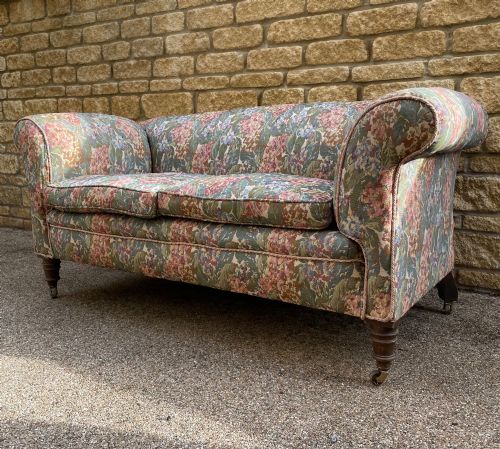
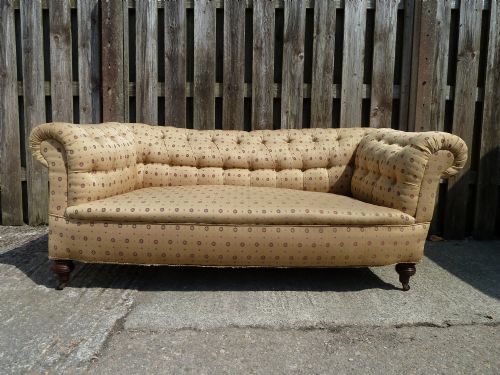
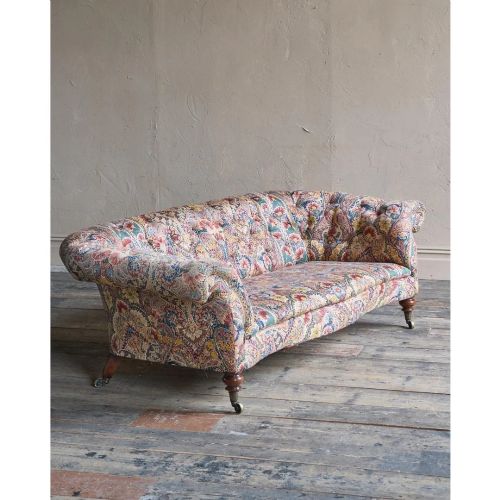
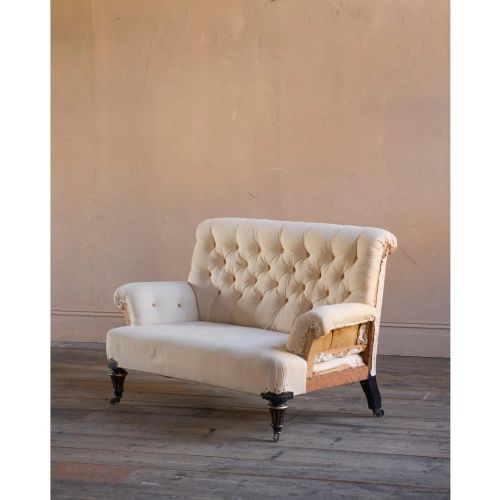
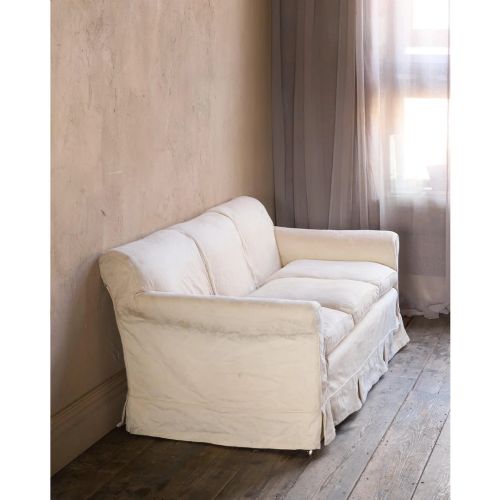
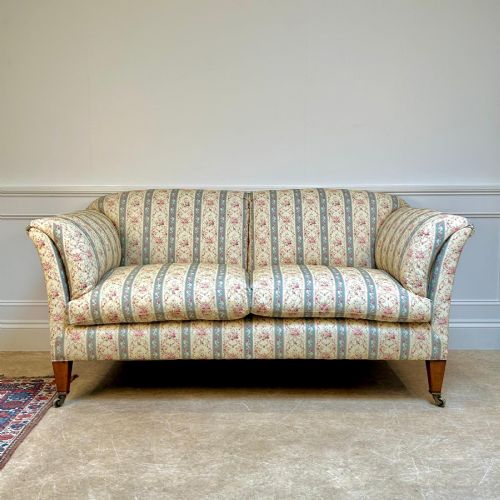
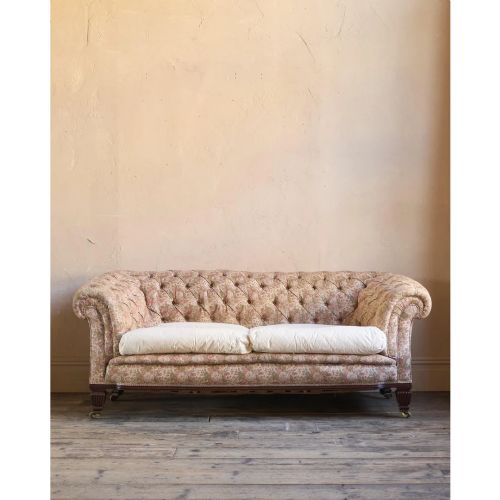
An english upholstered settee encompasses large country house sofas, deep-seated Chesterfields, and structured Knole sofas designed for drawing rooms and living spaces. These pieces span from nineteenth-century Victorian and Edwardian examples to early twentieth-century forms, appearing as two-seater or three-seater configurations alongside day beds and drop-arm sofas.
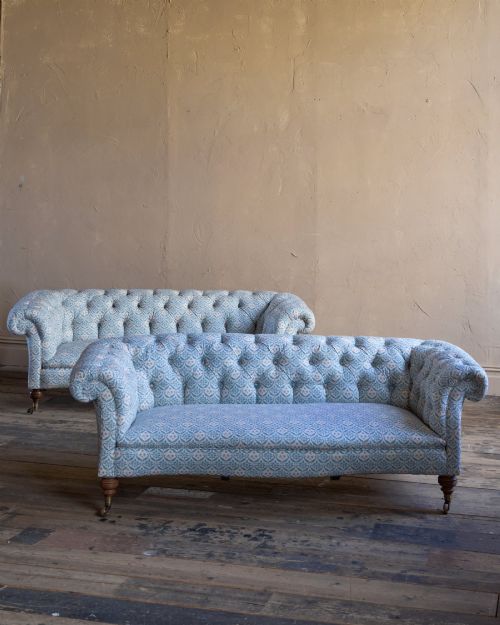
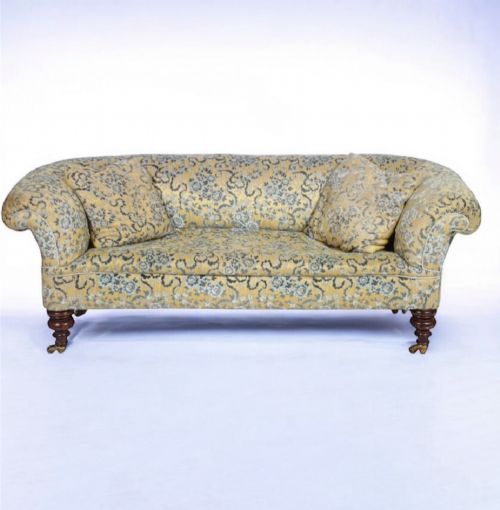
The version most frequently met on this page is the nineteenth-century Chesterfield or country house sofa, upholstered in fabric, velvet, or damask. Makers and styles range from traditional English Queen Anne and Chippendale revivals to Regency rosewood frames and utilitarian nineteenth-century seating.
Buyers encounter timber and show-frame settees alongside fully upholstered lounge seating built for domestic comfort. The selection draws together diverse periods including the Victorian, Edwardian, and nineteen-thirties eras under the overarching banner of traditional English seating.
How they were made
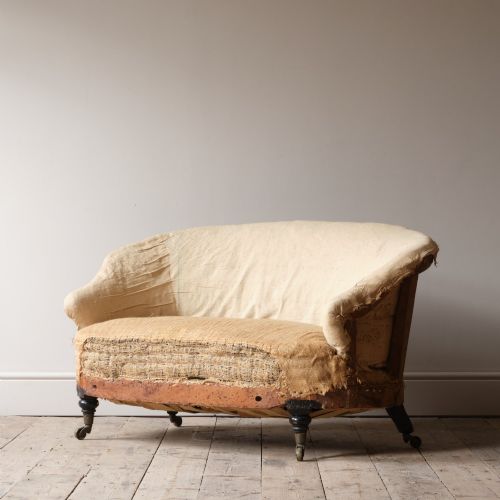
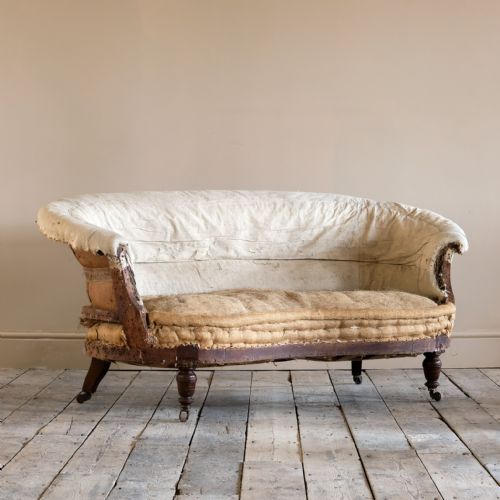
Frames rely on sturdy timbers such as mahogany, walnut, rosewood, and general wood construction to provide a rigid internal skeleton. Show-frame settees expose polished timber, while standard upholstered variants hide the wood beneath supportive layers of hessian, calico, and fabric.
Traditional upholstery techniques utilise internal stuffing and foundational materials like hessian and calico before the final application of velvet, damask, or printed cotton. Brass tacks and buttons often secure the textile layers, particularly on button-back Chesterfields and Knole settees.
English Upholstered Settee Retail Price Guide 2026
Typical asking prices for english upholstered settee among the pieces listed under this phrase on Sellingantiques today, from the lower quarter to the upper quarter. They describe what is for sale here now, not the wider market.
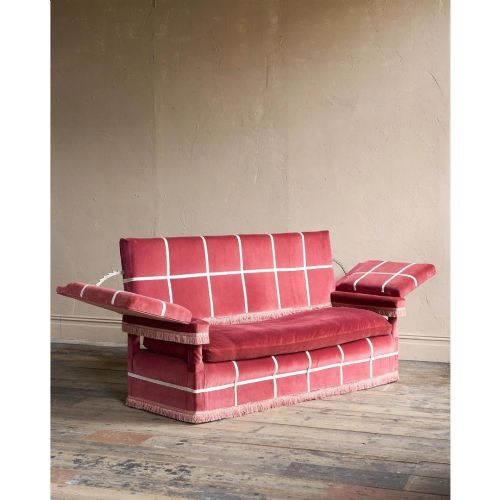
Drop-arm mechanisms let sitters adjust one end downward to create an impromptu day bed for an afternoon rest.
What varies in quality
The standard of a settee rests upon the integrity of its wooden frame and the depth of its original upholstery build. Pieces originating from renowned workshops exhibit superior joinery and more resilient internal springing compared to standard commercial outputs of the same period.
Material selection dictates the visual standing of the piece, with fine rosewood or walnut frames and high-grade velvet or designer textiles separating elevated examples from simpler country house furniture. The preservation of original makers' stamps and lining adds significant weight to an individual settee.
Howard and Sons·Hampton and Sons·A Jackson and Graham·H. Goodall and Sons·Jas Shoolbred·Gillows
The English Upholstered Settee Glossary
- Chesterfield
- A deep-tufted sofa characterised by arms and back of the same height, traditionally upholstered in leather or heavy fabric with button detailing.
- Knole sofa
- An early seventeenth-century style settee featuring adjustable hinged sides that can be lowered or raised, typically draped in rich textiles and secured with elaborate braids and tie-backs.
- Hessian
- A coarse woven fabric made from jute or hemp fibres, utilised as a foundational webbing and stuffing cover inside traditional upholstery layers.
- Calico
- A plain-woven cotton textile employed as an inner lining and base layer beneath the final decorative upholstery fabric.
- Show-frame
- A furniture construction where the polished or carved wooden framework remains visible around the upholstered sections rather than being fully covered.
English Upholstered Settee: Frequently Asked Questions
What is an english upholstered settee?
An english upholstered settee is a traditional seating form designed for domestic drawing rooms and country houses, encompassing styles like the Chesterfield, Knole, and drop-arm sofa.
These pieces range from nineteenth-century Victorian frames to early twentieth-century examples, built for comfort using timber, fabric, and traditional upholstery methods.
How were settees used originally?
Historically, these settees served as principal seating in formal drawing rooms, parlours, and country house libraries, accommodating multiple people for conversation or resting.
Deep-seated variations and chaise longues were specifically adopted for relaxation and lounging in private residential quarters.
How do I identify a Victorian Chesterfield?
A Victorian Chesterfield is identified by its characteristic deep button-tufted upholstery and arms that match the height of the backrest.
Evidence shows these nineteenth-century pieces often feature sturdy timber frames beneath heavy fabric, velvet, or leather coverings.
How do I live with antique upholstery?
Living with these settees involves placing them away from direct sunlight to protect sensitive fabrics like velvet, damask, and printed cotton.
Routine gentle care preserves the underlying hessian, calico, and internal padding while maintaining the structural integrity of the wood frame.
What defines a country house sofa?
A country house sofa is defined by generous proportions, deep seating, and an emphasis on relaxed domestic comfort over rigid formality.
These pieces typically date from the nineteenth or early twentieth century and utilise soft upholstery materials suited to traditional English interiors.