




English Turned Wood Box
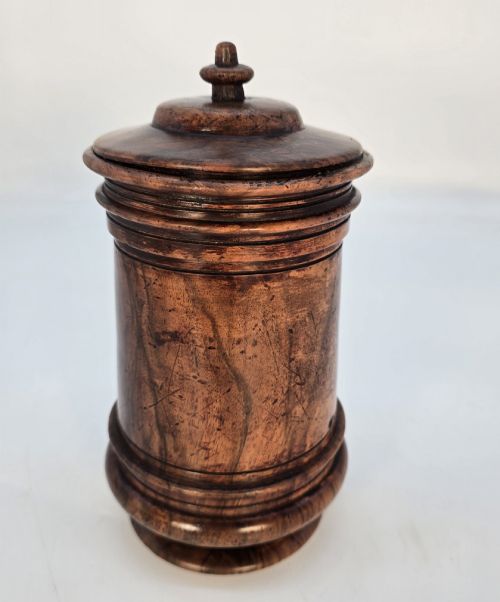
These English turned wood box examples are tactile vessels of historical treen, offering a tangible connection to domestic life across four centuries.
English Turned Wood Box
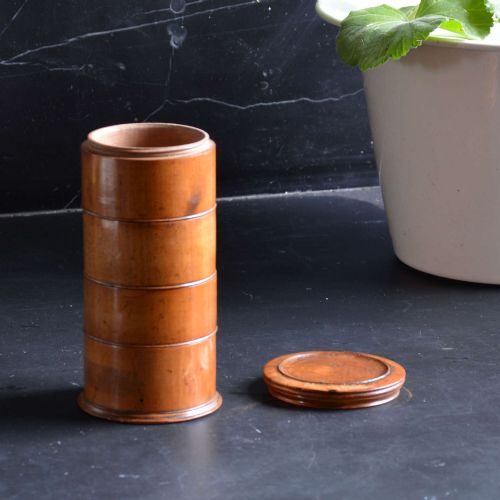
The most common forms you will encounter here include multi-tiered spice towers and tobacco jars. Alongside these specialised containers, the evidence shows domestic treen such as string holders and nutmeg graters made by turners working in hard and soft woods.
Materials and Turning Methods
Craftsmen utilised dense timbers such as boxwood, walnut, beech, and oak, often shaping them on a lathe to create symmetrical lids, threaded joints, and stacked compartments. These materials provided the necessary hardness for intricate decorative rings and functional friction fits.
Makers occasionally combined contrasting woods, such as rosewood and boxwood, or integrated brass elements to secure moving parts and enhance durability.
English Turned Wood Box Retail Price Guide 2026
Typical asking prices for english turned wood box among the pieces listed under this phrase on Sellingantiques today, from the lower quarter to the upper quarter. They describe what is for sale here now, not the wider market.
Listings on this page span materials including boxwood, oak, walnut, beech, and sycamore, alongside brass fittings.
Assessing Craftsmanship and Age
The distinction between ordinary pieces and superior examples lies in the crispness of the lathe work and the preservation of the original surface patina. Well-turned mouldings and tight joints demonstrate the skill of the individual artisan.
Condition and completeness also dictate quality, particularly in multi-component objects like spice towers where matching tiers and original threaded connections determine integrity.
The English Turned Wood Box Glossary
- Treen
- Small handmade wooden domestic objects and utensils. This term derives from Middle English and encompasses everything from small boxes to tablewares.
- Spice tower
- A multi-tiered cylindrical container designed to hold various culinary spices. Each section nests or screws into the one below.
- Boxwood
- A dense, pale yellowish wood prized by turners for intricate detail work. Its fine grain prevents splintering on delicate threads.
- Tobacco jar
- A lidded vessel intended to keep smoking leaf moist and aromatic. These containers often feature heavy walls and secure fitting lids.
English Turned Wood Box: Frequently Asked Questions
What were spice towers used for?
Spice towers served as compact containers for storing a variety of valuable cooking spices in domestic kitchens. Their stacked design allowed multiple ingredients to be kept in a single footprint on a table or shelf.
Each tier separated to grant access to a different flavour, protecting expensive goods from moisture and loss.
How do I date a turned wooden box?
Dating relies on identifying the timber species, tool marks, and overall style associated with documented historical periods. Seventeenth-century examples often display heavy oak construction, whilst Georgian and Victorian pieces frequently utilise exotic hardwoods and finer lathe profiles.
Wear patterns and the presence of patination help corroborate the age suggested by construction methods.
Why are some boxes made of multiple woods?
Makers combined contrasting timbers like boxwood and walnut to create decorative visual bands and highlight specific structural elements. This practice demonstrated the turner's skill and made everyday objects more ornamental.
Contrasting materials also served a practical purpose, utilising harder woods for threaded components that required greater strength.
How should I care for antique treen?
Antique turned wood requires stable indoor humidity and protection from direct sunlight to prevent timber shrinkage and cracking. Cleaning should be restricted to a soft, dry cloth without the application of modern chemical polishes.
Maintaining a consistent environment preserves the natural wax and oil accumulation that forms the historic surface patina.