
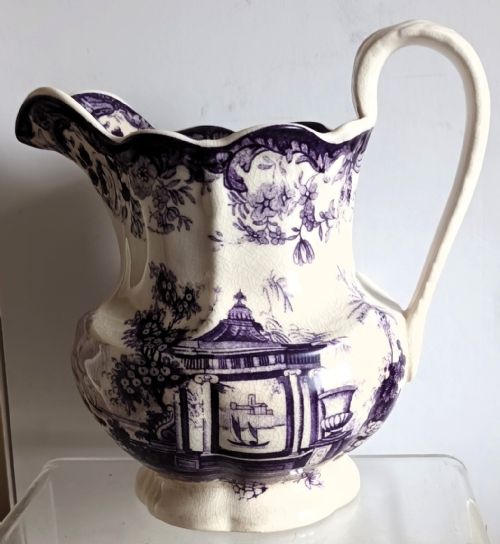


English Transferware Jug
An english transferware jug brings robust utility and sharp monochrome or polychrome narrative printing straight from the kiln to the table.
English Transferware Jug
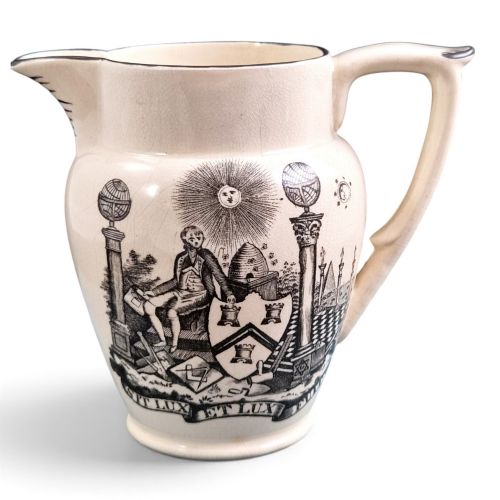
An english transferware jug represents a pinnacle of ceramic design, combining practical liquid containment with detailed printed imagery. Buyers searching for an english transferware jug encounter robust earthenware vessels decorated through copper-plate transfer printing.
The pieces on this page span the Georgian and Victorian eras, alongside specific dates around 1800. Forms range from large one-gallon vessels and footbath jugs down to cream jugs and mask head jugs.
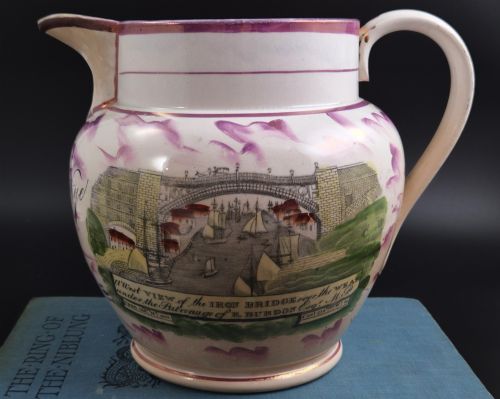
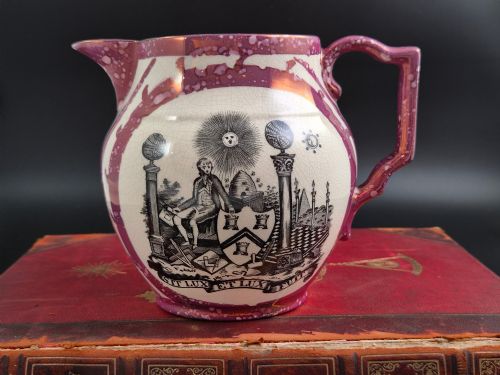
Origins trace directly to English potteries producing creamware, pearlware, and standard earthenware bodies. Blue and white decoration predominates, alongside distinctive pink splash lustre and magenta transfer work.
Materials and Technique
Potters formed these vessels from local earthenware, creamware, or pearlware bodies, shaping them on the wheel or pressing them into moulds. Handle application and spout formation required skilled hand-finishing before the initial biscuit firing.
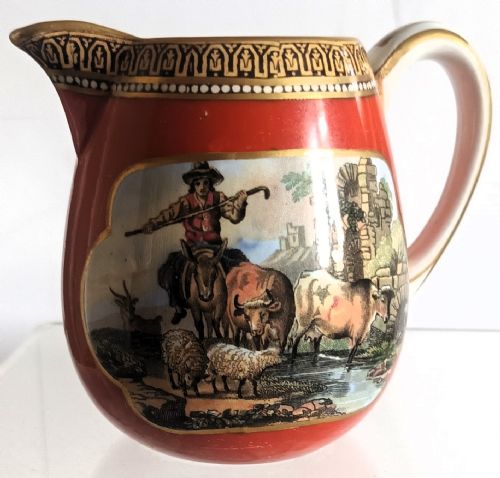
Decoration relied on copper-plate transfer printing, where an engraved design was pulled onto tissue paper and applied to the porous ceramic surface. Artisans frequently added hand-painted enamel highlights, gilt accents, or metallic lustre glazes over the printed transfer before a final glaze firing.
The inventory spans the Georgian and Victorian periods, including pieces dated specifically around 1800, 1810, 1830, and 1859.
Assessing Quality
Quality rests upon the crispness of the transfer print and the registration of the copper-plate impression across the curved body. Finer examples maintain clean lines without blurring, smudging, or overlapping at the seams.
The secondary embellishments dictate the upper tier of the range, particularly the application of pink splash lustre, enamel colouring, and gilding. A well-potted body with balanced proportions and a stable handle demonstrates superior craftsmanship.
The English Transferware Jug Glossary
- Transferware
- Ceramic pottery decorated by pulling an engraved copper-plate design off paper onto the clay body. This method allowed intricate topographical and narrative scenes to be reproduced consistently.
- Creamware
- A refined earthenware developed in Staffordshire featuring a pale yellow or creamy lead glaze. It provided a smooth, light ground ideal for black or coloured transfer prints.
- Pearlware
- An improved Staffordshire earthenware containing a small amount of cobalt in the glaze to neutralize the natural yellow tone of the clay. This created a bluish-white surface reminiscent of Chinese porcelain.
- Lustre Glaze
- A metallic film applied over the fired glaze to produce an iridescent or reflective surface. Sunderland pink splash lustre relies on this technique to create mottled pink patterns.
- Mask Head Jug
- A pitcher featuring a moulded human or animal face beneath the spout. These sculptural forms often date to the transition between the eighteenth and nineteenth centuries.
English Transferware Jug: Frequently Asked Questions
How were these jugs used?
These vessels served practical daily functions carrying water, milk, or beer at the table. Larger examples acted as pitchers or footbath jugs, while smaller ones functioned as cream jugs.
Beyond utilitarian tasks, many pieces recorded commemorative events, shipping scenes, or political subjects, making them display items in domestic interiors.
How do I date an antique jug?
Dating relies on stylistic markers, ceramic bodies, and specific subjects recorded on the piece. Creamware and pearlware bodies typically point toward the Georgian era, while robust earthenware and specific colour palettes can indicate the Victorian period.
Inscribed dates, named ships, and historical events like the Boston State House provide narrow chronological windows for individual pieces.
What is transfer printing?
Transfer printing is a method of applying a printed design to pottery using an engraved copper plate. The design is inked, transferred to tissue paper, and rubbed onto the unglazed or biscuit-fired ceramic.
This technique revolutionized pottery production by enabling detailed pictorial scenes, such as the Pine Cone decoration or architectural views, to be applied rapidly.
How do I display lustre jugs?
Displaying lustre jugs requires placement where ambient light can catch the metallic glaze and enamel highlights. Open shelving or cabinets with good illumination allow the pink splash effects and transfer prints to stand out.
Ensure stability on flat surfaces, as these earthenware pieces have substantial weight when sized as gallon jugs or footbaths.