



English Style Settee
An English style settee brings relaxed country house comfort and traditional craftsmanship into a room.
English Style Settee
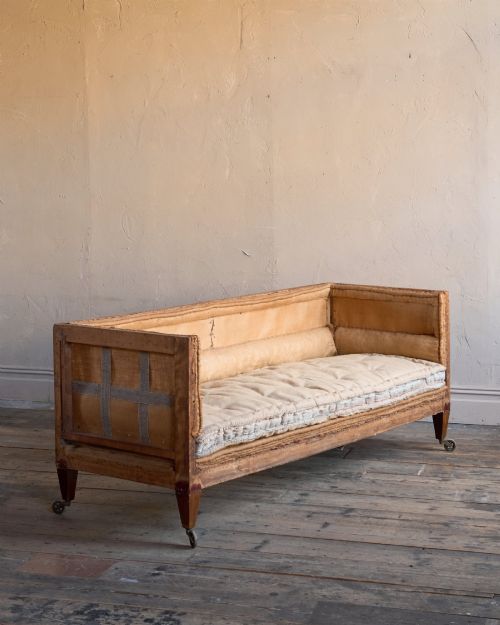
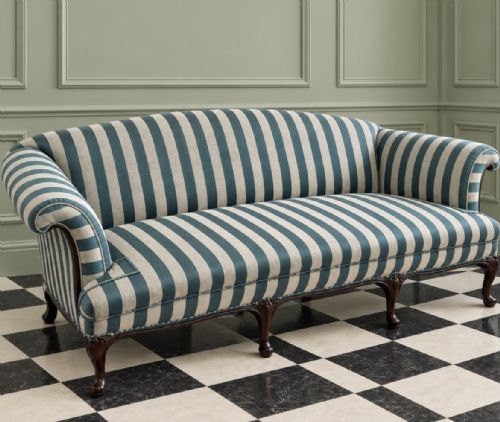
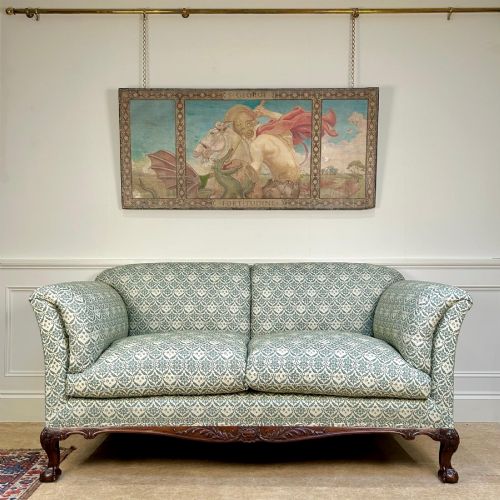
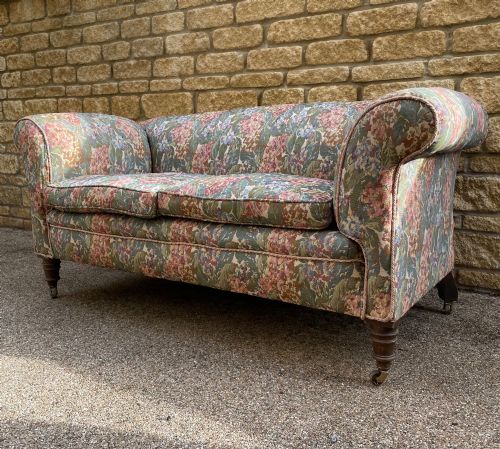
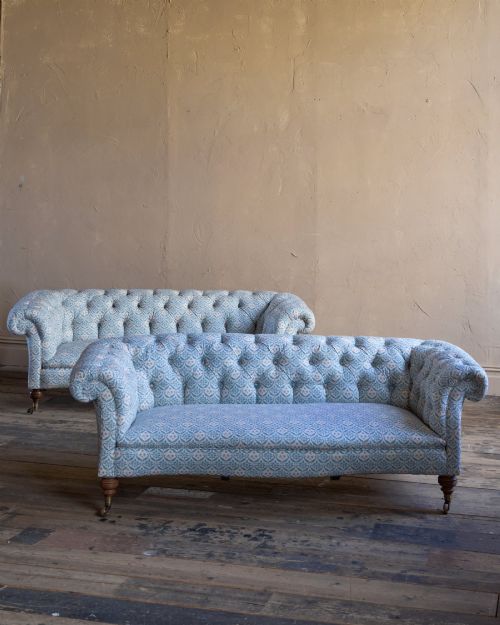
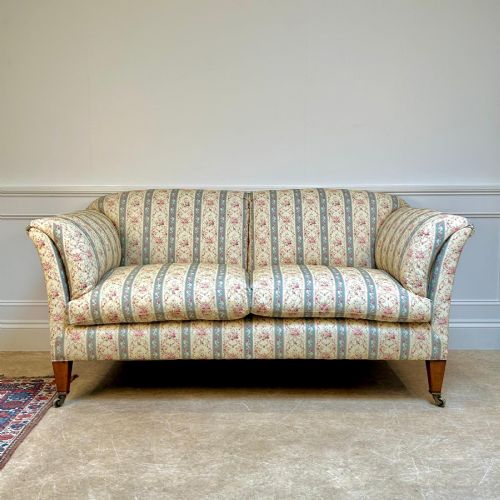
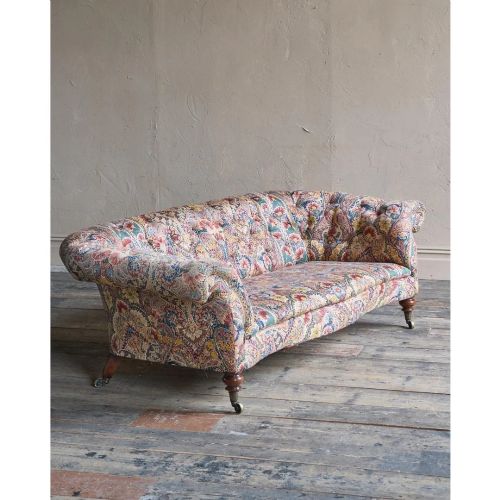
An english style settee represents traditional seating forms spanning the nineteenth and twentieth centuries, taking the shape of deep seated country house sofas, drop arm models, and formal revival designs. These pieces range from substantial upholstered chesterfields to carved giltwood frames and painted wooden settees.
The selection on this page leans heavily towards nineteenth century and Edwardian country house pieces, alongside revival styles that mirror earlier Georgian and Regency aesthetics. Buyers encounter everything from button back settees in cotton and calico to camel back silhouettes and Knole sofas.
Originating primarily from British workshops, these settees serve as versatile living room seating that combines generous proportions with period character. They range from simple timber framed settees to signature sprung upholstered designs built for sustained comfort.
Assessing quality and craftsmanship
Quality rests in the integrity of the underlying timber frame and the depth of the upholstery build, where traditional hand tied springs and robust hardwood structures separate standard pieces from exceptional examples. Finer makers ensure balanced proportions and durable internal webbing that maintains support over generations.
Surface finish and textile choice further distinguish individual pieces, from finely carved or gilded wooden frames to the precision of hand applied buttoning and upholstery matching. Original brass castors and intact period fabric finishes elevate the standing of a settee.
English Style Settee Retail Price Guide 2026
Typical asking prices for english style settee among the pieces listed under this phrase on Sellingantiques today, from the lower quarter to the upper quarter. They describe what is for sale here now, not the wider market.
The listings span the nineteenth century through the 1930s, featuring mahogany, walnut, brass, and fabrics like cotton and damask.
Howard and Sons
The English Style Settee Glossary
- Chesterfield sofa
- A traditional upholstered sofa characterised by deep buttoning and rolled arms of equal height to the back. This form is designed for formal or relaxed domestic spaces.
- Knole sofa
- An early upholstered settee style featuring adjustable or hinged sides that can be lowered or raised. It originated at Knole House in Kent.
- Drop arm
- A mechanical sofa arm that lowers on one or both sides to create a daybed or lounging surface. This feature appears on nineteenth century upholstered seating.
- Camel back
- A classic sofa or settee backrest shape that rises in a smooth, continuous convex curve resembling a camel's hump. It is frequently associated with Chippendale and Georgian revival styles.
- Damask
- A reversible figured fabric traditionally woven in silk, wool, or cotton, featuring intricate patterns visible on both sides. It is used for formal upholstery.
English Style Settee: Frequently Asked Questions
How do I choose the right size settee?
Consider the overall width and depth of the frame, especially when fitting a piece into a traditional drawing room or sitting area. Deep seated country house models require adequate floor space to maintain proportion in the room.
Measure doorways and stairwells carefully before purchase, as nineteenth century frames and large sofas often have substantial solid timber dimensions that do not easily navigate tight turns.
What defines an english country house sofa?
These sofas prioritise deep proportions, generous cushioning, and comfortable upholstery designed for relaxed everyday living rather than strict formal posture. They often combine understated wooden feet with soft fabric coverings.
Over time, these pieces acquired a gathered, lived in aesthetic that suits both traditional interiors and more eclectic modern country homes.
How do I care for antique upholstery?
Protect delicate fabrics such as damask and cotton from direct sunlight to prevent fading and textile degradation over the years. Gentle vacuuming with a soft brush attachment helps remove dust without stressing the underlying weave.
Professional cleaning is recommended for antique textile coverings to preserve the integrity of older cotton, calico, and decorative trimmings.
Are these settees suitable for daily use?
Many nineteenth and twentieth century pieces were built with robust hardwood frames and resilient internal springing designed for heavy domestic service. Well constructed frames remain entirely functional for modern seating when maintained properly.
Checking the stability of the timber frame and the condition of the internal support ensures the settee handles daily lounging comfortably.