




English Silver Scent
English silver scent bottles and boxes combine practical utility with intricate metalwork, offering collectors tactile pieces of historical dressing table culture.
English Silver Scent
When you search for english silver scent, you encounter a selection of personal fragrance containers and chatelaine items dating from the Victorian era through the mid-twentieth century. The listings on this page span scent bottles, perfume decanters, pot pourri boxes, and chatelaines produced across several decades.
You are most likely to meet sterling silver mounted glass bottles alongside solid silver boxes bearing clear hallmarks. These pieces range from small pocket companions to decorative dressing table items featuring chased cherubs or smooth geometric silhouettes.
The objects originate from notable production periods including the late Victorian years, the Edwardian period, and the Art Deco movement. Makers operating in London and Birmingham created the majority of these surviving examples.
Materials and construction methods
Silversmiths utilised sterling silver for collars, caps, and full overlays, often pairing the metal with clear, green overlay, or cut glass bodies. Hallmark stamps applied to the silver components record the assay office, standard, and date of manufacture.
Enamel work frequently appears on twentieth-century examples, where artisans fused coloured vitreous glass powders onto a guilloché engraved silver ground. Organic textures also enter the material mix through the use of crocodile or alligator skin casings fitted with silver hardware.
English Silver Scent Retail Price Guide 2026
Typical asking prices for english silver scent among the pieces listed under this phrase on Sellingantiques today, from the lower quarter to the upper quarter. They describe what is for sale here now, not the wider market.
Distinctions in quality
Quality in these items rests upon the crispness of the silver chasing and the depth of hand-cut facets on the glass or crystal bodies. Pieces featuring detailed figural repoussé work, such as cherubs, demonstrate greater artisanal input than plain collars.
The condition and completeness of delicate elements like guilloché enamel and hinged caps govern the standing of an individual piece. Makers with established reputations for luxury retail and manufacturing also elevate the desirability of the work.
William Comyns & Sons·Henry Perkins·Barnsley & Co·Adie Brothers Ltd·Mappin & Webb
The English Silver Scent Glossary
- Chatelaine
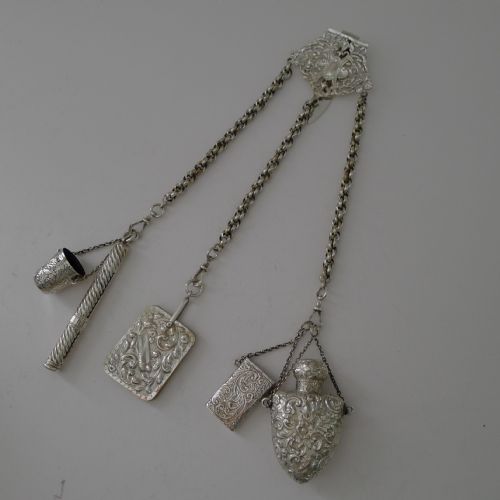
- A decorative belt hook worn with suspended chains carrying household and personal accessories. Victorian ladies used these to keep scent bottles and trinket boxes readily to hand.
- Guilloché
- A mechanical engraving technique that etches precise, intricate geometric patterns into a metal surface. Enamellists then apply translucent layers over this texture to create depth of colour.
- Repoussé
- A metalworking method where the silversmith hammers and pushes the design from the reverse side to form a raised relief. This technique created the cherub and angel motifs seen on Victorian pieces.
- Hallmark
- An official stamp or series of marks impressed on precious metals to guarantee the purity standard. These marks identify the maker, the assay office, and the year of testing.
- Overlay
- A decorative casing of cut glass or crystal enclosed within a pierced or solid silver sleeve. This technique provided extra protection while enhancing the visual contrast of the bottle.
English Silver Scent: Frequently Asked Questions
What is an english silver scent bottle?
These are small personal containers designed to hold liquid perfumes or aromatic salts, fitted with secure silver screw caps or hinged stoppers. They served both a practical function in masking odours and a social role as refined accessories.
Survival rates indicate they were prized possessions, often kept on dressing tables or suspended from chatelaines for immediate use during daily outings.
How do I read the hallmarks on these bottles?
Hallmarks typically consist of a standard mark for sterling silver, a city mark indicating the assay office, and a date letter that corresponds to a specific year of testing. Additional maker's marks identify the individual silversmith or firm responsible for the metal components.
Matching these symbols against established assay records allows collectors to verify the exact year and origin of manufacture.
What styles are common in english silver scent items?
Victorian examples frequently display ornate floral repoussé work or figural scenes featuring cherubs and angels. Later twentieth-century pieces shift towards the clean geometric lines and guilloché enamel finishes associated with the Art Deco period.
These stylistic changes reflect broader shifts in design tastes from heavy ornamentation to streamlined modernity.
How should I care for antique silver and glass?
Maintain the silver components by using a soft cloth to remove tarnish, taking care to avoid abrasive polishes that can wear away thin metal or damage adjacent glass and enamel. Store them away from direct sunlight to protect coloured glass and delicate skin casings.
Gentle handling ensures the hinges, collars, and stoppers remain secure and functional over time.