



English Silver Pepper
These English silver pepper pieces bring tactile warmth to the table, ranging from crisp George VI shakers to Georgian castors.
English Silver Pepper
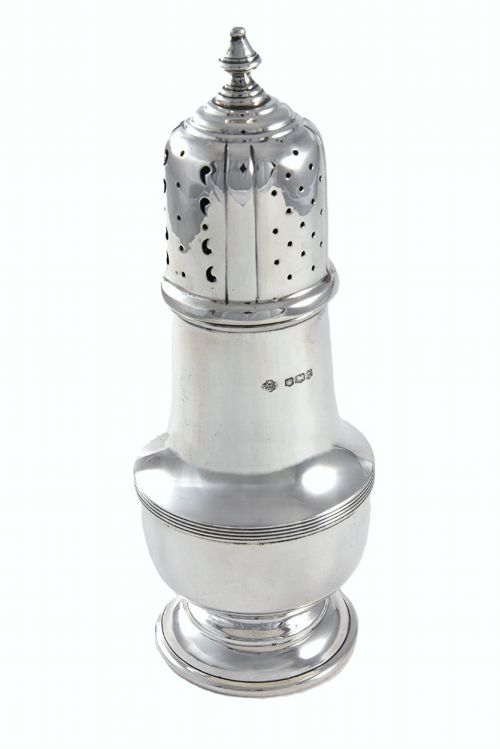
When you search for english silver pepper, you encounter a varied assortment of domestic table items designed to hold and dispense seasoning. The selection spans distinct eras, from the clean lines of early 18th Century castors by makers like Thomas Pritchard to Victorian novelty cruet sets and later George VI shakers.
Cruet sets and condiment stands appear frequently alongside standalone pepper pots and sugar shakers. Materials extend beyond solid sterling silver to include silver plate paired with cut glass, oak, and occasionally steel or velvet linings.
Stylistic influences move from Queen Anne formality through Regency utilitarian forms to elaborate Victorian figural designs and Art Deco minimalism. You are just as likely to find a cased Edwardian condiment stand as an individual George VI shaker or a novelty pepper pot pistol.
How they were made
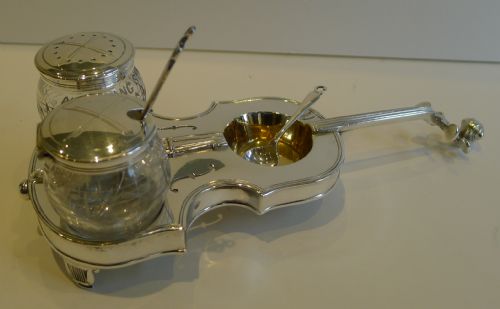
The construction of these pieces relies on traditional silversmithing techniques, including casting and hand-raising, as seen in the heavy Queen Anne castors. Sterling silver and silver plate form the primary structural housings, shaped into bulbous pots, cylindrical shakers, and intricate novelty frames such as miniature violins or butlers' trays.
Many examples incorporate secondary materials like cut glass containers for condiments and oak bases for multi-piece cruet stands. Pierced lids and screw-fitting caps are standard mechanisms for pepper pots, whilst early castors utilise bayonet or slip-in pierced covers secured by turned finials.
English Silver Pepper Retail Price Guide 2026
Typical asking prices for english silver pepper among the pieces listed under this phrase on Sellingantiques today, from the lower quarter to the upper quarter. They describe what is for sale here now, not the wider market.
Listings feature items spanning the 18th Century through the Victorian, Edwardian, and Art Deco periods, utilising sterling silver, silver plate, cut glass, oak, and velvet.
What varies in quality
The distinction between ordinary and exceptional pieces rests upon the crispness of the piercing on the pepper caps and the weight of the silver itself. Castors from the 18th Century display substantial metal thickness and deeply hand-cut armorial engraving, whereas mass-produced plated sets from the late 19th Century rely on stamped decoration.
The integrity of the internal components, such as glass inserts and original fitted velvet or silk presentation cases, elevates the desirability of cased Edwardian and Victorian cruet sets. Maker marks and clear hallmarks indicating specific Birmingham workshops provide additional confidence in the origin and metal standard.
Wilmot Manufacturing Co·Thomas Pritchard·Bricks and Sons
The English Silver Pepper Glossary
- Castor
- A small perforated vessel used for sprinkling sugar or dry seasonings over food. Early examples date to the Queen Anne period and feature heavy cast construction.
- Cruet set
- A matched group of bottles or pots for holding condiments like pepper, salt, and mustard, typically housed within a silver-plated or wooden stand.
- Hallmark
- An official stamp applied by an assay office to indicate the purity of the metal, the maker, and the year of manufacture. English silver commonly bears standard marks such as the lion passant.
- Novelty cruet
- A condiment set or pepper pot formed in a whimsical or unusual shape, such as a violin, a butler's tray, or a pistol. These pieces enjoyed popularity during the Victorian era.
English Silver Pepper: Frequently Asked Questions
How do I clean antique silver pepper pots?
Use a soft cloth and a gentle, non-abrasive silver polish formulated for antiques to remove tarnish without scrubbing away the hallmarks or surface detail. Avoid harsh chemical dips that strip the natural patina accumulated over decades.
Ensure that any glass inserts or wooden bases are removed prior to cleaning so that moisture does not become trapped inside enclosed compartments or damage vulnerable linings.
Are these pepper pots safe for daily use?
Many solid sterling silver and silver-plated pepper pots remain entirely functional for everyday dining, provided the interior is washed and dried thoroughly after holding spices. Modern ground pepper contains oils that can tarnish silver if left in contact for extended periods.
Delicate novelty items or pieces with intricate mechanical parts are better suited to occasional display or careful handling during dinner parties rather than heavy daily service.
How do I identify the date of a silver pepper pot?
Look for the assay office stamp, the date letter, and the lion passant hallmark stamped directly onto the base, body, or lid rim of the silver piece. These official marks correspond to specific active years recorded in British silver registers.
Stylistic cues such as Queen Anne baluster profiles, Regency austere shapes, or Victorian figural designs offer a secondary method for estimating the period of manufacture when hallmarks are worn.
What is the difference between a castor and a pepper pot?
A castor is traditionally a larger vessel with a securely fitting pierced lid designed specifically for dispensing caster sugar or fine spices onto food. They frequently appear as part of matched sets dating to the 18th Century.
A pepper pot is generally smaller and proportioned specifically for table seasoning, often featuring a simpler push-on or screw lid with small perforations suitable for ground black pepper.