

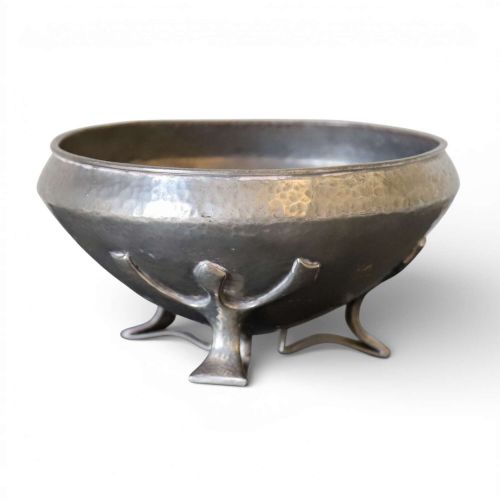


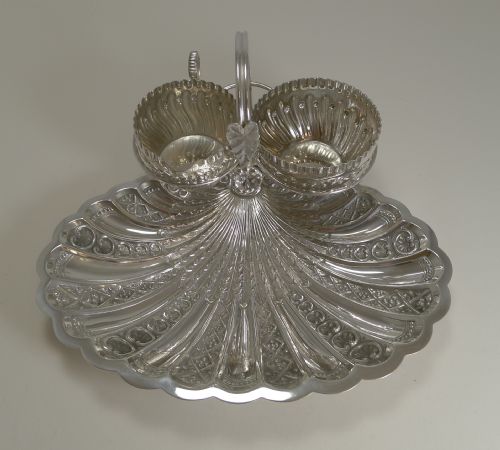


English Silver Fruit Bowl
An english silver fruit bowl brings the heavy gleam of sterling, plate, and cut crystal to the dining table.
English Silver Fruit Bowl
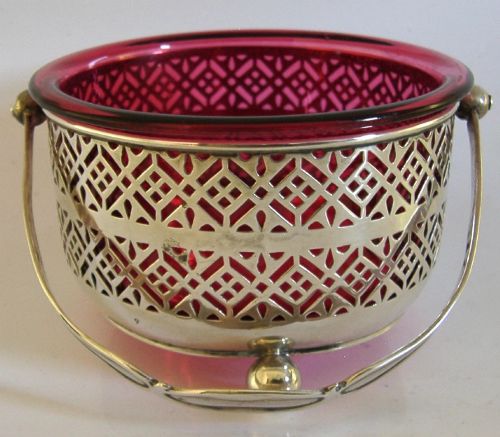
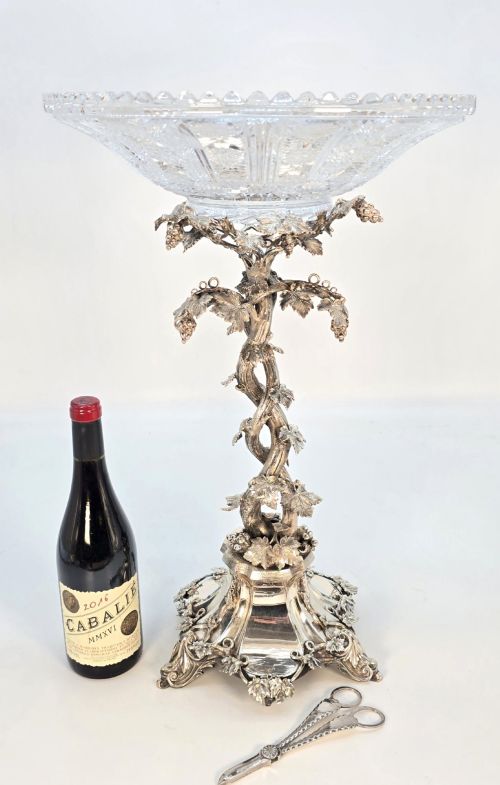
When you search for an english silver fruit bowl, you are looking at substantial vessels designed for dining tables and sideboards. These pieces range from substantial Victorian and Edwardian centrepieces to smaller swing-handled baskets and tazzas.
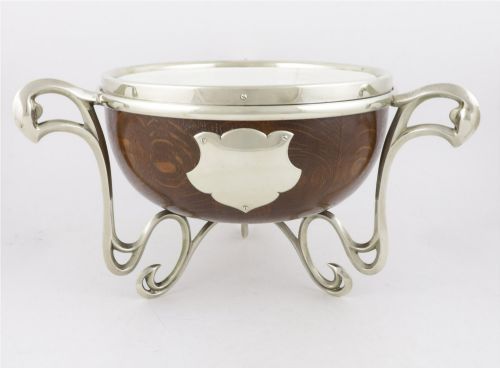
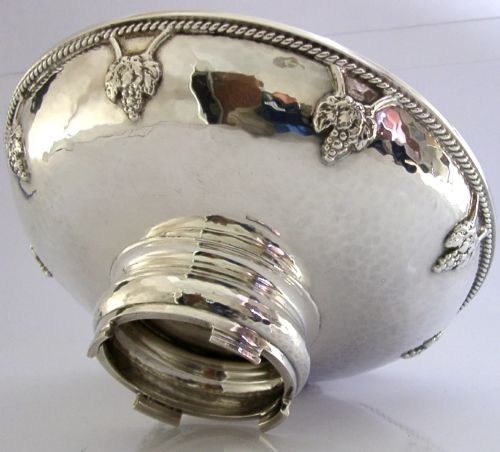
The selections on this page draw heavily from the Edwardian and Victorian eras, alongside Arts and Crafts designs. You will encounter decorative bowls, presentation pieces, and mixed-material forms that incorporate oak, ceramic, and cut glass.
Many of these forms double as table centrepieces, sugar baskets, or presentation prize bowls. The variety spans simple silver plate over copper to heavy sterling silver frameworks supporting crystal liners.
Materials and construction
Makers utilised sterling silver and silver plate combined with heavy cut glass, cut crystal, and sometimes ceramic or oak. Metal mounts and swing handles secure glass inserts or support wooden staves bound in plated bands.
Techniques varied from traditional silversmithing and piercing to pewter casting by notable workshops. Cut glass and crystal liners were deeply faceted or wheel-cut to catch candlelight on the Victorian dining table.
English Silver Fruit Bowl Retail Price Guide 2026
Typical asking prices for english silver fruit bowl among the pieces listed under this phrase on Sellingantiques today, from the lower quarter to the upper quarter. They describe what is for sale here now, not the wider market.
Listings feature pieces spanning the 18th century through the 1960s, incorporating sterling silver, silver plate, cut crystal, ceramic, and oak.
Judging the range
Quality rests in the weight of the metal and the depth of the glass cutting. Heavier sterling silver and crisply faceted crystal sit at the upper end of the scale, showing sharper detail in cast handles and rims.
The integration of mixed materials also dictates distinction. Pieces combining solid oak, ceramic, or specialised glass with well-preserved plating or hallmarks demonstrate greater ambition from the maker.
A E Jones·Liberty & Co·Oliver Baker·Royal Doulton·Gorham·Roberts and Belk
The English Silver Fruit Bowl Glossary
- Sterling silver
- A silver alloy containing 92.5 percent pure silver by mass and 7.5 percent other metals, usually copper.
- Silver plate
- A layer of silver applied to a base metal such as copper, nickel silver, or pewter.
- Tazza
- A small, broad saucer-shaped dish supported on a stem and foot, often used for serving fruit.
- Centrepiece
- A large decorative object placed in the middle of a dining table.
- Cut glass
- Glass decorated by having its surface carved or abraded with rotating wheels.
English Silver Fruit Bowl: Frequently Asked Questions
How are these bowls cleaned?
Silver plate and sterling require gentle cleaning with dedicated polishes to avoid wearing the plating down to the base metal. Glass liners lift out easily for washing in warm soapy water.
Keep abrasive materials away from both the metal mounts and the cut crystal to preserve the original surface finish.
Can I use these for actual fruit?
Most of these vessels function well for holding fruit, particularly those fitted with removable glass or crystal liners. Solid wood or ceramic versions handle dry fruit safely.
Acidic fruits should not sit on exposed silver plate for extended periods to prevent tarnishing and surface pitting.
How do I date an Edwardian piece?
Edwardian items date from the reign of King Edward VII between 1901 and 1910. Makers' marks and date letters stamped into sterling silver provide exact verification.
Stylistic cues such as lighter scrolling and neoclassical motifs also point toward this specific decade.