
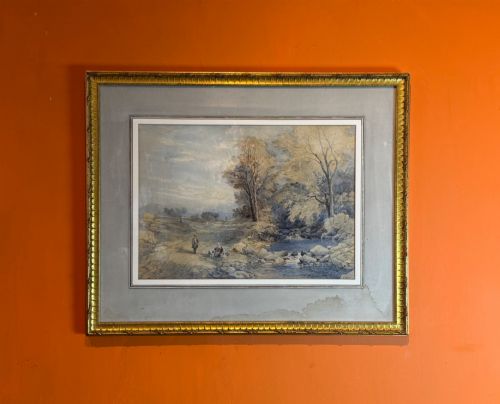


English School Watercolour Painting
An english school watercolour painting captures landscapes, portraits and coastal views created on paper across the eighteenth, nineteenth and twentieth centuries.
English School Watercolour Painting
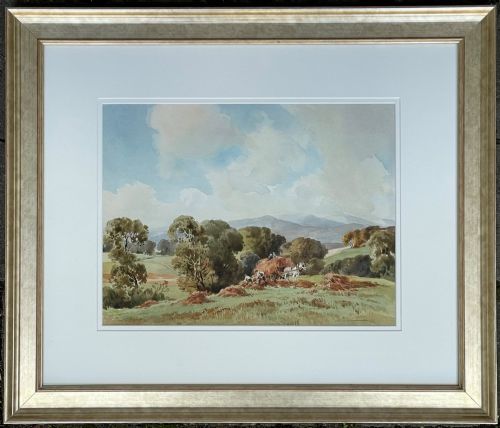
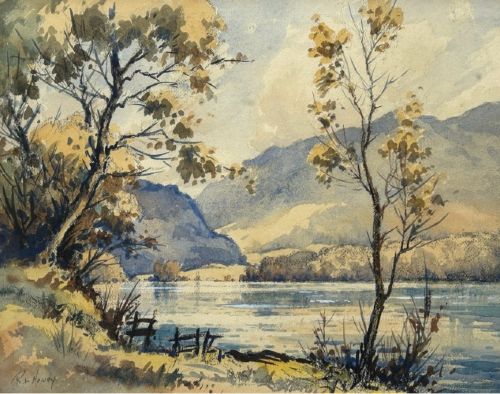
An english school watercolour painting encompasses works on paper created by British artists across the Georgian, Victorian, Edwardian and mid twentieth century periods. The inventory spans detailed botanical studies, intimate miniature portraits, still life compositions of roses and summer flowers, and expansive rural landscapes featuring rivers, lakes and castles.
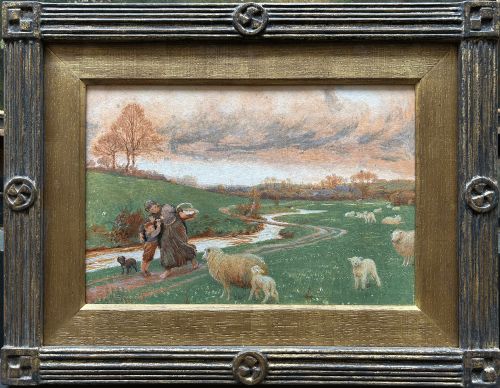
Buyers frequently encounter nineteenth century village scenes, coastal harbours with fishing boats, and topographical views executed in soft pigments. Anonymous compositions attributed simply to the English School sit alongside signed works by named regional artists and professional painters associated with specific artistic groups.
Materials and Technique
The works utilise watercolour pigment applied to paper sheets, frequently enhanced with bodycolour or gouache for opacity and pencil underdrawing for structural precision. Many examples incorporate gum arabic within the medium to deepen tone and add a subtle surface sheen to shadowed areas.
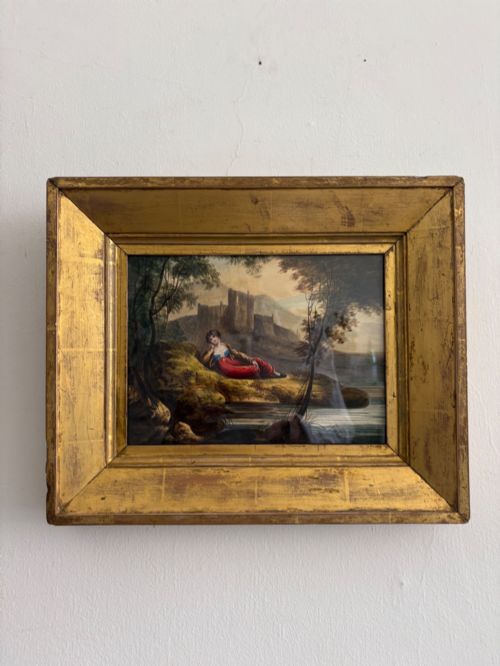
Framing relies upon traditional materials, enclosing the delicate painted surfaces behind glass within wooden surrounds, often finished with gilt leaf or mounted inside period timber frames.
Current listings feature eighteenth, nineteenth and twentieth century works on paper, spanning regional landscapes, botanical studies and coastal scenes.
Evaluating Quality
Superior examples demonstrate confident brushwork, precise control of translucent washes and careful handling of natural light, whereas lesser pieces display flat application and static composition. The sophistication of the drawing beneath the pigment often separates competent amateur output from professional execution.
Condition plays a central role, distinguishing works that retain their original pigment vibrancy from sheets affected by heavy fading, foxing or chemical discoloration caused by acidic backing boards.
Percy Lancaster·Robert Leslie Howey·Frederick Walker·David Cox·James Hayllar·Thomas Cooper Moore·Alice Anne Renshaw·George Graham·Arthur Tucker·J Laporte·William Egley·Harry Bright·Edward Horace Thompson·William Hough·A G Hayward·William Wyld·Will Anderson·Henry Barlow Carter·Frederick Mayor·Percy Brooke·Amos Green·Thomas Bush Hardy·Fred Stead·Robert Winchester Fraser·William Henry Hunt
The English School Watercolour Painting Glossary
- Watercolour
- A paint consisting of natural pigment suspended in a water soluble binder, traditionally applied to handmade paper in translucent washes.
- Gouache
- An opaque watercolour medium containing pigment mixed with a white filler, utilised to introduce solid highlights and dense areas of colour.
- Grisaille
- A monochrome painting executed entirely in shades of grey, frequently employed for preparatory sketches or tonal studies.
- Staithes Group
- A loose association of British painters inspired by French Impressionism, working primarily in Yorkshire coastal locations during the late nineteenth and early twentieth centuries.
- Foxing
- The appearance of brownish spots on antique paper caused by chemical reactions within the pulp or environmental exposure over long periods.
English School Watercolour Painting: Frequently Asked Questions
How should I display an antique watercolour?
Keep works away from direct sunlight to prevent the fugitive pigments from fading over time. Utilise UV filtering glass and acid free mounts during framing.
Maintain stable indoor humidity levels to protect the historic paper support from warping or developing foxing spots.
Are these paintings usually signed by the artist?
Many works bear the artist signature, monogram or contemporary inscription on the front or reverse of the sheet. Others remain anonymous under the broader designation of the English School.
Unsigned examples are frequently attributed through stylistic comparison, subject matter or archival records related to known sketching tours.
What is the difference between watercolour and gouache?
Traditional watercolour relies on translucent washes where the white of the paper illuminates the pigment from beneath. Painters layer thin applications to build depth and atmospheric tone.
Gouache incorporates opaque white fillers that block light entirely, allowing artists to paint light details directly over darker washes and create solid areas of colour.
How can I tell a nineteenth century painting from a later copy?
Examine the paper stock for watermark evidence, texture and natural ageing characteristics typical of nineteenth century manufacturing methods. Handmade or early machine made wove papers differ significantly from modern synthetic sheets.
Consider the framing materials, backing boards and fastening methods, as original Victorian framing components often provide reliable chronological markers.