




English Satinwood Furniture
English satinwood furniture brings luminous timber and refined marquetry into a room, offering both Georgian elegance and later Revival craftsmanship.
English Satinwood Furniture
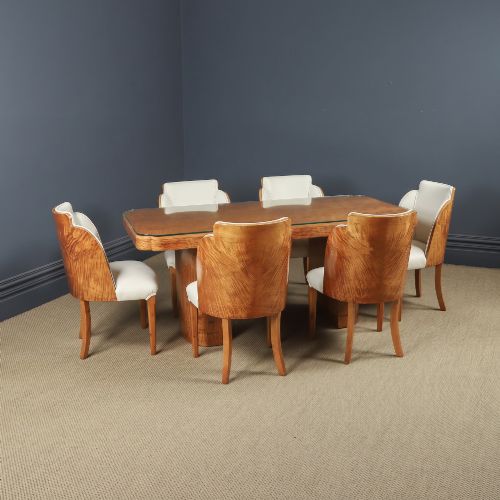
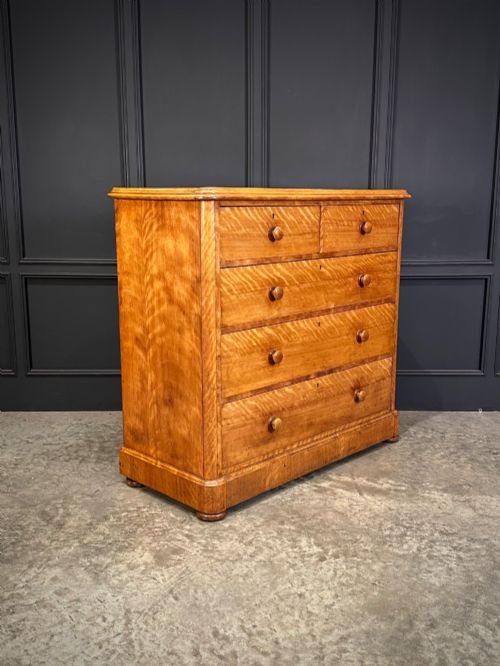
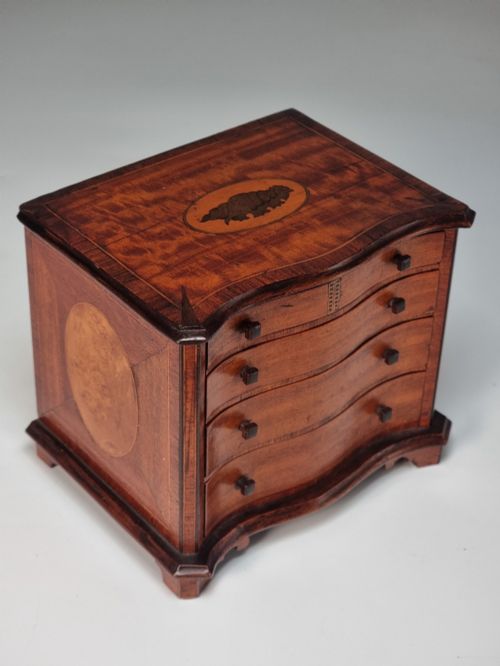
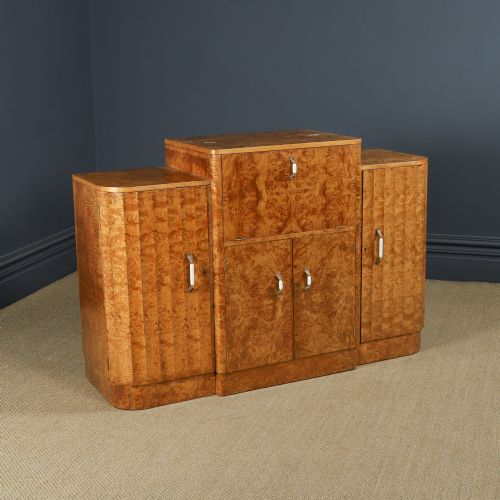
English satinwood furniture encompasses a range of refined domestic forms, from Georgian side tables and serpentine chests to Edwardian music cabinets and Art Deco dining suites. These pieces showcase the striking blonde timber, often contrasted with darker woods like mahogany, ebony, and rosewood.
The examples found here span multiple centuries and stylistic revivals, with nineteenth-century Sheraton Revival pieces appearing alongside eighteenth-century originals and twentieth-century cocktail cabinets. Buyers encounter everything from miniature serpentine chests to large dining tables and sideboards.
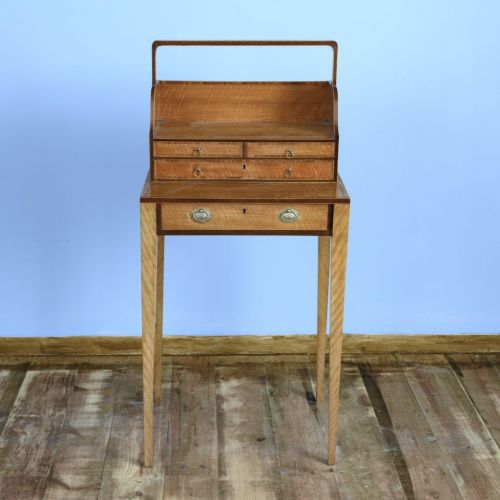
Practical forms such as writing tables, desks, bureaux, and dressing table mirrors demonstrate how makers utilised this timber for functional room settings. Occasional tables and cabinets complete the selection, bringing delicate neoclassical lines or later decorative flourishes to domestic interiors.
Materials and construction
Makers built these pieces using solid timbers and fine veneers, laying satinwood over supportive carcases of mahogany or pine. Tradesmen incorporated contrasting stringing and banding in ebony, rosewood, and maple to define panels and drawers.
Detailed marquetry and inlay work distinguish many surfaces, combining various woods to create floral or geometric motifs. Brass handles, escutcheons, and glass elements complete the structural detailing on cabinets and desks.
English Satinwood Furniture Retail Price Guide 2026
Typical asking prices for english satinwood furniture among the pieces listed under this phrase on Sellingantiques today, from the lower quarter to the upper quarter. They describe what is for sale here now, not the wider market.
Some nineteenth-century bedside cabinets masqueraded as mundane pot stands until their hinged tops revealed hidden compartments.
Standards of craftsmanship
Quality rests primarily in the selection of the timber and the precision of the veneer work, where tightly figured grain demonstrates superior stock. The crispness of inlaid stringing and the integration of marquetry details reveal the maker's discipline.
Structural integrity, including the smooth operation of serpentine drawer fronts and the stability of joints, separates standard workshop production from exceptional cabinet-making. Original brass hardware and well-preserved surface polishes maintain the integrity of the piece.
A. F. Lloyd, Bideford·Harry & Lou Epstein·Lamb of Manchester
The English Satinwood Furniture Glossary
- Satinwood
- A hard, yellow timber with a lustrous, reflective grain utilised extensively in fine cabinet-making from the eighteenth century onwards. It takes a high polish and accepts delicate inlay exceptionally well.
- Marquetry
- The art of forming decorative patterns by fitting together veneer slices of different woods, metals, or shells. Craftsmen applied these pictorial designs to table tops, cabinet doors, and bureau falls.
- Serpentine
- A curved furniture front characterised by a convex centre flanked by concave ends. This undulating shape requires advanced woodworking skill to construct and fit accurately.
- Cheveret
- A small freestanding writing table fitted with a small set of drawers or a letter rack on top. These compact pieces were designed for domestic writing and correspondence.
- Stringing
- Thin lines of contrasting wood inlaid into grooves on table edges, drawer fronts, and leg shafts. This linear detail defines borders and accentuates structural forms.
English Satinwood Furniture: Frequently Asked Questions
What is English satinwood furniture?
English satinwood furniture consists of cabinets, tables, desks, and chests made using the pale, light-reflecting timber native to tropical regions but worked by British cabinet-makers. These items range from eighteenth-century neoclassical designs to twentieth-century Revival and Art Deco pieces.
Makers prized the timber for its golden sheen, frequently combining it with darker woods to create high-contrast decorative surfaces for formal rooms.
How do I date satinwood pieces?
Dating relies on stylistic markers, construction methods, and the specific historical revival periods represented in the piece. Eighteenth-century examples display restrained neoclassical proportions, while nineteenth-century Sheraton Revival items often incorporate heavier framing and elaborate marquetry.
Examining drawer linings, backboards, and secondary timbers helps confirm the manufacturing era and distinguishes original Georgian production from later copies.
Where were these pieces used?
These items served functional roles in principal reception rooms, morning rooms, bedrooms, and studies. Ladies' writing desks, dressing table mirrors, and bedside cabinets populated private quarters, while large dining suites and sideboards occupied formal dining spaces.
Compact forms like occasional tables and music cabinets were designed to fit easily into smaller domestic interiors.
How should I care for satinwood?
Maintenance involves keeping pieces away from direct sunlight and maintaining stable room humidity to protect the delicate veneers and timber ground. Regular dusting with a soft, dry cloth preserves the polished surface without the need for heavy chemical polishes.
Avoiding excessive moisture and sudden temperature changes prevents the timber from warping and keeps the intricate inlay secure.