





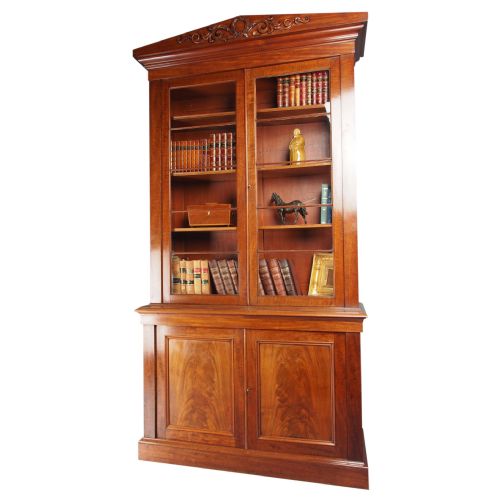


English Regency Library Furniture
English regency library furniture unites utilitarian design with cabinet-making of exceptional ambition, offering scholars and collectors tactile connection to the domestic interiors of the early nineteenth century.
English Regency Library Furniture
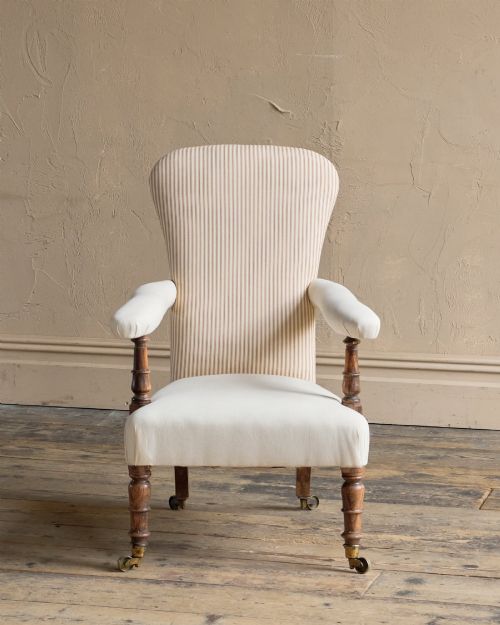
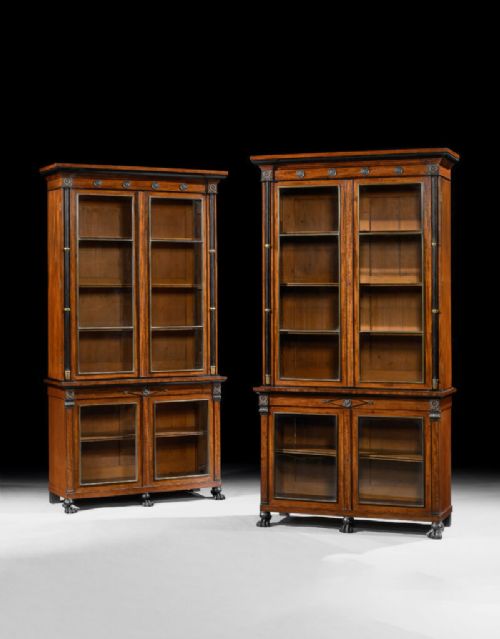
English regency library furniture encompasses the bespoke utilitarian pieces built for the domestic study during the Regency, George IV, and William IV periods, alongside later nineteenth-century revivals. The surviving forms concentrate heavily on bookcases, library tables, centre tables, and steps designed to service extensive private collections of books.
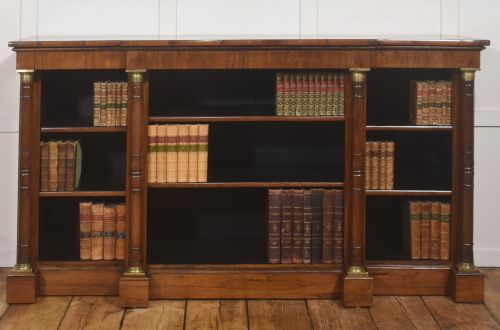
The primary forms found here include breakfront open bookcases, brass-inlaid library tables, and metamorphic seating that converts from armchairs into library steps. These pieces range from grand scale architectural bookcases down to country house Gothic pieces and revolving folio stands.
Most examples hail from the Regency period itself, constructed in dense tropical hardwoods and native timbers like mahogany, rosewood, and burr oak. Buyers looking for English regency library furniture will encounter both documented maker-stamped pieces and uncredited vernacular interpretations of the dominant classical and Gothic revival styles.
Assessing Quality and Execution
The tier of a piece rests upon the selection of timber and the ambition of its secondary woods, such as pollard oak or gonçalo alves. Superior examples display uninterrupted grain matching across wide breakfront bookcase doors and meticulous brass inlay work embedded flush into the timber.
Construction fidelity dictates longevity, distinguishing workshop-built tables with pegged joints and solid drawer linings from later factory output. The precision of mechanical elements, such as the folding mechanisms in metamorphic armchairs and library steps, separates master cabinet-making from standard production.
Attribution to known workshops elevates standing, particularly when maker stamps or distinct architectural motifs link a library table or cabinet directly to prominent firms like Gillows. Proportion and scale remain crucial, with top-tier pieces maintaining architectural balance whether executed as a grand breakfront bookcase or a compact centre table.
English Regency Library Furniture Retail Price Guide 2026
Typical asking prices for english regency library furniture among the pieces listed under this phrase on Sellingantiques today, from the lower quarter to the upper quarter. They describe what is for sale here now, not the wider market.
The furniture spans multiple design movements, encompassing Regency classicism, William IV styling, and Gothic revival architecture.
Marsh & Tatham·Gillows·James Winter & Sons·Gillows of Lancaster and London·J.Jarvis
The English Regency Library Furniture Glossary
- Breakfront
- A cabinet or bookcase whose central section projects forward from the flanking wings. This architectural arrangement creates dynamic shadow lines across large library walls.
- Gonçalo alves
- A dense tropical hardwood imported during the nineteenth century, prized for its dramatic dark figuring and distinctive contrasting grain patterns. Makers utilised it for high-status library tables.
- Metamorphic
- Furniture designed with concealed mechanisms to transform from one functional object into another, such as an armchair converting into library steps. These pieces demonstrate ingenious nineteenth-century mechanical design.
- Folio stand
- A specialised piece of furniture designed to hold large books, prints, or unbound sheets of paper flat or at an adjustable reading angle. They often feature folding wooden frames supported on trestle bases.
- Bergère
- An enclosed upholstered armchair with wooden sides and a cane or upholstered back, frequently utilised in Regency libraries for comfortable reading. The frame is often ebonised or carved from mahogany.
- Crenelated cornice
- A decorative top moulding shaped to resemble the battlements of a medieval castle, frequently seen on Gothic revival bookcases and cabinets. It introduces architectural fortification to domestic library furniture.
English Regency Library Furniture: Frequently Asked Questions
What is a metamorphic library armchair?
A metamorphic library armchair is a clever seating form engineered with hidden pivots and folding sections that transform the chair into a flight of wooden steps. This allowed nineteenth-century readers to reach high bookshelves without dragging separate ladders across the room.
Makers concealed the mechanical joints within the mahogany frame so the piece functioned as a comfortable seat until conversion. They represent some of the most inventive engineering found in period domestic interiors.
How do I distinguish Regency library tables from centre tables?
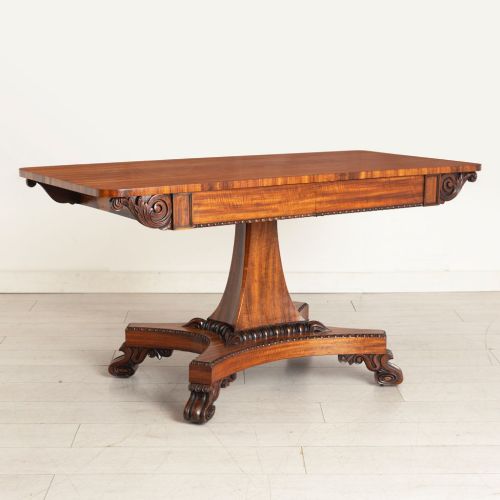
Regency library tables typically feature fitted drawers beneath the top and heavier under-framing designed for writing and archival sorting. Centre tables are finished on all four sides to stand free in the middle of a room, often lacking storage drawers.
Library tables frequently incorporate leather writing surfaces and tilt-top mechanisms, whereas centre tables prioritise architectural leg supports and decorative top veneers like rosewood or gonçalo alves.
Where were folio stands placed in a Regency library?
Folio stands stood near reading desks or library tables to hold oversized books, maps, and unbound architectural plates safely open. Their adjustable frames allowed scholars to consult large volumes without straining the bindings.
Because they were designed to be moved around the study, they often feature sturdy trestle bases and folding wooden frames built from mahogany or rosewood.
What timber was most popular for Regency bookcases?
Mahogany remained the dominant timber for large library bookcases throughout the Regency period due to its structural strength and rich reddish-brown tone. Cabinet-makers also utilised rosewood for smaller open bookcases and decorative veneers.
In regional country houses, native woods like oak and burr oak saw frequent use, offering a distinct alternative to imported tropical hardwoods.