




English Porcelain Mantel Ornaments
English porcelain mantel ornaments bring character and period charm to a chimney piece through figures, animals, and vases crafted in ceramic.
English Porcelain Mantel Ornaments
These english porcelain mantel ornaments encompass decorative figures, pottery groups, and sculptural vases designed to adorn a room.
The selections span the Georgian and Victorian eras, bringing together Staffordshire animal pairs, Derby porcelain beasts, and glazed figures.
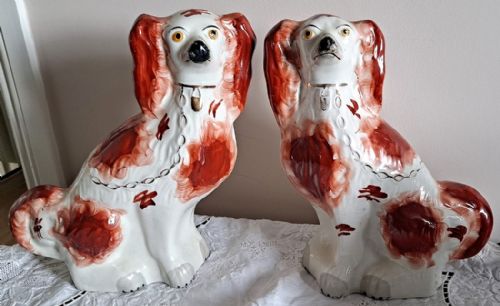
Buyers encounter Staffordshire greyhounds, spaniels, poodles, and pairs of wild boars alongside Derby porcelain stags and classical figures.
How they were made
Potters shaped these pieces using ceramic and earthenware before applying lead glazes and hand-painted details.
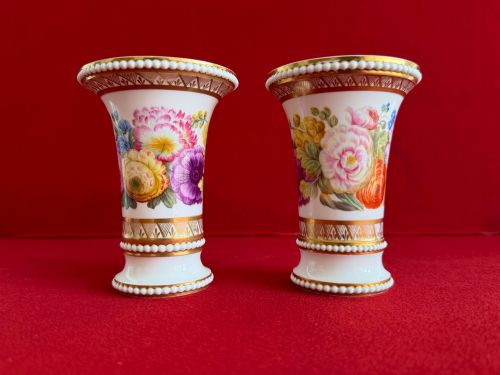
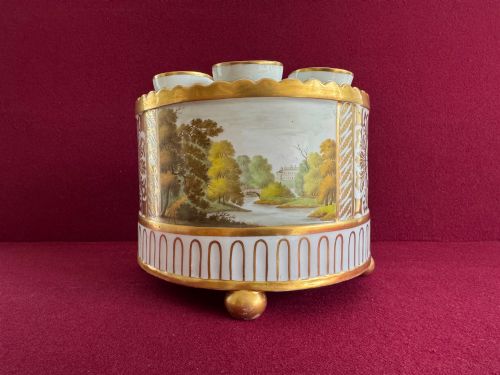
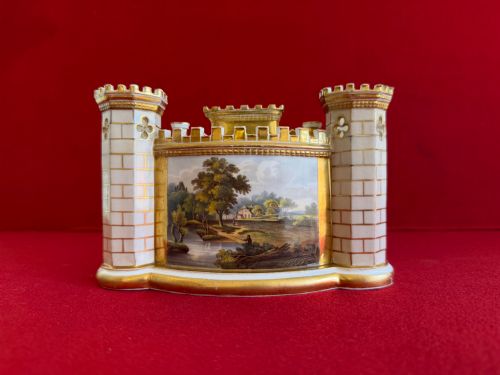
Gilt accents and enamel highlights frequently finish the surfaces, adding bright colour and contrast to the glazed ceramic bodies.
English Porcelain Mantel Ornaments Retail Price Guide 2026
Typical asking prices for english porcelain mantel ornaments among the pieces listed under this phrase on Sellingantiques today, from the lower quarter to the upper quarter. They describe what is for sale here now, not the wider market.
Materials recorded on this page include ceramic, earthenware, porcelain, and Parian, finished with lead glaze and gilt.
What varies in quality
The refinement of the modelling and the crispness of the hand-painted decoration distinguish finer examples from simpler work.
Pairs matched for symmetry and the preservation of the original glaze and gilding elevate the standing of a mantel ornament.
Derby·Royal Worcester·Staffordshire·Copeland
The English Porcelain Mantel Ornaments Glossary
- Bocage
- A background of applied foliage and leaves often found behind 18th-century porcelain figures. It creates a leafy arbour effect around the subject.
- Parian
- A fine white porcelain resembling carved marble, developed in the 19th century. Figures rendered in this material have a matte, sculptural surface.
- Staffordshire
- Pottery produced in the English county famous for utilitarian and decorative figures. Spaniels and greyhounds are typical subjects from this region.
- Lead glaze
- A glossy coating applied to pottery before firing to waterproof the ceramic body. It imparts a characteristic shine to the surface of the ornament.
English Porcelain Mantel Ornaments: Frequently Asked Questions
What periods do these ornaments cover?
The pieces span the Georgian and Victorian eras, taking in the 18th and 19th centuries.
Most examples date from the Victorian period, particularly the middle and later decades of the 19th century.
Are these figures usually found in pairs?
Many of the figural groups and animal ornaments were produced as balanced pairs designed to sit at either end of a mantelpiece.
Single figures and sculptural vases also appear among the selections.
What materials make up these mantel pieces?
The pieces are constructed from ceramic, earthenware, and porcelain bodies finished with lead glaze.
Decoration frequently includes enamel colours and gilt highlights applied over the glaze.
How do animal subjects differ between eras?
Georgian examples such as those from Derby often feature naturalistic creatures like stags and wild boars set against leafy bocage.
Victorian pieces focus more on domestic animals and pets, including spaniels, greyhounds, and poodles.