




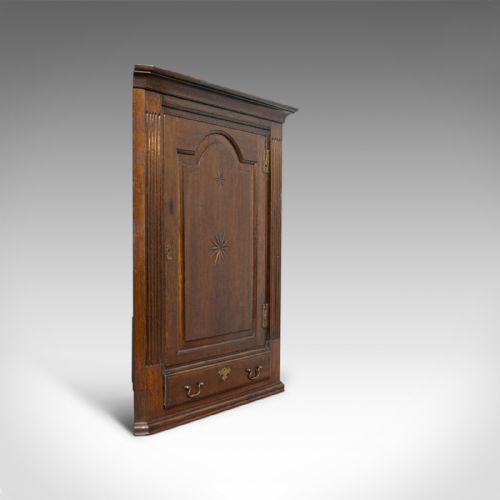


English Oak Wall Cabinet
An English oak wall cabinet brings robust timber and quiet utility to a room, offering compact storage that mounts securely out of the way.
English Oak Wall Cabinet
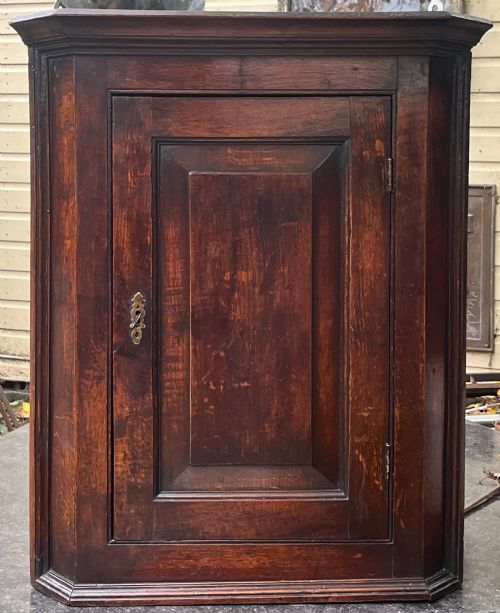
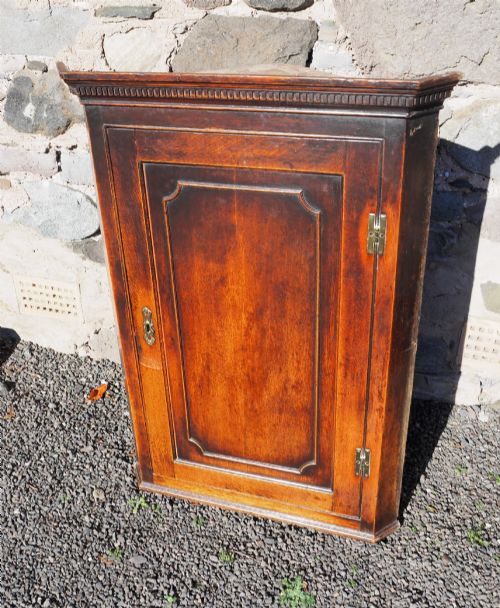
An English oak wall cabinet is a hanging cupboard designed to utilise vertical space, frequently taking a triangular form to fit neatly into room corners. These functional pieces appear in various historical iterations, ranging from simple 17th-century livery cupboards to refined George III glazed display units and later Victorian interpretations.
The selection on this page demonstrates the enduring appeal of oak, often accompanied by mahogany crossbanding, fruitwood inlay, or brass hardware. Most examples function as corner cupboards, hanging spice cupboards, or small wall-mounted display cases intended for domestic settings.
How they were made
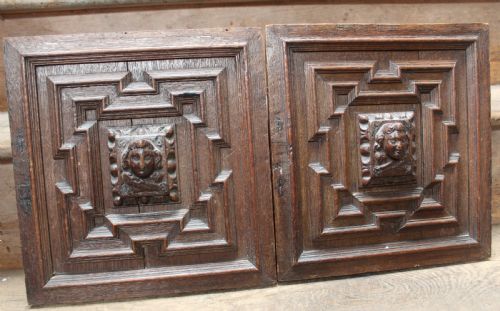
Cabinet makers built these wall-mounted cupboards using solid oak panels joined with traditional methods to withstand the strain of hanging. Secondary materials such as mahogany crossbanding, fruitwood inlay, and ebonised wood added decorative contrast to the primary timber surfaces.
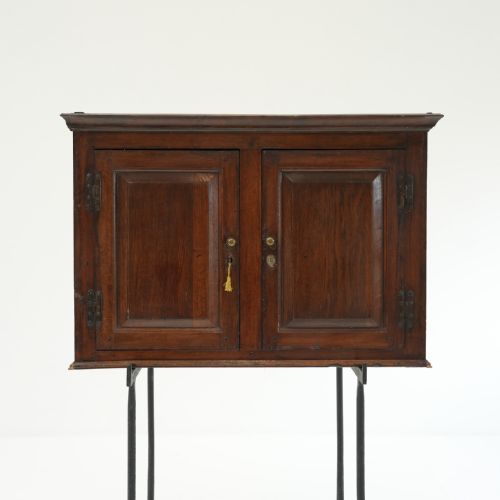
Glazing bars, wrought iron hinges, and brass escutcheons provided structural support and visual definition on doors that protected contents from dust. Hand-cut dovetails typically secure the small drawers found inside or beneath the main cupboard sections.
English Oak Wall Cabinet Retail Price Guide 2026
Typical asking prices for english oak wall cabinet among the pieces listed under this phrase on Sellingantiques today, from the lower quarter to the upper quarter. They describe what is for sale here now, not the wider market.
Listings span from the 17th century through the Georgian and Victorian eras, utilising oak alongside mahogany, glass, and brass.
What varies in quality
The distinction between standard and superior pieces rests on the crispness of the timber grain, the subtlety of any inlay work, and the integrity of the original joints. Grain selection in the oak, alongside well-executed mahogany crossbanding, separates simpler utilitarian cupboards from more ambitious parlour pieces.
Original hardware, untouched patination on the timber, and well-proportioned cornices elevate the standing of a cabinet. The presence of period glass panes and working locks with matching keys further distinguishes finer examples from altered or heavily restored items.
The English Oak Wall Cabinet Glossary
- Crossbanding
- A decorative border technique where thin strips of veneer, such as mahogany, are laid perpendicular to the surrounding grain. This frames the primary oak panel of the door or drawer front.
- Livery cupboard
- A traditional storage piece originally used for food and candles before evolving into a general household cabinet. These early forms often feature ventilation slats or turned spindles.
- Escutcheon
- A protective plate surrounding a keyhole, usually fashioned from brass. It guards the surrounding wood from wear caused by the insertion of the key.
- Cornice
- The moulded projection that crowns the top of a cabinet. It provides a visual cap to the piece and reflects the architectural tastes of the period.
- Bow front
- A convex curved cabinet front that projects outward in a smooth arc. This shape softens the angular geometry typical of corner cupboards.
English Oak Wall Cabinet: Frequently Asked Questions
How do I hang a heavy oak wall cabinet safely?
These wall-mounted pieces require sturdy fixings secured directly into wall studs or masonry rather than plaster alone. Professional installation ensures the substantial weight of the oak timber and its contents is supported safely.
Weight distribution matters greatly with corner units, so check that the internal mounting brackets or original hanging straps remain strong and sound before loading the shelves.
What rooms suit an antique hanging cupboard?
Kitchens and dining rooms make natural homes for these cabinets, echoing their historical use for storing spices, crockery, and provisions. Hallways and studies also benefit from the compact footprint of a wall-mounted design.
Placing a corner cupboard in an unused room angle utilises dead space effectively while introducing period character to plain walls.
How do I tell a Georgian oak cabinet from a Victorian copy?
Georgian pieces generally exhibit hand-sawn timber marks, pegged mortise and tenon joints, and subtle patination developed over centuries of use. Secondary woods and construction quirks often point to eighteenth-century workshop practices.
Victorian and Edwardian revivals tend to feature machine-sawn elements, tighter standardised dimensions, and sometimes brighter factory finishes that lack the depth of earlier surfaces.
How do I clean and care for old oak timber?
Dust the cabinet regularly with a soft, dry cloth to prevent particulate buildup in the grain and carvings. Avoid modern silicone sprays or heavy polishes that leave a sticky residue on the historic wax or oil finish.
Feed the dry oak occasionally with a traditional beeswax polish to maintain the sheen and protect the wood from atmospheric changes in your home.