

English Oak Panel Chest
An english oak panel chest brings centuries of domestic history into a room while offering sturdy storage for blankets and linens.
English Oak Panel Chest
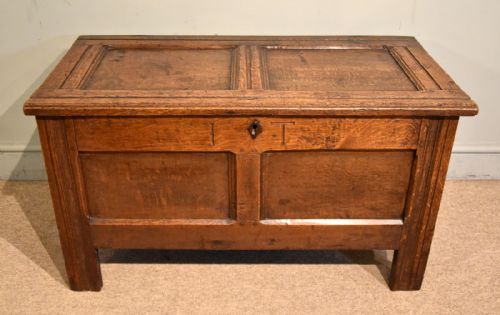
An english oak panel chest is a heavy storage receptacle constructed from timber frames holding fitted thin panels. These pieces served households from the Tudor period through the Georgian era to store textiles, valuables, and dry goods.
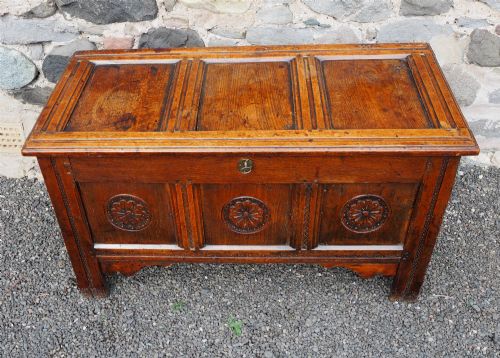
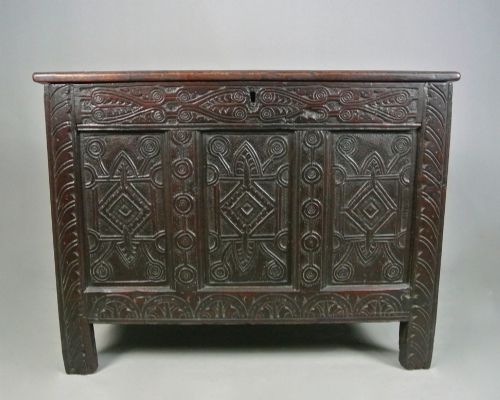
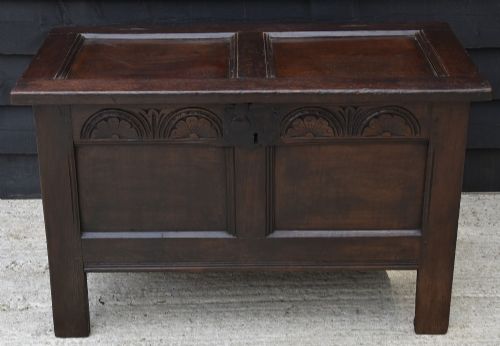
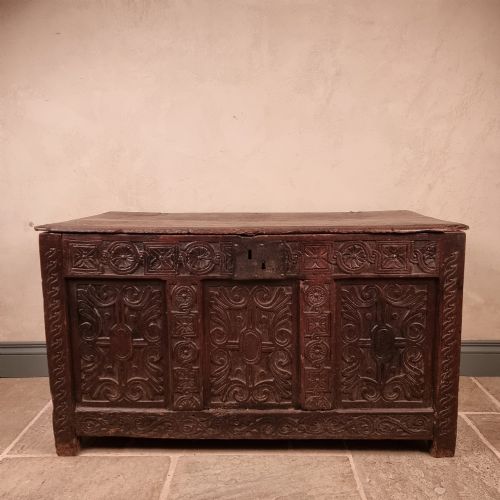
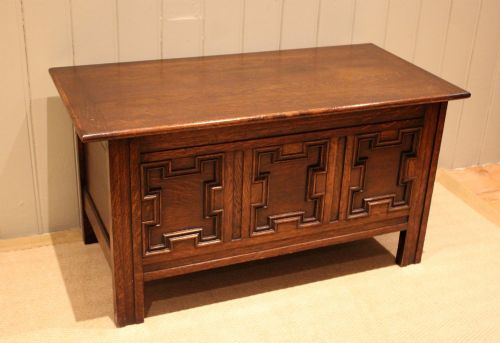
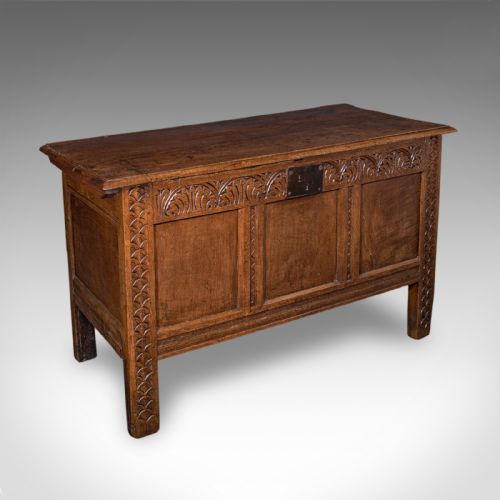
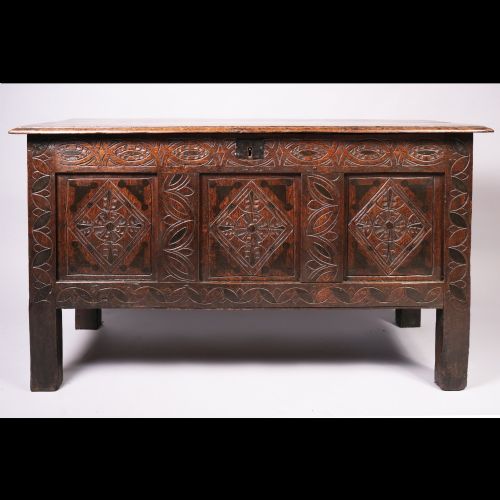
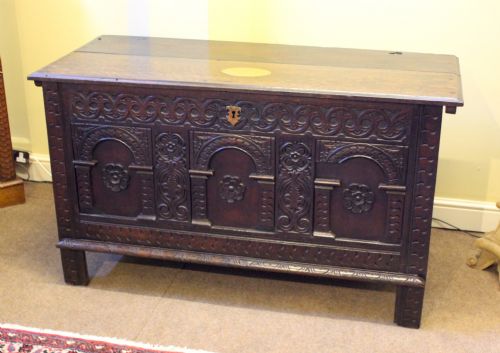
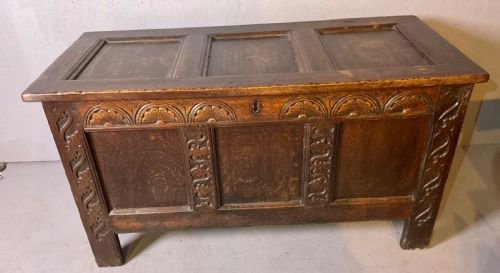
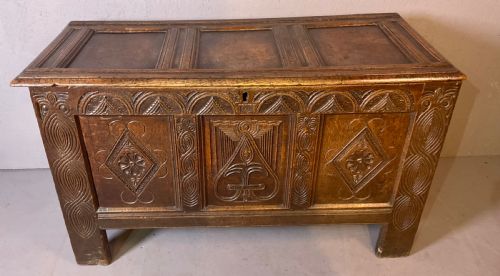
The versions most common on this page date from the late seventeenth and eighteenth centuries, featuring twin or triple panel fronts. Many examples show carved decoration or geometric mouldings typical of Jacobean and William III styles.
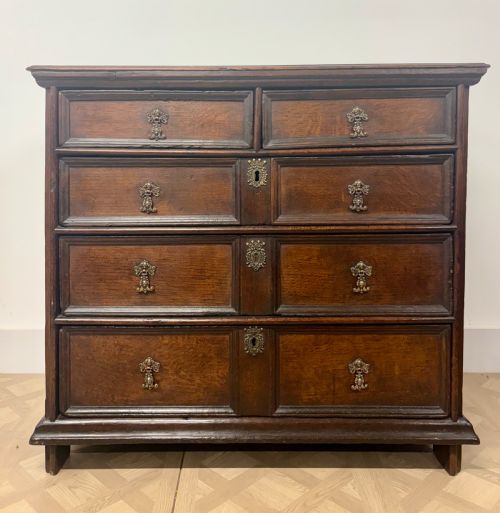
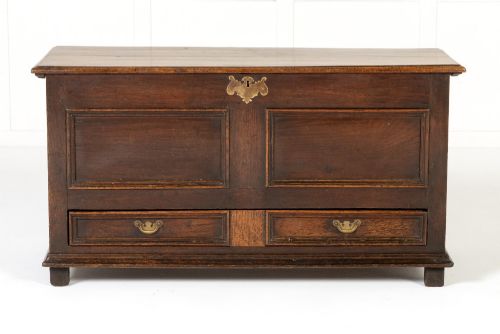
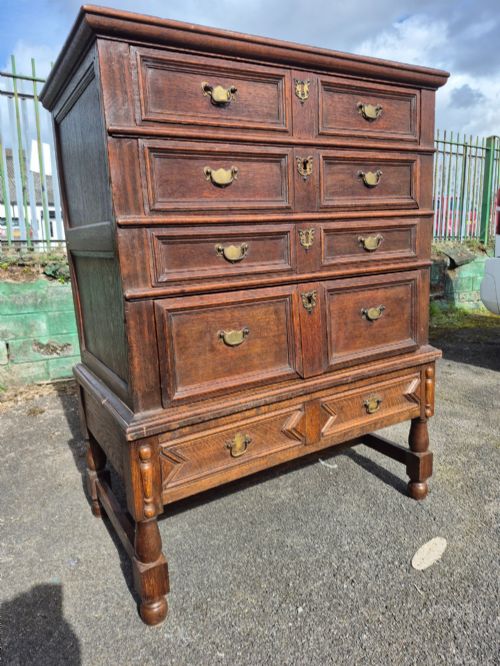
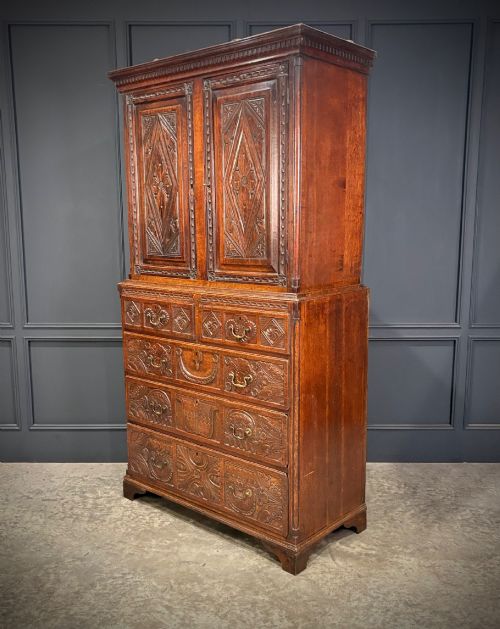
Mule chests appear frequently alongside standard coffers, incorporating one or more bottom drawers beneath the main lifting lid. These hybrid forms evolved as domestic storage needs expanded during the eighteenth century.
How They Were Made
Joiners constructed these chests using traditional mortice and tenon frames secured with wooden pegs. Panels floated within grooved framework to allow for the natural expansion and contraction of timber over time.
Makers selected quarter-sawn oak for its strength and distinctive medullary ray figuring. Iron and brass hinges, locks, and handles reinforced the heavy lids and provided functional security.
Marriage mule chests served as bridal gifts, packed with linens to start a new household.
What Varies in Quality
The intricacy and depth of hand carving differentiate standard utility pieces from high-status commissions. Crisp relief work and well-proportioned mouldings reflect the skill of the original workshop.
The integrity of construction materials dictates longevity, particularly the survival of original timber boards in lids and bases. Retaining matching panels and early iron hardware elevates a piece above heavily restored examples.
The English Oak Panel Chest Glossary
- Coffer
- A box with a hinged lid used for storage, often synonymous with a blanket chest. These items formed essential furniture in early English households before fitted closets existed.
- Mule chest
- A storage chest featuring one or more drawers built into the base beneath the main compartment. This form bridges the traditional coffer and the modern chest of drawers.
- Linenfold
- A carved wooden panel motif resembling folded cloth linen, popular in the Tudor period. This design required careful chisel work by skilled woodworkers.
- Stile and rail
- The vertical and horizontal framing members that hold fitted panels in place. This technique prevents warping in large wooden surfaces.
- Quarter-sawn
- Timber cut radially from the log ring to display prominent medullary ray patterns. This method yields more stable boards less prone to splitting.
English Oak Panel Chest: Frequently Asked Questions
What did people store inside an english oak panel chest?
Households primarily used these large boxes to store heavy woolen blankets, household linen, and family valuables. Because houses lacked built-in closets, these chests kept textiles safe from dust and pests.
Over time, they also served as strongboxes for important documents and silver. Their flat lids meant they doubled as seating benches or tables in busy rooms.
How can I tell a seventeenth-century chest from an eighteenth-century one?
Seventeenth-century examples often display deep hand-carved strapwork, arcading, or geometric mouldings influenced by Jacobean and Charles II styles. The frames are typically pinned with visible wooden dowels and utilise simpler joined construction.
Eighteenth-century pieces generally favour cleaner lines, panel configurations of three or four sections, and frequently incorporate base drawers as seen in mule chests. The overall proportions tend toward greater width and refined bracket feet.
Where should I place a chest in a modern home?
These pieces function exceptionally well at the foot of a bed or beneath a window as a seating bench with internal storage. Their sturdy oak construction easily supports cushions while hiding away bulky winter bedding.
Placed in an entrance hall, a chest provides a convenient surface for dropping bags while storing out-of-season footwear inside. The rich grain of aged timber brings warmth and texture to contemporary interiors.
Are original hinges and locks common?
Original iron strap hinges and working locks survive on some examples, but many pieces received replacement hardware during their long histories. Ironwork was prone to rust and wear, making repairs necessary over centuries of daily use.
When replacement hardware matches the period style, it does not diminish the historic utility of the chest. Collectors simply look for evidence of past alterations around the lid and keyhole escutcheons.