

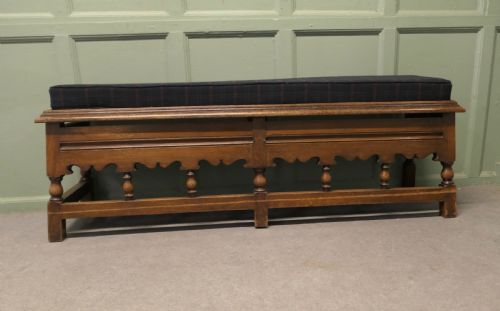


English Oak Hallway Bench
An English oak hallway bench brings solid timber architecture straight into the threshold, offering durable seating with a distinct historical pedigree.
English Oak Hallway Bench
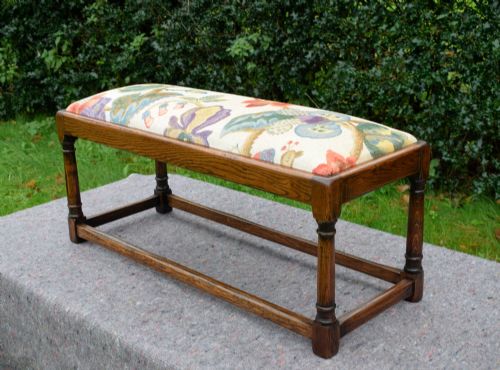
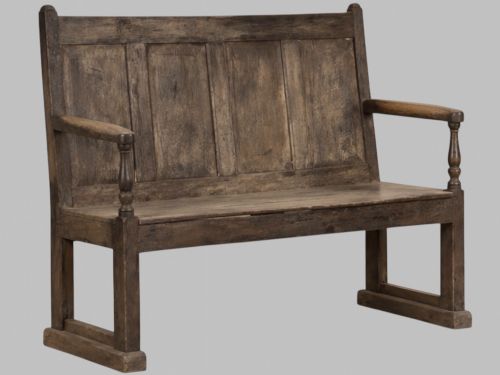
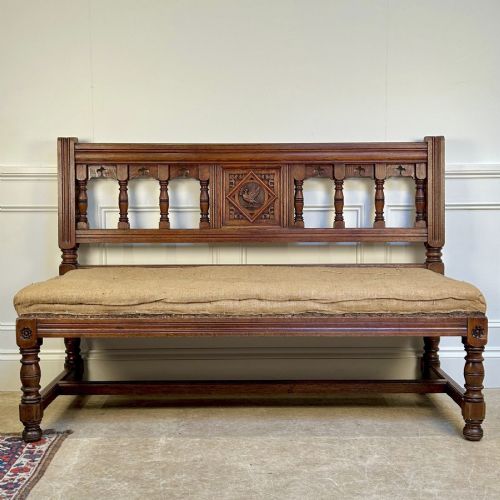
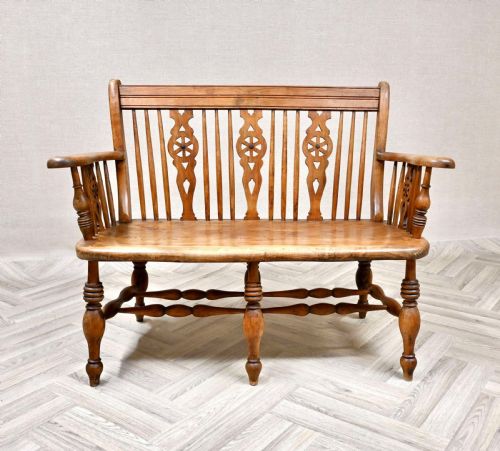
An english oak hallway bench comprises sturdy timber seating designed for the entrance of a house, drawing on traditions of domestic utility that span centuries. These items range from simple plank forms to panelled settles with integrated storage, reflecting the practical needs of past households.
The versions most commonly encountered on this page date from the nineteenth century, though earlier examples from the seventeenth and eighteenth centuries appear alongside later revival pieces. Makers utilised robust native hardwoods to construct these items, ensuring they survived generations of heavy use in busy entryways.
Beyond standard benches, the category encompasses settles with high backs and enclosed storage compartments beneath the seat, alongside variations incorporating elm, ash, and cane. Each piece serves as a functional anchor for a hallway, combining structural heft with traditional cabinetmaking methods.
How they were made
Joiners built an english oak hallway bench using heavy timber frames joined by traditional mortise and tenon construction, secured with wooden pegs rather than modern fixings. Workshops relied on quarter-sawn oak to resist warping, often supplementing the primary timber with secondary woods such as elm and ash for structural components or seats.
Surface finishing involved hand-planing and scraping, followed by centuries of waxing and handling that developed a deep patina across the grain. Carved details, fielded panels, and turned supports were executed manually with chisels and gouges, reflecting the regional styles of English country craftsmanship and revival movements.
English Oak Hallway Bench Retail Price Guide 2026
Typical asking prices for english oak hallway bench among the pieces listed under this phrase on Sellingantiques today, from the lower quarter to the upper quarter. They describe what is for sale here now, not the wider market.
Current listings demonstrate a span of periods ranging from the late seventeenth century through the nineteenth century, utilising oak, elm, and ash.
What varies in quality
The calibre of an english oak hallway bench depends upon the integrity of its timber selection and the retention of its original structural elements. Pieces constructed with solid quarter-sawn boards and minimal later replacement timber hold greater architectural coherence than those assembled from mismatched components.
Subtlety of hand-carving and the crispness of joinery distinguish provincial workshops from master cabinetmakers. The depth of the natural surface patina and the absence of extensive structural timber replacement dictate the standing of any given piece within its period.
Gillows
The English Oak Hallway Bench Glossary
- Settle
- A wooden bench featuring a high back designed to block draughts, often incorporating a hinged box seat for storage underneath. These items sat near the hearth or in the entrance hall of traditional homes.
- Quarter-sawn
- A method of cutting logs radially across the growth rings to produce boards with enhanced dimensional stability and prominent medullary ray figure. This technique was preferred for high-quality furniture framing.
- Mortise and tenon
- A fundamental woodworking joint where a protruding peg fits snugly into a corresponding cavity to lock two pieces of timber together at a right angle. It provides immense rigidity without relying on metal nails.
- Patina
- The surface sheen and colour developed over decades or centuries through oxidation, handling, and repeated waxing. A rich patina indicates age and continuous use.
- Mule chest
- A storage chest featuring one or two drawers beneath the main compartment, bridging the design transition between traditional coffer and modern drawer units.
English Oak Hallway Bench: Frequently Asked Questions
What is an english oak hallway bench used for?
These benches provided practical seating and storage in domestic entryways, allowing occupants to sit while removing heavy footwear. Integrated compartments often held boots, textiles, or household items.
Over generations, their robust construction made them ideal high-traffic furniture pieces designed to withstand constant daily use near the front door.
How do I date an english oak hallway bench?
Dating relies on examining construction methods, tool marks, and hardware types used within the frame. Hand-split boards, pegged joinery, and style conventions point towards specific centuries.
Comparing panel styles and carving motifs against documented regional examples helps narrow down the period of manufacture.
Are these benches comfortable to sit on?
Traditional wooden benches have rigid timber seats designed for upright posture rather than lounging. Many owners add loose cushions or tweed seat pads for daily comfort.
The original design prioritized durability and support over soft cushioning, suiting brief moments in a hallway.
How do I care for antique oak furniture?
Maintain the timber by applying natural beeswax periodically and buffing with a soft cloth to nourish the grain. Avoid placing pieces near direct heat sources or strong sunlight.
Consistent indoor humidity prevents the oak from drying out, splitting, or loosening its traditional pegged joints.