

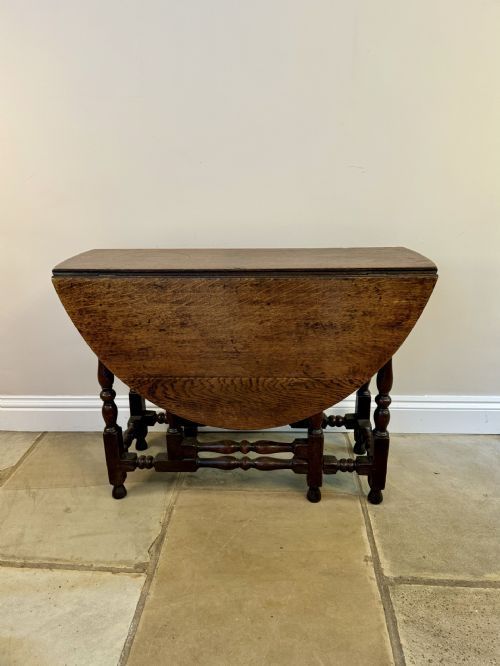


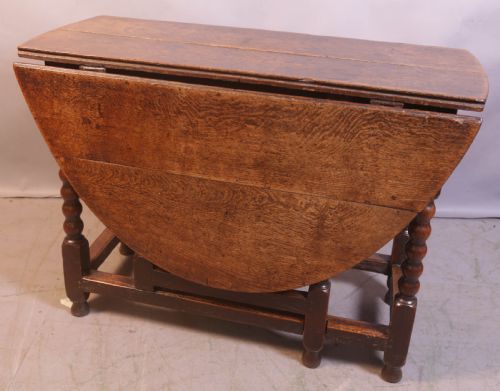


English Oak Gateleg
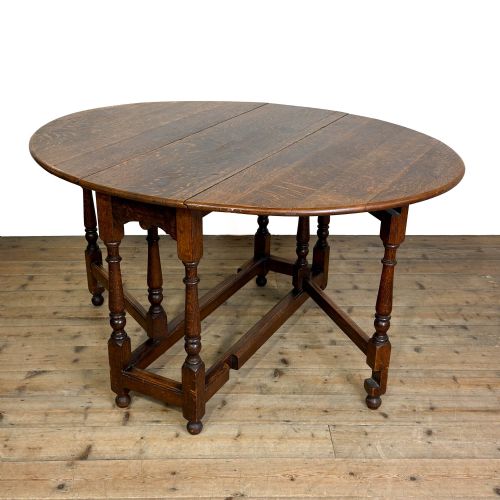
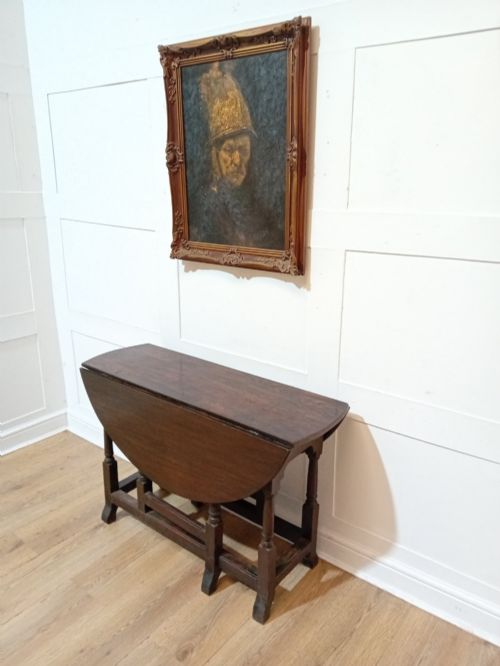
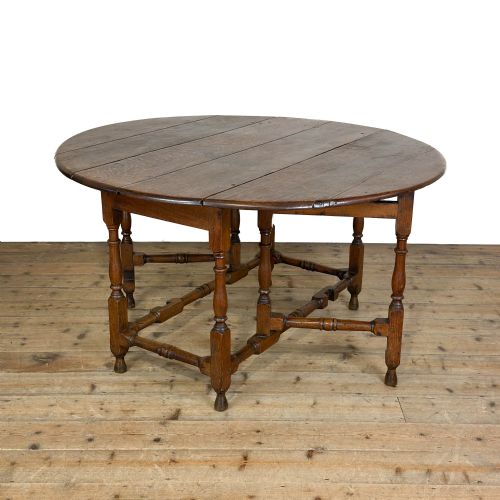
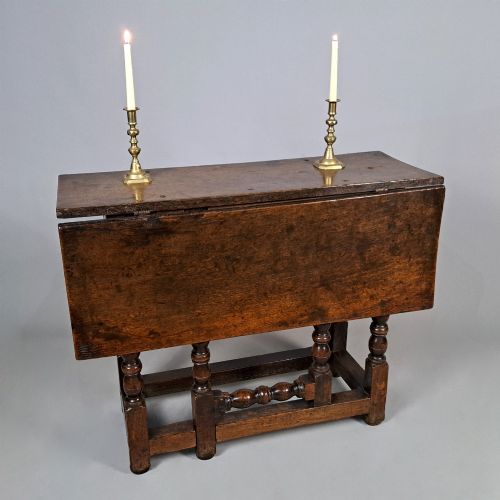
English oak gateleg tables are sturdy drop-leaf dining and side furniture offering expanding surfaces through pivoting legs.
English Oak Gateleg
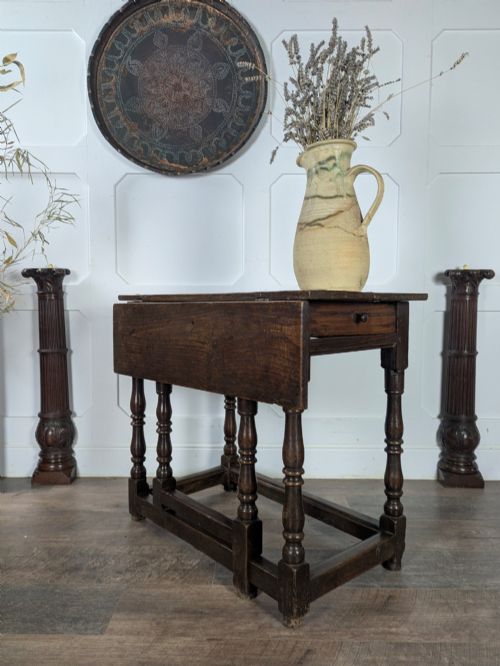
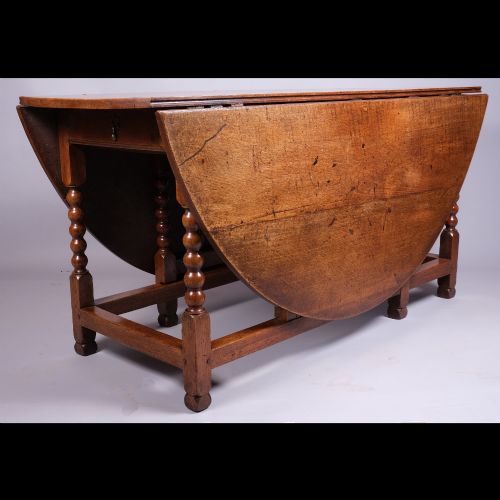
An english oak gateleg table provides a versatile surface that expands through pivoting fly legs supporting hinged leaves. When you search for an english oak gateleg, you encounter forms ranging from compact side tables to large dining tables seating multiple people. The majority of pieces on this page span the seventeenth and eighteenth centuries, alongside later revival pieces.
Assessing quality
Quality rests upon the integrity of the timber and the crispness of the turnery on the posts and gate legs. Tables retaining deep original surface patination and tight joinery at the hinge pivots demonstrate superior preservation.
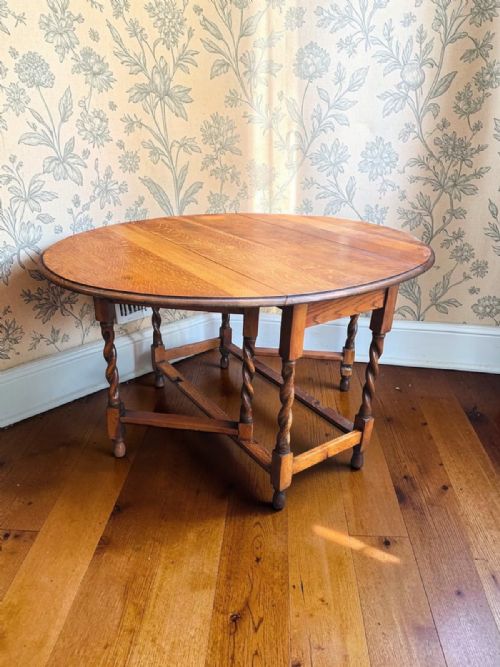
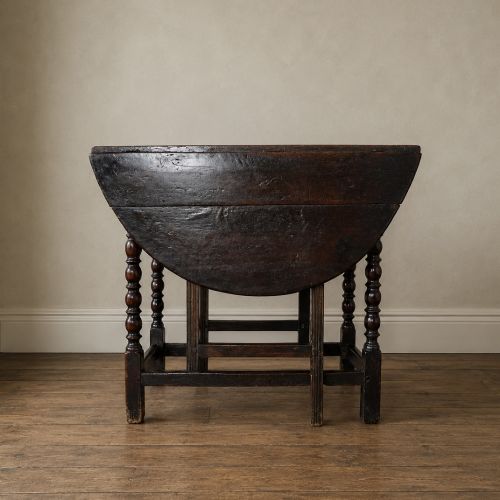
Proportion and scale distinguish fine examples, where the balance between the fixed centre frame and the folding leaves remains harmonious. The complexity of the leg turnings, such as bobbin or barley twist styles, also marks the distinction between standard and finer workshops.
English Oak Gateleg Retail Price Guide 2026
Typical asking prices for english oak gateleg among the pieces listed under this phrase on Sellingantiques today, from the lower quarter to the upper quarter. They describe what is for sale here now, not the wider market.
Listings feature solid oak pieces spanning the seventeenth century through to the Edwardian period and the 1930s.
The English Oak Gateleg Glossary
- Gateleg table
- A table with hinged leaves supported by one or more legs that swing outward like a gate. This design allows the surface area to expand or contract as needed.
- Barley twist
- A type of turning resembling a spiral rope, frequently carved into the legs of seventeenth-century and later revival tables. It adds decorative movement to the structural supports.
- Bobbin turn
- A style of woodturning characterised by spherical or cylindrical shapes repeated along the length of a post, resembling a string of beads. This feature appears on seventeenth-century frames.
- Drop leaf
- A hinged section of a table top that folds down when not in use. It enables the furniture to occupy less space against a wall.
- Patina
- The surface sheen and colour developed over centuries through handling, waxing, and ageing. A desirable patination reflects genuine historic use.
English Oak Gateleg: Frequently Asked Questions
How do I use a gateleg table daily?
Keep both leaves dropped against the centre frame to use the piece as a narrow side or console table in a hallway or living room. Raise one or both leaves and swing the gate legs outward when you need a surface for dining or writing.
Ensure the pivoting leg locks securely beneath the leaf to distribute weight evenly across the structure during use.
What rooms suit these tables?
Dining rooms accommodate larger oval variations easily, providing extendable seating space for guests without permanent bulk. Smaller side and coffee table formats fit comfortably into sitting rooms or studies.
Their narrow profile when folded makes them practical for spaces requiring flexible furniture arrangements.
How do I spot a seventeenth-century piece?
Examine the timber construction for pegged mortise and tenon joints and hand-turned structural posts like balusters or bobbins. Seventeenth-century examples display heavy solid oak construction with distinct tool marks and deep patination.
Revival pieces from later centuries often employ different joint methods and uniform machine turnings.
How do I care for historic oak?
Apply traditional beeswax sparingly and buff gently with a soft cloth to maintain the surface sheen without building up heavy residues. Protect the timber from direct heat sources and strong sunlight to prevent warping and drying.
Avoid excessive moisture on the surface by using coasters beneath glasses and wiping spills immediately.