
English Mahogany Seating
English mahogany seating encompasses heavy timber frames and upholstered forms designed for dining rooms and morning rooms across the eighteenth and nineteenth centuries.
English Mahogany Seating
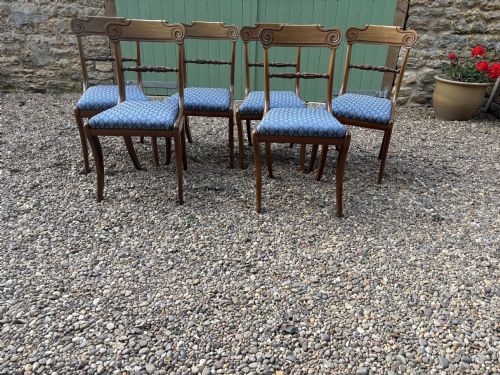
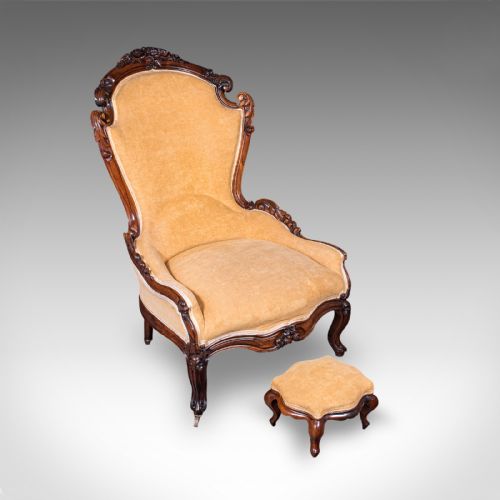
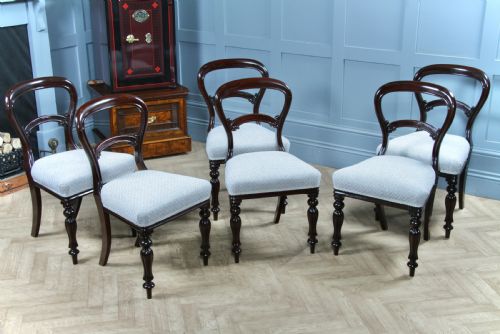
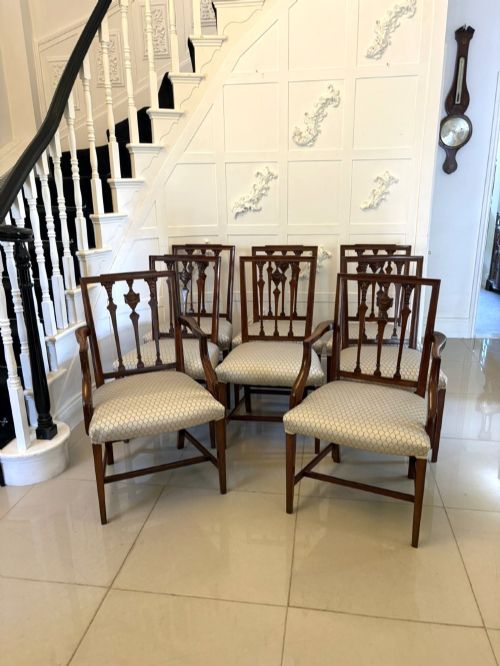
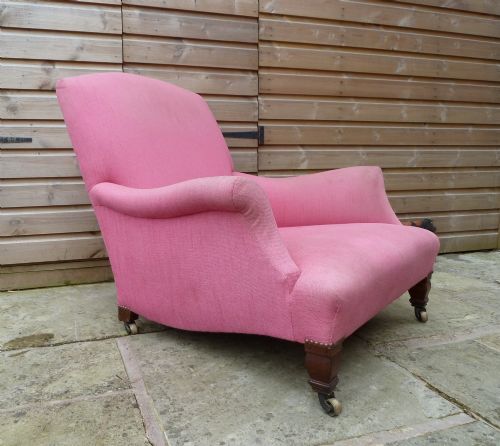
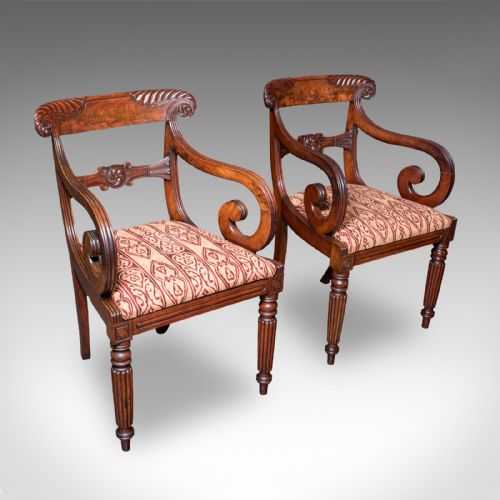
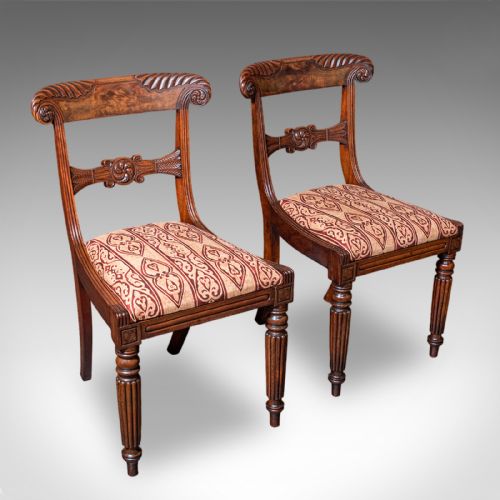
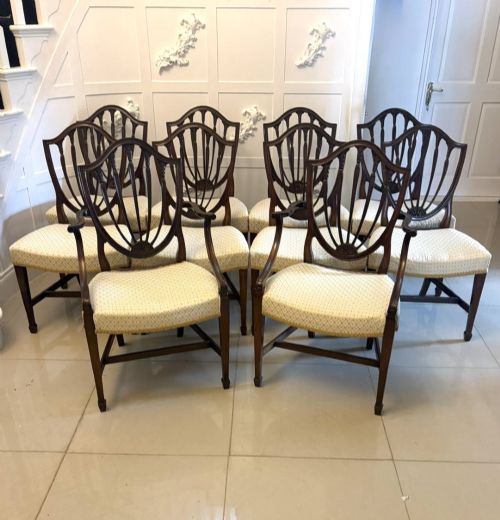
English mahogany seating spans dining chairs, armchairs, hall chairs, and sofas produced across the eighteenth and nineteenth centuries. Buyers frequently encounter sets of dining chairs alongside single elbow chairs and deep-seated armchairs originating from the Georgian, Regency, and Victorian eras.
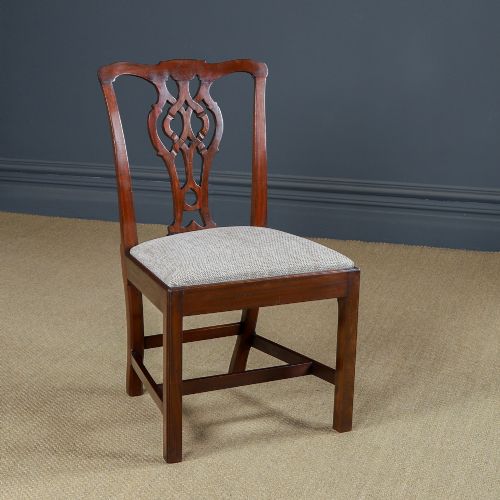
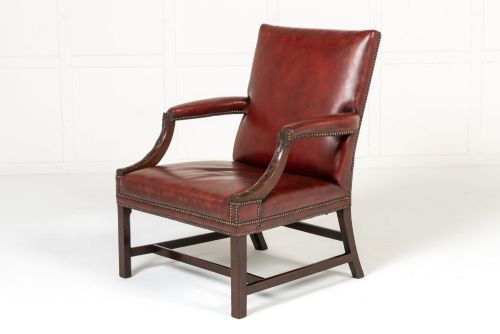
The selection includes specialised forms such as Gainsborough chairs, library armchairs, and hall chairs with solid timber seats. Revivals from the Edwardian period and the early twentieth century also appear, echoing earlier Chippendale and Hepplewhite designs.
Materials and Construction
Makers utilised dense imported mahogany for structural frames, sometimes combining it with secondary woods like maple or employing cane inserts for seats. Joinery relied on traditional mortise and tenon construction to support the substantial weight of the timber.
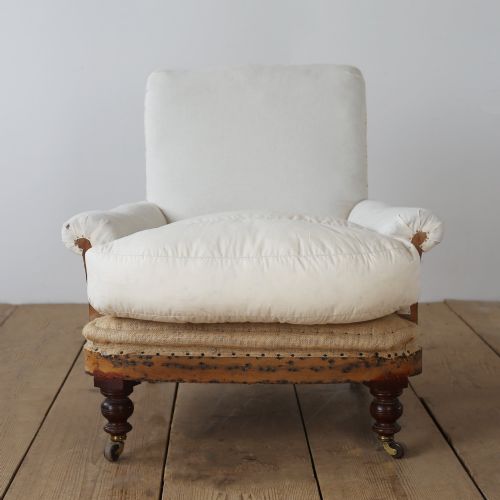
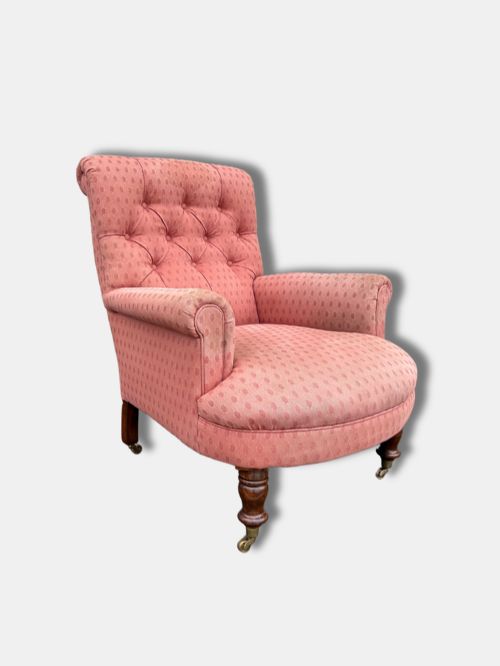
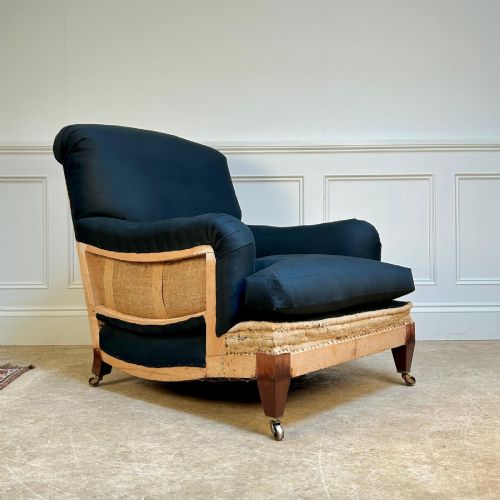
Upholstery techniques involved horsehair and webbing beneath coverings of leather, velvet, calico, or patterned fabric. Brass castors, studs, and hand-dyed hides frequently finished pieces intended for principal reception rooms.
Listings feature mahogany seating across Georgian, Regency, and Victorian periods, alongside Edwardian revivals.
Standards of Execution
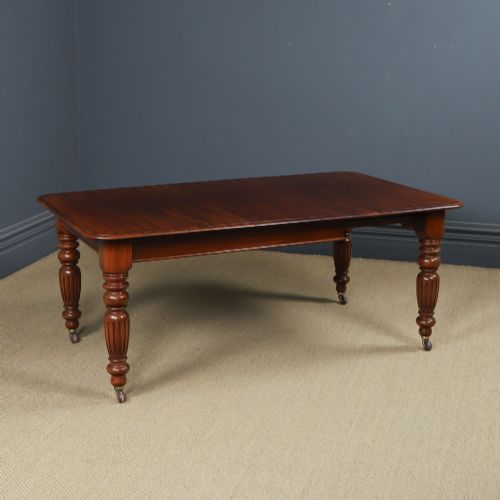
The refinement of carved detail separates standard production from exceptional work, particularly where blind fretwork, reeded legs, or shaped splats are concerned. Crispness in the carving of mahogany indicates the skill of the original hand.
Integrity of the timber frame and the retention of original upholstery foundations dictate the character of surviving examples. Chairs retaining sturdy joints and sympathetic reupholstery preserve their architectural proportions.
Howard and Sons·Maple and Co
The English Mahogany Seating Glossary
- Gainsborough chair
- An eighteenth-century armchair featuring an upholstered back, padded arms, and an open frame above square or cabriole legs. This form was designed for writing desks and principal reception rooms.
- Hall chair
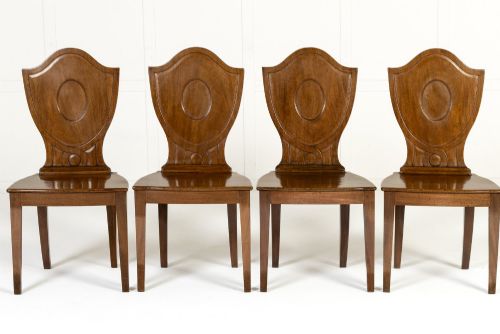
- A rigid wooden seat lacking upholstered padding, typically positioned in entrance halls. These pieces often display painted crests or carved shields on solid timber backs.
- Elbow chair
- An armchair scaled for domestic use, often accompanying a set of single dining chairs at the head of a table. They frequently served in morning rooms and libraries.
- Chippendale style
- A design idiom associated with mid-eighteenth-century cabinetmaking characterised by ribbon-back splats, blind fretwork, and cabriole legs. Revival versions appeared frequently during the Victorian and Edwardian periods.
- Reeding
- Parallel convex mouldings carved into furniture legs, arms, or rails. This decorative technique became prominent during the Regency period.
English Mahogany Seating: Frequently Asked Questions
How do I identify a Georgian chair?
Georgian pieces display robust mahogany frames with characteristic carved details like pierced splats and ball and claw feet. Proportions remain heavy yet balanced, reflecting the timber's structural strength.
Later revival pieces often imitate these profiles, but genuine eighteenth-century examples reveal appropriate tool marks and timber shrinkage within the internal joinery.
What is a Gainsborough chair used for?
These open-armed chairs were originally positioned at writing desks or used as occasional seating in formal reception rooms. Their generous proportions accommodated elaborate eighteenth-century garments.
Today they function as desk chairs or low reading seats in studies and drawing rooms.
Are hall chairs comfortable?
Hall chairs possess solid wood seats without upholstery, designed for short periods of waiting in entrance spaces. Their construction prioritises architectural presence over cushioned ease.
Carved timber panels and shield backs served to display family crests rather than provide lounging comfort.
How do I date a mahogany dining chair?
Dating relies on examining structural joinery, leg profiles, and the method of timber preparation. Early pieces show hand-sawn surfaces and pegged joints beneath the seat frames.
Subsequent eras introduced machine-cut elements and differing leg shapes, shifting from cabriole forms to Regency reeding and Victorian turned pillars.