


English Linen Press
An English linen press offers substantial storage through its classic upper cupboard and lower chest configuration.
English Linen Press
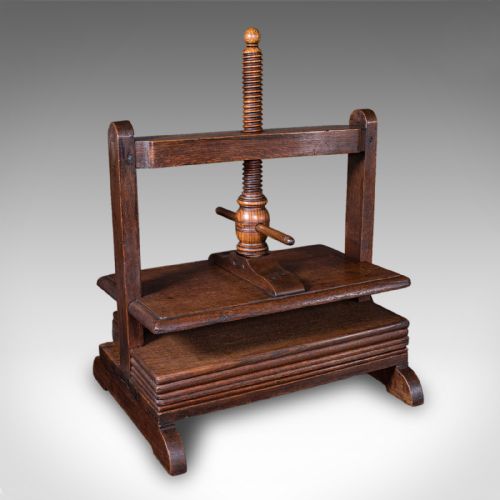
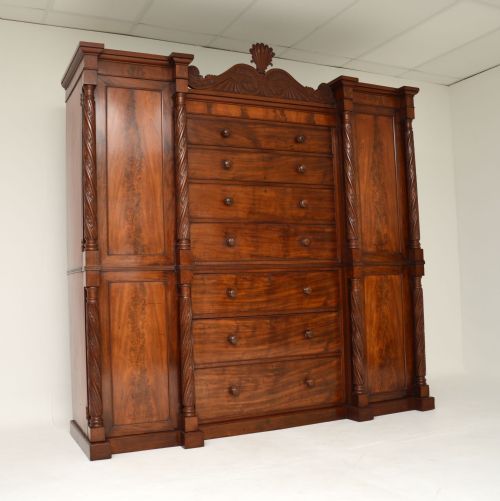
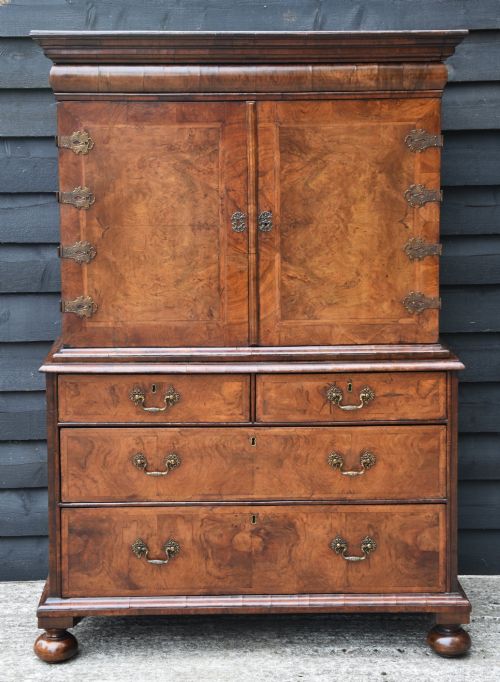
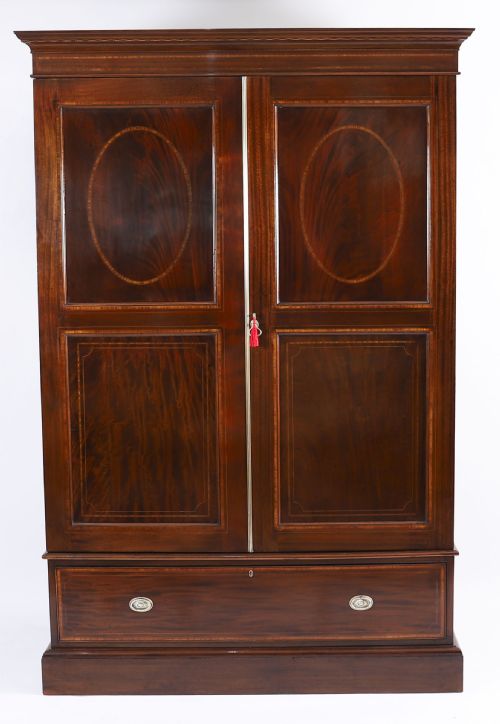
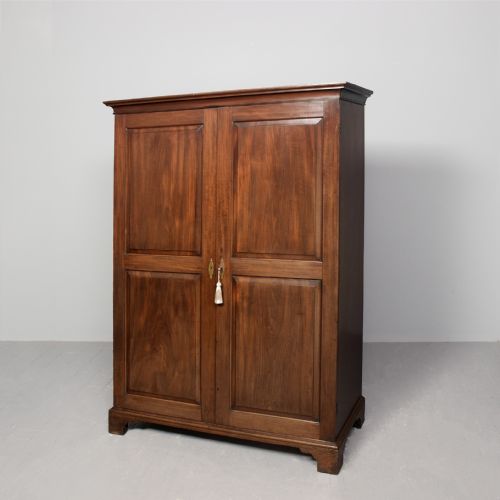
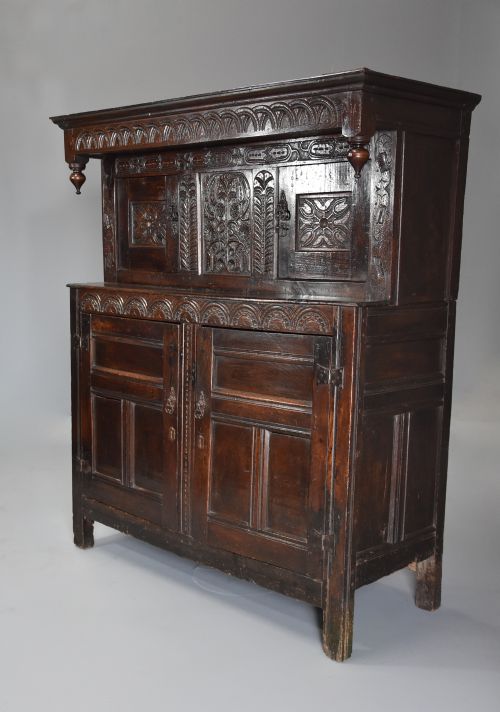
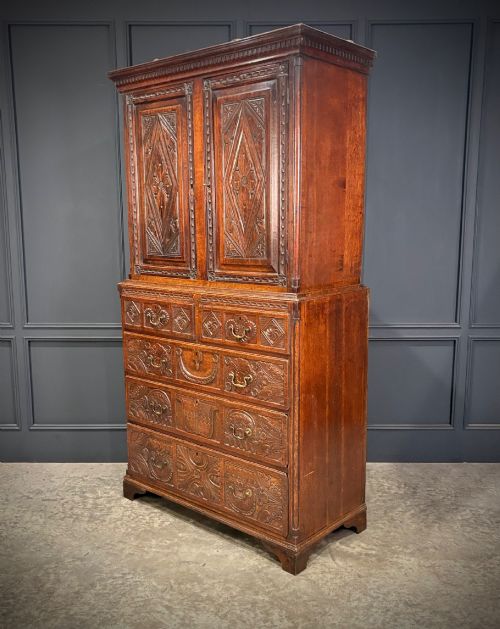
An English linen press primarily combines a wardrobe or sliding tray cabinet above a chest of drawers, serving traditional domestic storage needs. The form evolved significantly from early joined oak and carved walnut pieces to refined Georgian and Regency mahogany constructions.
Beyond formal linen presses, related housekeeping cupboards and compactum wardrobes frequently appear in this category. These pieces span centuries from the seventeenth century through the Victorian era, reflecting changing interior layouts and storage requirements.
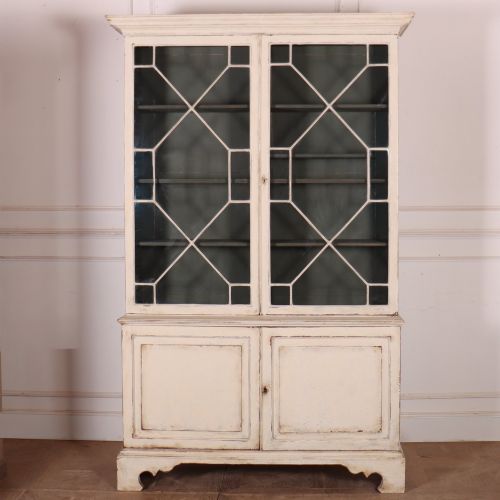
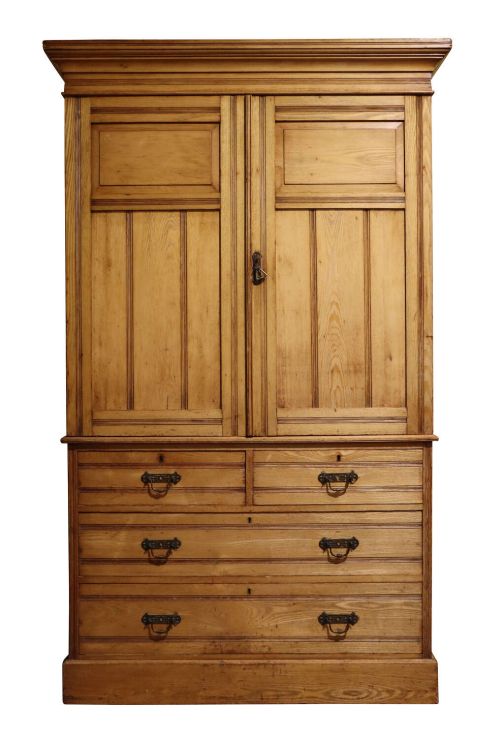
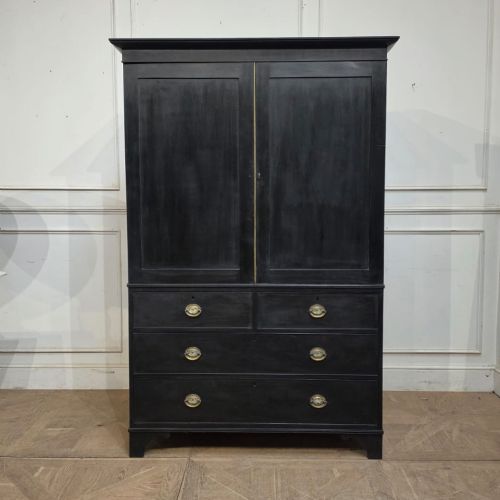
Regional variants and country house pieces often utilise simpler pine or fruitwood timbers, sometimes retaining original painted finishes. Whether dealing with a towering mahogany cabinet on chest or a utilitarian painted pine cupboard, these items remain central to traditional interior storage.
Materials and Construction
Cabinet makers relied heavily on native oak for early pieces, transitioning to figured mahogany, walnut, and satinwood during the Georgian and Victorian periods. Secondary timbers like pine often formed internal drawer linings and backboards.
Joinery techniques progressed from heavy frame and panel construction to sophisticated veneering, notably utilising flame mahogany and burr walnut over stable base woods. Brass hardware, including original drop handles and escutcheons, secures doors and internal sliding trays.
Listings feature periods spanning from the seventeenth century through the Victorian era, constructed in oak, mahogany, walnut, and pine.
Evaluating Craftsmanship
Quality rests significantly on the selection of timber veneers and the crispness of carved details or inlaid banding. Superior examples display continuous grain matching across drawer fronts and doors, paired with robust internal sliding trays that operate smoothly.
The integrity of original surfaces, whether patinated oak, polished flame mahogany, or early paint finishes, largely dictates the standing of an individual piece. Structural proportions, original brass fittings, and untouched internal configurations further distinguish superior workshop production.
Maple & Co.·Holland & Sons·Waring & Gillow·Lamb of Manchester·Gillows·Heal & Sons
The English Linen Press Glossary
- Compactum
- A multi-functional wardrobe designed for varied clothing storage, often incorporating hanging space, drawers, and linen shelves within a single footprint.
- Press
- A tall cabinet traditionally utilised for storing textiles flat on sliding trays before hanging wardrobes became universal.
- Housekeeper's Cupboard
- A large utility cupboard featuring extensive shelving and lower drawers, historically used in country houses for linen and provisions.
- Cabinet on Chest
- A two-part form consisting of an upper display or storage cabinet sitting atop a lower chest of drawers.
- Sliding Trays
- Horizontal internal shelves, often referred to as slides, designed for stacking folded linens rather than hanging garments.
English Linen Press: Frequently Asked Questions
What is a linen press used for today?
Modern interiors utilise these cabinets for storing folded clothes, bedding, and linens inside the upper sliding tray section. The lower drawers provide ample space for miscellaneous garments or household items.
Their substantial presence makes them effective statement storage units in bedrooms, hallways, or large dressing rooms.
How do I tell a Georgian press from a Victorian one?
Georgian examples typically exhibit architectural cornices, classical proportions, and rich figured mahogany with subtle stringing or bracket feet. Victorian iterations often introduce heavier mouldings, plinth bases, burr walnut veneers, and more complex internal configurations.
Early pieces from the seventeenth and eighteenth centuries rely more heavily on solid oak with hand-carved panels and simpler wooden knobs or brass drop handles.
Can I hang clothes inside a linen press?
Most traditional presses were constructed with internal sliding trays rather than hanging rails to keep textiles flat. Converting the upper section for hanging requires careful internal modification or selecting a compactum variant designed specifically for mixed storage.
Many collectors prefer to keep the original sliding tray configuration intact to preserve the historical utility of the cabinet.
Where should I place a large press in my home?
These tall, deep pieces require substantial wall space and clearance for wide opening doors. Bedrooms, dressing rooms, and spacious landings accommodate their proportions best without overwhelming the surrounding floor area.
Measuring ceiling height and doorway clearance remains essential before attempting to site a two-part cabinet on chest.