



English Kitchenalia
English kitchenalia brings together utilitarian copper, sycamore and pewter built to work hard in centuries past.
English Kitchenalia
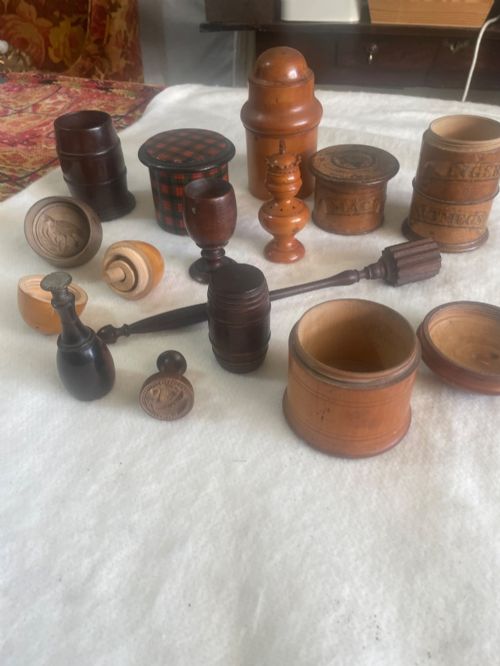
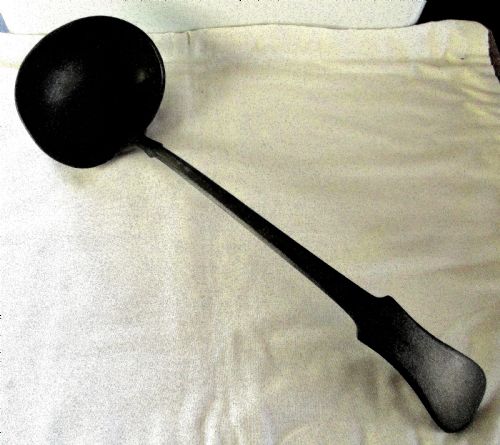
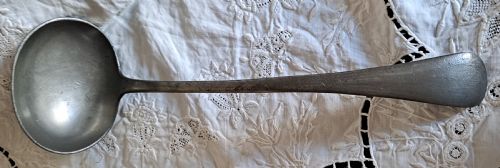
English kitchenalia covers the domestic implements and storage vessels used in historic households, spanning from the seventeenth century through to the Edwardian era. These survivals range from turned wood spice towers and sycamore butter prints to heavy copper jelly moulds and pewter basting ladles.
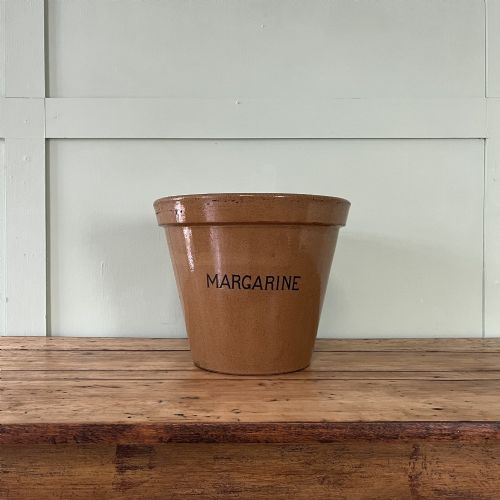
The pieces met most often on this page belong to the nineteenth century, including glazed stoneware bowls, cream bowls and lidded copper pots. Everyday utility defines the category, capturing how food was prepared, preserved and served before modern manufacturing took over.
Materials and construction
Turned wood pieces rely on dense timbers like sycamore, shaped on a lathe to create interlocking spice towers, grinders and butter prints with carved motifs. Metals such as copper and pewter form the durable roasting pans, jelly moulds and ladles, shaped by hand to withstand constant kitchen heat and heavy use.
Ceramics involve glazed stoneware and creamware, fired to create robust storage jars and large bowls suitable for holding food in pantry conditions. Paper labels occasionally survive on these vessels, noting the original contents or supplying merchant details from taverns and grocers.
English Kitchenalia Retail Price Guide 2026
Typical asking prices for english kitchenalia among the pieces listed under this phrase on Sellingantiques today, from the lower quarter to the upper quarter. They describe what is for sale here now, not the wider market.
Listings span from the seventeenth century through the Georgian and Victorian eras up to nineteen ten, utilising copper, pewter, sycamore and stoneware.
Markers of quality
Quality rests in the crispness of hand-carving on treen items and the thickness of metal used in copper moulds and pewter ladles. Pieces retaining clear maker marks or original patination from decades of use command greater attention than heavily worn or poorly repaired examples.
The integrity of turned joints in multi-tiered sycamore towers and the uniform thickness of heavy bronze roasting pans indicate the skill of the maker. Finer items balance robust utility with deliberate decorative touches, such as carved acorn and wheat motifs on butter prints.
John Yates·Dixon & Son·C & A Painter·Harrods·Copeland
The English Kitchenalia Glossary
- Treen
- Small handmade wooden objects for domestic use. This term embraces everything from sycamore spice grinders to butter prints.
- Pewter
- A malleable metal alloy containing tin, used historically for tableware and ladles. It acquires a dark, soft sheen over centuries of handling.
- Stoneware
- A heavy, dense ceramic fired at high temperatures to become impermeable to liquids. Glazed stoneware suits large storage jars and dairy bowls.
- Spice tower
- A multi-tiered turned wooden container designed to hold various spices. Each section nests securely into the next.
- Butter print
- A carved wooden stamp used to impress patterns onto pats of butter. Common motifs include botanical themes like wheat and acorns.
English Kitchenalia: Frequently Asked Questions
What is english kitchenalia?
English kitchenalia comprises the utilitarian utensils, storage jars and cooking vessels used in domestic kitchens across past centuries.
These pieces reflect everyday food preparation using traditional materials like wood, copper, pewter and glazed stoneware.
How were old spice towers used?
Tiered spice towers held various aromatic powders in separate stacked compartments for easy access during cooking.
The tight tolerances of turned sycamore kept the contents dry and distinct before glass jars became common.
How do I clean copper kitchenware?
Historic copper items are best maintained with gentle cleaning rather than harsh abrasive polishes that strip age.
Preserving the darkened patination keeps the surface appearance honest to its working history.
Are these kitchen items still usable?
While many metal pans and wooden prints remain structurally sound, most collectors prefer to display them.
Using antique treen or old pewter for modern cooking can risk damaging fragile historic surfaces.