





English Ironstone Urn
An English ironstone urn is a sturdy decorative vessel from the nineteenth century onwards, offering bold ceramic presence for traditional interiors.
English Ironstone Urn
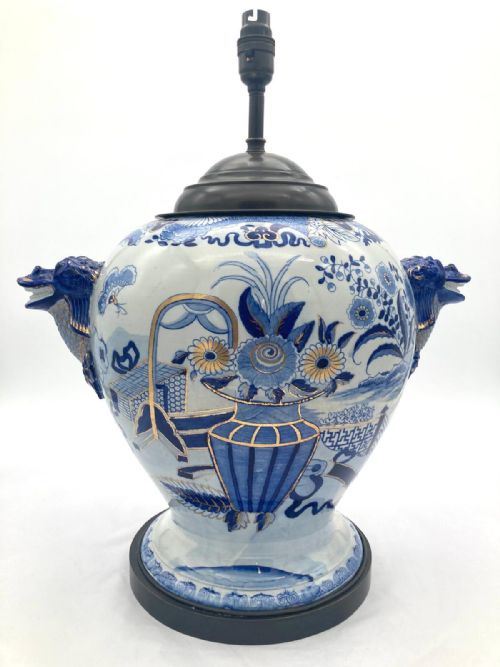
When you search for an english ironstone urn, you encounter heavy ceramic vessels spanning the nineteenth century, Regency, and Edwardian periods. These pieces include lidded jars, garniture sets, and converted table lamps designed for decorative display.
Makers such as Mason, Spode, and Hicks and Meigh produced these durable forms with rich decorative schemes. The most common examples display intricate Chinoiserie motifs, exotic birds, and floral patterns across substantial bodies.
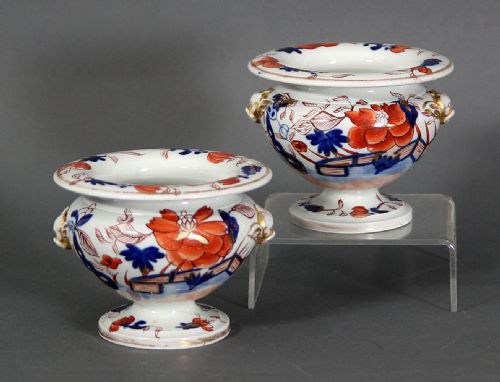
The selection ranges from early nineteenth century hall vases to later posy vases and salts. Each object demonstrates the dense, utilitarian ceramic body developed to withstand daily use while emulating porcelain.
Materials and production methods
Potters constructed an english ironstone urn using a dense vitreous ceramic paste fired at high temperatures to achieve stone-like durability. Artisans then applied enamel colours and gold leaf highlights to enhance the glazed surfaces.
Decoration relied heavily on transfer printing combined with hand-painted detailing, particularly for Chinoiserie scenes featuring birds and peonies. Gilt and gilding finishes were added to rims and handles before a final protective glaze firing.
English Ironstone Urn Retail Price Guide 2026
Typical asking prices for english ironstone urn among the pieces listed under this phrase on Sellingantiques today, from the lower quarter to the upper quarter. They describe what is for sale here now, not the wider market.
The inventory records various forms including lidded jars, salt cellars, table lamps, and posy vases decorated with Chinoiserie patterns.
Assessing quality in ironstone vessels
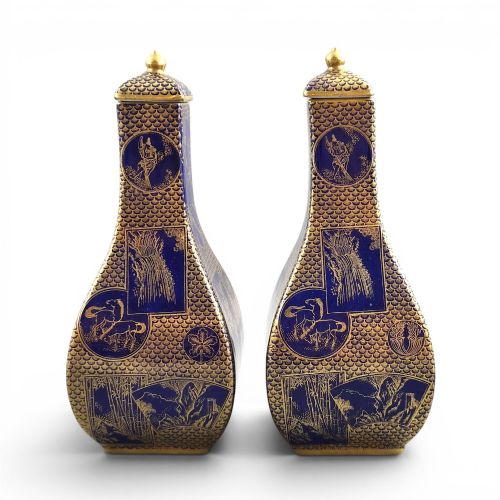
Quality rests in the crispness of the transfer printing and the precision of the hand-painted enamel work. Superior pieces exhibit deeply saturated mazarine blue grounds and meticulously applied gold leaf rather than flat, uniform washes.
The sophistication of the modelling separates standard production from exceptional works. Urns featuring elaborate handles, lidded configurations, and complex Chinoiserie compositions demonstrate greater artistic ambition from the manufactory.
Mason's·Spode·Hicks and Meigh·Miles Mason
The English Ironstone Urn Glossary
- Ironstone
- A heavy, durable ceramic body patented in the nineteenth century to imitate Chinese porcelain while offering greater strength. It forms the structural base for these decorative urns and vases.
- Chinoiserie
- A European decorative style reflecting Chinese artistic influences, frequently featuring imaginary landscapes, exotic birds, and floral motifs. This style appears extensively on nineteenth century ironstone vessels.
- Garniture
- A matched set of three or more vases or urns designed to be displayed together on a mantelpiece or sideboard. These sets often share identical transfer-printed patterns such as the Bandana design.
- Mazarine
- A deep, rich blue colour applied as a ground hue on ceramic bodies. It provides a dramatic backdrop for gilt highlights and polychrome bird decorations.
- Potpourri
- A vase or jar featuring a pierced or perforated lid designed to hold dried scented plant material. These vessels allowed fragrance to diffuse while concealing the contents within an ornamental body.
English Ironstone Urn: Frequently Asked Questions
How do I date an ironstone urn?
Dating relies on stylistic markers, patterns, and pottery marks recorded during the nineteenth and early twentieth centuries. Regency examples often feature distinct Chinoiserie transfer prints while Edwardian pieces show later stylistic shifts.
Examining the depth of the glaze and the specific blue ground hues helps narrow the production window. Comparing the piece against known factory output from makers like Mason or Spode clarifies the timeline.
Are these urns waterproof?
Most ironstone bodies are vitrified and hold water safely for display with fresh flowers. However, historic pieces with hairline fractures or extensive gilt wear require careful handling.
Posy vases and hall vases were built for functional use alongside decorative display. Hand washing preserves the enamel and gold leaf better than immersion in automated basins.
What is a garniture set?
A garniture set consists of multiple matching vases intended for symmetrical arrangement on a mantelpiece or furniture top. These matching groupings typically share identical transfer-printed motifs and colour palettes.
Finding a complete matched set from the Regency period remains uncommon due to centuries of separation. Individual urns from a broken garniture still function effectively as standalone decorative accents.
How should I clean my ironstone?
Cleaning requires warm water and mild soap applied with a soft cloth to protect the surface glaze. Avert harsh scouring pads that might scratch the delicate enamel or wear away gold leaf highlights.
Dry the vessel thoroughly with a lint-free cloth after washing. Regular dusting keeps the transfer-printed details visible without risking moisture damage to older ceramic bodies.