

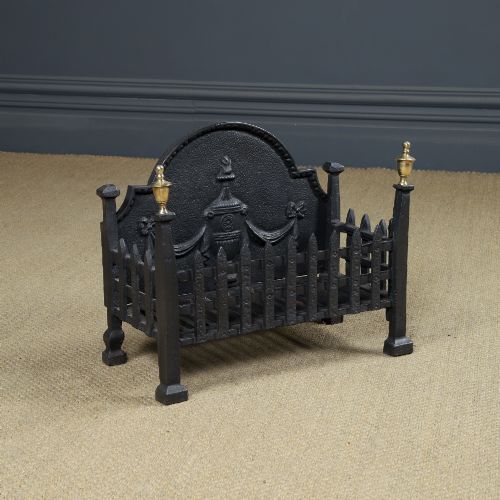
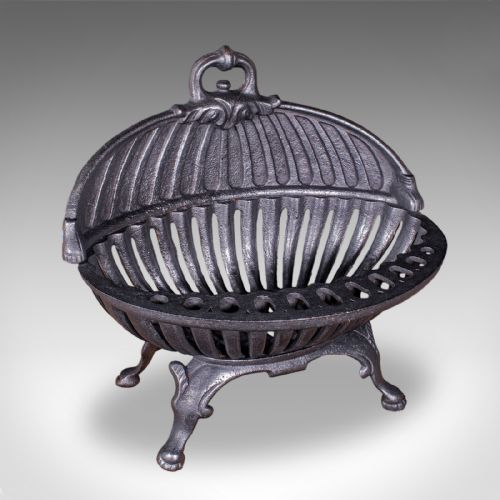
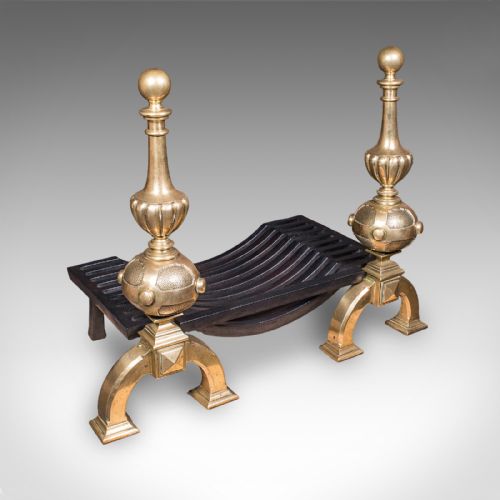


English Fire Basket
An English fire basket brings hearth-warming metalwork into the room, offering an open grate for logs and coal.
English Fire Basket
An English fire basket sits within the hearth to hold fuel safely off the floor while radiating heat into the room. Buyers searching this phrase look for functional ironwork that forms the centrepiece of a period fireplace.
The versions met most frequently on this page date from the Victorian period, alongside Georgian, Edwardian, and later interpretations from nineteen-twenty. These pieces often arrive alongside matching andirons or fire sets.
Forms range from small free-standing grates to large inglenook fire baskets and open hearth fireplaces. They serve both practical heating needs and decorative interior roles in period properties.
Materials and Construction
Cast iron and wrought iron form the primary structural body of these grates, providing the necessary strength to contain burning fuel. Smiths and founders worked these metals into robust baskets designed to withstand intense heat.
Brass details and firebrick linings appear frequently, adding contrasting metallic highlights and protecting the iron structure from direct thermal stress. Wrought iron elements allow for more malleable decorative shaping, whilst cast iron offers solid weight.
English Fire Basket Retail Price Guide 2026
Typical asking prices for english fire basket among the pieces listed under this phrase on Sellingantiques today, from the lower quarter to the upper quarter. They describe what is for sale here now, not the wider market.
Some sets include a mulling andiron, quietly reminding us that earlier residents used their fireside metalwork to warm spiced ale.
Assessing Quality and Character
The thickness and heft of the cast iron distinguish sturdier examples from lighter utilitarian pieces, alongside the crispness of any decorative detailing on the basket frame. Better examples integrate complementary brass fittings and robust firebrick elements that endure decades of use.
The integrity of the ironwork, free from excessive thermal distortion, marks out superior construction. Proportion and balance between the basket and its accompanying andirons determine how well the set suits an open hearth.
The English Fire Basket Glossary
- Fire Basket
- A metal container designed to hold solid fuel within a fireplace hearth. It raises the fire to improve airflow and combustion.
- Andiron
- One of a pair of horizontal metal supports placed in a fireplace to hold logs. They often feature decorative front pillars that match the fire basket.
- Inglenook
- A large recessed space around a fireplace designed to sit within the room. Baskets built for these spaces are typically larger to heat the wider hearth area.
- Firebrick
- A block of refractory ceramic material used to line furnace and fireplace interiors. It reflects heat back into the fire basket and protects the surrounding metal.
- Cast Iron
- An iron-carbon alloy poured into moulds to create solid shapes. It provides the heavy, heat-retaining structure for traditional grates.
English Fire Basket: Frequently Asked Questions
What is an English fire basket?
An English fire basket is a metal grate designed to hold wood or coal within a hearth. It elevates the fuel to allow air circulation underneath.
These pieces combine structural ironwork with decorative styling suited to period rooms.
How do I choose the right size?
Measure the width and depth of your fireplace opening carefully before selecting a grate. Leave adequate clearance around the basket for safety and proper heat distribution.
Larger inglenook variants require substantial hearth space, whilst small free-standing grates suit tighter fireplace openings.
Can I burn real wood in them?
Most of these grates are built from cast iron or wrought iron to handle solid fuel combustion. Ensure the basket is clear of structural cracks before lighting.
Using appropriate seasoned logs or coal ensures the metal heats evenly without sudden thermal shock.
How do I date an antique grate?
Dating relies on stylistic clues such as Gothic Revival motifs, Regency lines, or Victorian proportions. Maker marks and the transition from wrought to cast techniques also offer age indicators.
Reference pieces from Georgian, Victorian, and Edwardian eras help establish a comparative timeline for the ironwork.