



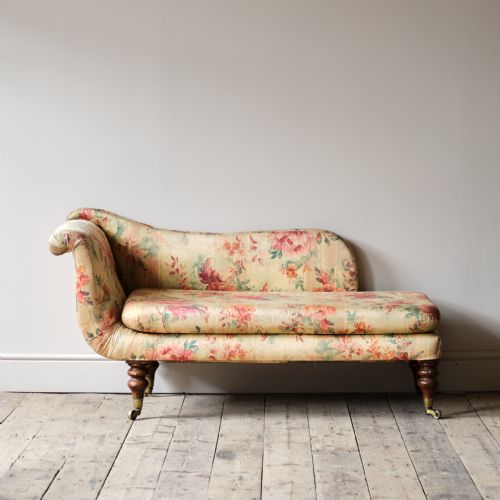


English Fainting Couch
An english fainting couch brings undeniable elegance to a room, offering a sloping backrest designed for resting in comfort without retiring to the bedroom.
English Fainting Couch
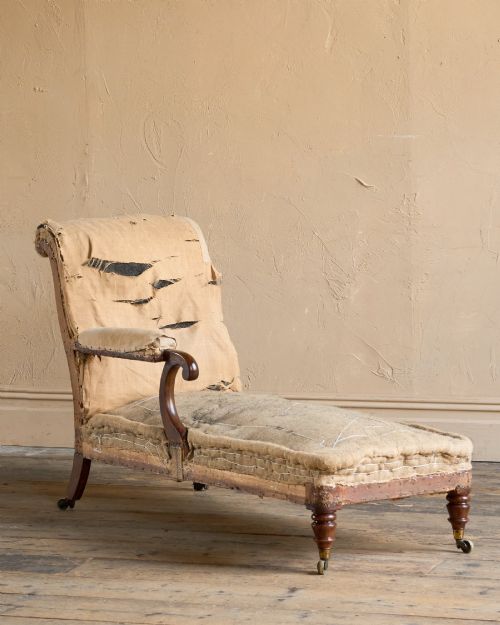
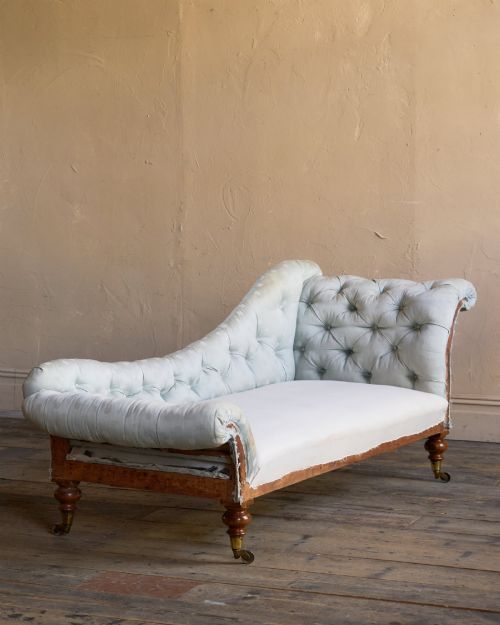
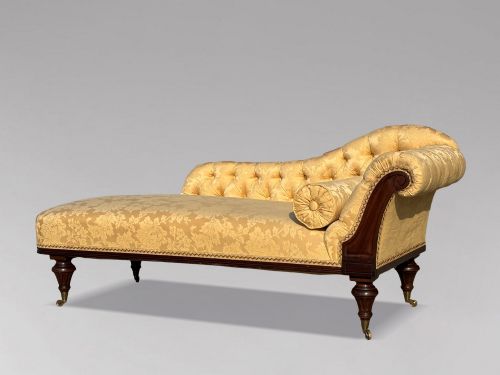
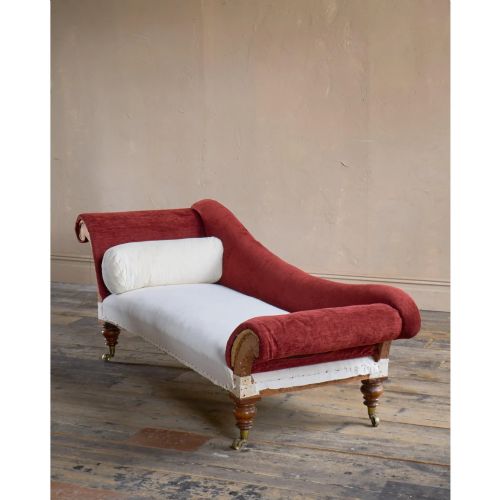
An english fainting couch is a specialised form of day bed designed with a single raised end and a partial backrest, intended for semi-reclining. The examples found here span the Regency and Victorian eras, taking the form of chaise longues and day beds.
Makers and designers of the period produced these couches in mahogany and rosewood, often upholstered in velvet, satin, calico, or various upholstery fabrics. They stand on turned legs equipped with original castors for mobility across country house drawing rooms.
How they were made
Cabinet makers utilised dense hardwoods such as mahogany and rosewood to construct the structural frames of an english fainting couch. These timbers provided the necessary strength to support the sweeping curves of the backrest and the extended seat.
Upholstery techniques involved layering fabrics like velvet, satin, and calico over internal padding supported by the wooden frame. Brass castors were frequently fitted to the turned legs to allow easy movement of the heavy timber furniture.
English Fainting Couch Retail Price Guide 2026
Typical asking prices for english fainting couch among the pieces listed under this phrase on Sellingantiques today, from the lower quarter to the upper quarter. They describe what is for sale here now, not the wider market.
Listings span the nineteenth century, featuring Regency and Victorian periods constructed from mahogany, rosewood, and brass.
What varies in quality
The distinction between standard production and fine workshop attribution rests in the crispness of the wood carving and the fluidity of the scrollwork on the backrest. Maker attribution to notable firms elevates the standing of a piece.
The integrity of the original timber frame and the presence of surviving brass castors dictate the structural merit of the furniture. Finer examples retain their balanced proportions and original structural joins without heavy alterations.
Holland And Sons·Howard And Sons·H Goodall And Sons·Jas Shoolbred·Miles And Edwards·Gillows
The English Fainting Couch Glossary
- Regency
- An architectural and design style spanning the early nineteenth century, characterised by classical restraint and elegant curves. Pieces from this era often utilise mahogany.
- Castor
- A small wheel fitted to the base of furniture legs to allow smooth rolling. Brass versions frequently appear on nineteenth century day beds.
- Upholstery
- The materials including fabric, padding, and springs used to make seating comfortable. Examples here feature velvet, satin, and calico.
English Fainting Couch: Frequently Asked Questions
How do I use an english fainting couch?
An english fainting couch is designed for resting in a semi-reclined position during the day. It functions well as a statement piece in a drawing room or study.
The single raised end supports the head and shoulders, allowing the user to stretch out fully while remaining upright enough to converse or read.
Which woods are common?
Mahogany and rosewood dominate the construction of these nineteenth-century day beds. These dense timbers allowed makers to shape curving backrests with structural integrity.
Dark grain patterns and polished surfaces give these frames their distinctive period appearance.
How do I distinguish Regency from Victorian examples?
Regency pieces lean towards classical lines and simpler mahogany framing from the early nineteenth century. They often reflect the style associated with makers like Gillows.
Victorian pieces from the 1860s and 1880s tend to introduce richer rosewood, varied upholstery fabrics, and more elaborate button-tufting or Chesterfield framing.
Are castors original?
Original brass castors are frequently found on nineteenth-century day beds to aid in moving the heavy hardwood frames. Inspecting the fittings reveals whether they match the age of the legs.
Their presence contributes to the historical completeness of the piece.