

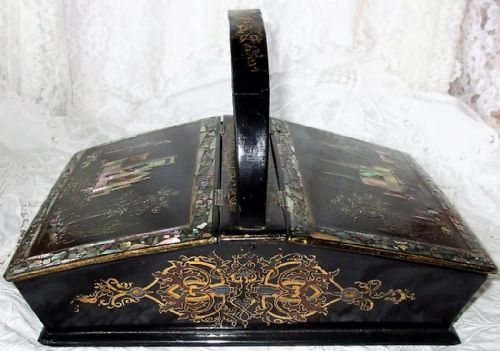


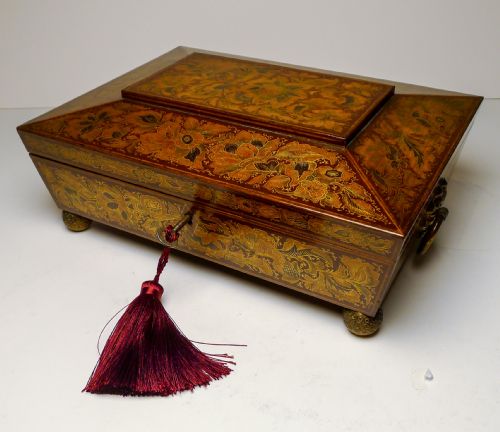

English Decorative Box
An English decorative box brings together fine craftsmanship and utility, offering a glimpse into past domestic habits through materials like rosewood, brass and papier-mâché.
English Decorative Box
An english decorative box encompasses a variety of domestic containers, most frequently appearing as tea caddies, sewing caskets, glove boxes and desk accessories from the Georgian, Regency and Victorian periods.
Buyers seeking an english decorative box will encounter pieces spanning from the mid-eighteenth century to the Edwardian era, with nineteenth-century examples in rosewood, walnut and papier-mâché dominating the selection.
These items served specific household functions, from storing dried tea leaves and sewing implements to securing correspondence and jewellery in the parlour or bedroom.
Materials and Construction
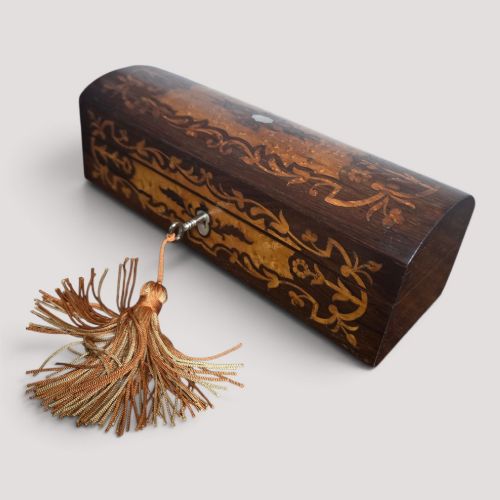
Wood forms the foundation of many pieces, utilising dense timbers like rosewood, padouk, sycamore and oak, often enhanced with boxwood stringing, brass mounts or mother-of-pearl inlay.
Specialised surface techniques define several distinct groups, including Tunbridge ware mosaic work, delicate penwork decoration, and yellow lacquer in the Chinoiserie taste.
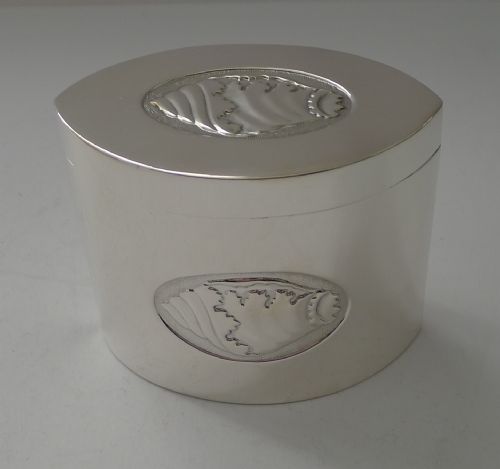
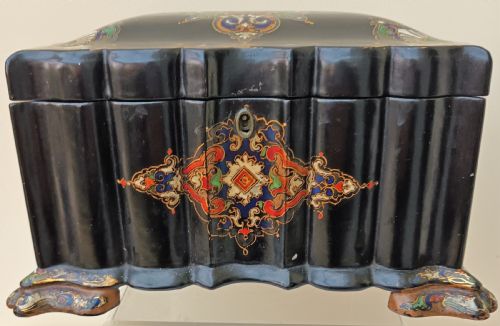
Alternative mediums such as papier-mâché, cast iron, ceramic and solid silver appear across specific caskets, safe boxes and tea caddies.
English Decorative Box Retail Price Guide 2026
Typical asking prices for english decorative box among the pieces listed under this phrase on Sellingantiques today, from the lower quarter to the upper quarter. They describe what is for sale here now, not the wider market.
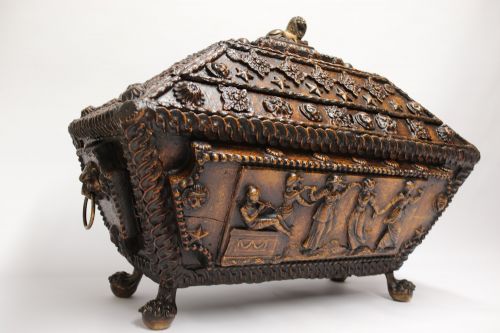
Several boxes double as hidden strong rooms, complete with secret letter compartments and heavy cast iron locking mechanisms.
Judging Quality
The standard of an english decorative box rests upon the precision of its construction, particularly the tightness of wood joints, the alignment of inlay work and the fidelity of penwork or mosaic detailing.
Material selection dictates the upper tier of pieces, where dense exotic woods, substantial brass hardware and complete internal fittings distinguish finer examples from standard production.
Preservation of original surface finishes, interior linings and functional locking mechanisms elevates the standing of a box among collectors.
The English Decorative Box Glossary
- Tea Caddy
- A box designed specifically for storing dry tea leaves, often featuring internal compartments and a fitted lid.
- Tunbridge Ware
- Woodworking characterised by tiny mosaic tiles assembled from different coloured natural woods to form pictorial or geometric motifs.
- Penwork
- A decorative technique using fine ink lines on a prepared surface to create intricate designs mimicking engraving.
- Padouk
- A heavy, durable tropical timber with a reddish hue utilised in eighteenth-century cabinet making.
- Papier-mâché
- A composite material made from paper pulp or layers of paper reinforced with glue, moulded and lacquered for decorative caskets.
English Decorative Box: Frequently Asked Questions
What were tea caddies used for?
Tea caddies served to store expensive tea leaves securely in the formal rooms of the house. Wealthy households kept tea under lock and key to monitor consumption and protect the valuable contents.
Many caddies included internal compartments and mixing bowls, allowing the master or mistress of the house to prepare the brew before guests.
How do I identify Tunbridge ware?
Tunbridge ware is recognised by its distinctive mosaic surface patterns, constructed from thousands of tiny prisms of naturally coloured British and foreign woods.
These tiny blocks create detailed images of flowers, butterflies or geometric borders, typically applied to small trinket boxes, glove boxes and needlework caskets.
What is penwork decoration?
Penwork involves drawing intricate monochrome designs directly onto a primed wooden surface using India ink and a fine nib. The artwork is then sealed with a clear protective varnish.
This technique appeared frequently on Regency games boxes, tea caddies and sewing baskets, often depicting classical scenes, landscapes or floral motifs.
How are Regency boxes different from Victorian ones?
Regency boxes tend to favour clean architectural lines, premium tropical hardwoods like rosewood, and restrained brass stringing or inlay. They reflect a classical aesthetic influenced by antique forms.
Victorian boxes often embrace heavier ornamentation, exploring diverse materials such as papier-mâché, mother-of-pearl, cast iron and ceramic alongside elaborate surface decoration.