



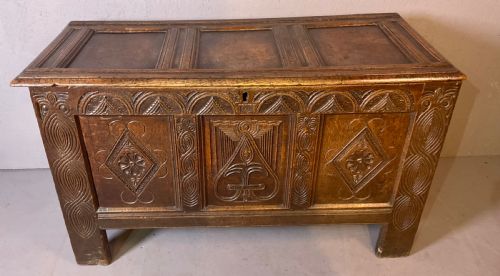


English Country Oak Coffer
An English country oak coffer provides honest, sturdy storage rooted in centuries of domestic history.
English Country Oak Coffer
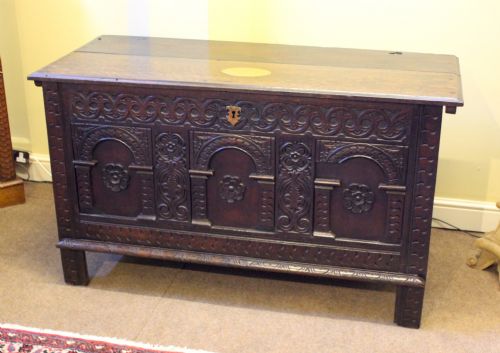
When you search for an english country oak coffer, you encounter heavy wooden storage chests designed for household linen, valuables and provisions. These pieces span from the sixteenth century through the Georgian era, capturing centuries of domestic woodwork.
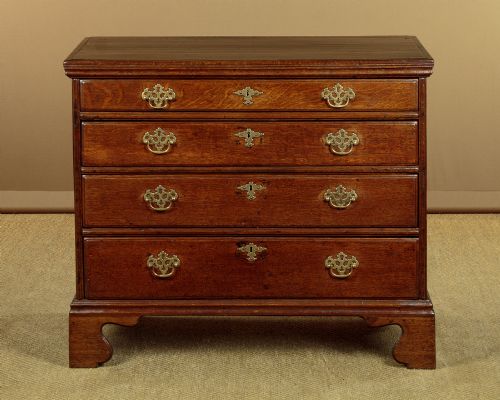
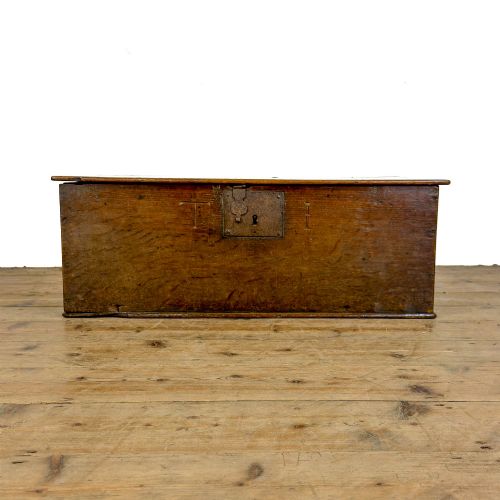
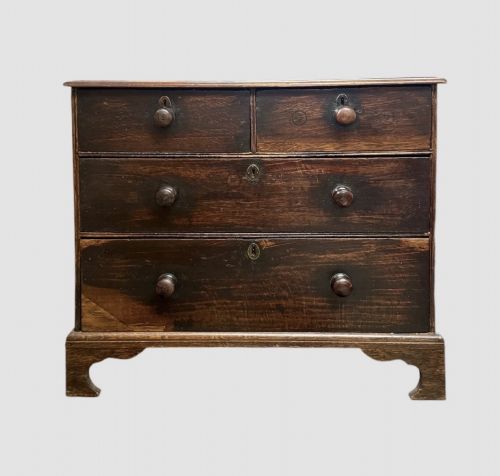
The selection here includes board constructions from the Elizabethan period alongside panelled forms from the seventeenth and eighteenth centuries. Alongside traditional coffers, related country furniture such as mule chests, box settles and small chests of drawers appear regularly.
Originating from regional workshops across England, particularly the West Country and North Country, these items reflect local vernacular traditions. Each piece tells a story of domestic life before fitted cupboards dominated the British home.
Assessing Quality and Character
Quality rests in the integrity of the timber and the honesty of the construction. Pieces retaining their original floorboards, hinges and timber patina command greater appreciation among collectors.
The depth and clarity of any carved detail separate standard vernacular items from finer regional work. Proportion and proportion balance also dictate desirability, particularly in smaller boxes and mule chests.
English Country Oak Coffer Retail Price Guide 2026
Typical asking prices for english country oak coffer among the pieces listed under this phrase on Sellingantiques today, from the lower quarter to the upper quarter. They describe what is for sale here now, not the wider market.
Listings feature oak, iron and brass across periods spanning the sixteenth, seventeenth and eighteenth centuries.
The English Country Oak Coffer Glossary
- Coffer
- A large wooden chest with a hinged lid, traditionally used for storing valuables, linen or documents. These form the primary focus of this collection.
- Mule chest
- A storage chest fitted with one or more drawers at the base beneath the main compartment. This form bridges the gap between the traditional coffer and the chest of drawers.
- Joined coffer
- A chest constructed using a frame and panel technique rather than simple boards. This method allows the timber to expand and contract naturally without splitting.
- Scratch carving
- A simple form of linear decoration incised into the timber surface using a specialised tool. It appears frequently on seventeenth-century West Country pieces.
- Boarded coffer
- A simple chest constructed from solid planks joined directly at the edges. This represents one of the earliest and most robust methods of box construction.
English Country Oak Coffer: Frequently Asked Questions
What were coffers originally used for?
Households utilised coffers to store heavy textiles, winter blankets, church silver and important documents. Because homes lacked built-in closets, these chests served as secure, mobile wardrobes.
Over time, they doubled as seating benches or tables within the main hall. Their robust construction meant they could withstand heavy domestic use.
How can I tell a seventeenth-century coffer from an eighteenth-century one?
Seventeenth-century pieces often display deeper hand-carved panelling, scratch mouldings and a darker, oxidised oak tone. Construction relies heavily on pegged joints and hand-split timber.
Eighteenth-century examples tend toward simpler surfaces, sometimes incorporating drawers at the base or sporting Georgian proportions. The internal timber work and tool marks help confirm the period.
What is a mule chest?
A mule chest is a hybrid form featuring a trunk space above one or two drawers at the bottom. The name reflects this crossing of types, combining chest and drawer storage.
They gained popularity as domestic storage needs expanded during the seventeenth and eighteenth centuries.
How do I care for antique oak furniture?
Keep oak furniture away from direct heat sources and sudden temperature shifts to prevent the timber from splitting. Regular dusting with a dry, soft cloth maintains the natural finish.
Applying a traditional beeswax polish occasionally helps nourish the dry grain without building up heavy residues.