





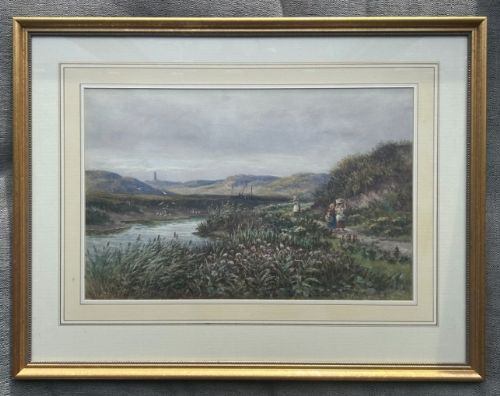


English Coastal Painting
When you search for english coastal painting, you enter a world of Victorian harbours, maritime scenes and quiet estuaries captured in oil and watercolour.
English Coastal Painting
An english coastal painting captures the shores, fishing fleets and harbours of Britain, spanning from the nineteenth century through to the mid twentieth century. These works document maritime life, coastal topography and changing weather along shores from Yorkshire to Cornwall.
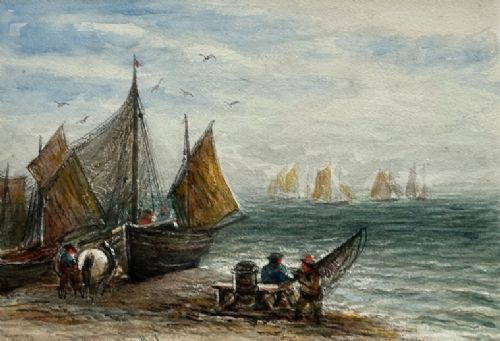
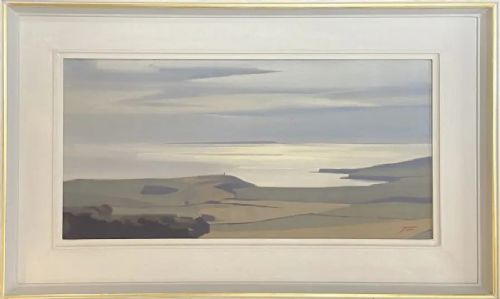
The most common examples on this page are watercolours and oil paintings dating from the Victorian and Edwardian eras, alongside later modernist interpretations. Many pieces focus on specific locations such as Whitby, St Ives, and Kimmeridge Bay, recording regional boat types and coastal architecture.
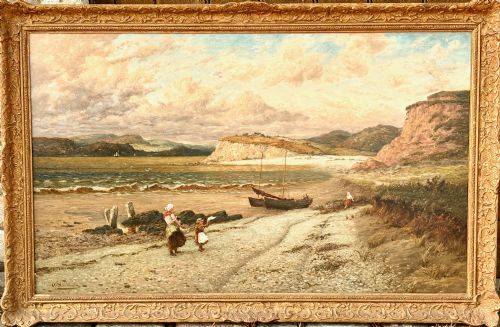
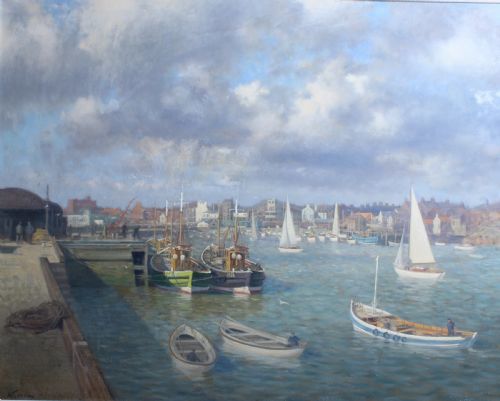
Subjects range from bustling fishing ports with trawling luggers at low tide to quiet estuarine views and dramatic cliff landscapes. Artists worked on paper, canvas, card and board, producing everything from finished gallery pieces to immediate plein air studies.
What Varies in Quality
The distinction between works rests upon the artist's command of light, atmosphere and marine anatomy, particularly the accurate depiction of rigging, hull forms and tidal movement. Stronger paintings demonstrate confident brushwork and a clear understanding of perspective within expansive coastal spaces.
Condition and originality also separate pieces, including the survival of the original giltwood or period framing that suits the age of the canvas or paper. Works that retain their vibrancy of colour and untouched surfaces offer a more direct connection to the artist's original vision.
English Coastal Painting Retail Price Guide 2026
Typical asking prices for english coastal painting among the pieces listed under this phrase on Sellingantiques today, from the lower quarter to the upper quarter. They describe what is for sale here now, not the wider market.
Materials span oil on canvas, board, and card, alongside watercolour pigment on paper.
James Orrock·William Banks Fortescue·James Fry·Walter Goodin·Alfred George Morgan·John Bedloe Goddard·Joseph Edward Hennah·William Edward Webb·Charles Napier Hemy·Richard Harry Carter·Helen Layfield Bradley·William J B Jenkins·Arthur Tucker·Herbert Royle·George Morland·George Hamilton Constantine·John Bell·Frederick William Hattersley·Frederick William Booty·Sir Herbert Hughes-Stanton·Harry Pennell·Alfred Henry Vickers·Stephen John Batchelder·Frederick Williamson·Alfred Robert Quinton
The English Coastal Painting Glossary
- Impasto
- Paint applied thickly to a canvas or board, leaving prominent brush or palette knife marks that catch the light. This technique is often used in maritime scenes to render the heavy texture of crashing waves or turbulent skies.
- Plein air
- Painting executed outdoors in the open air rather than inside a studio. Artists adopted this method to observe natural light and weather conditions along the shoreline first hand.
- Lugger
- A traditional two-masted fishing vessel carrying standing lug sails, commonly seen in nineteenth-century West Country and Yorkshire maritime paintings.
- Estuary
- The tidal mouth of a large river where the tide meets the stream, providing artists with expansive flat horizons and shifting mudflats to paint.
- Provenance
- The documented history of ownership of an artwork, establishing its authenticity and lineage back to the artist or original collection.
English Coastal Painting: Frequently Asked Questions
What periods do these paintings cover?
The works listed here primarily date from the nineteenth and twentieth centuries, encompassing Victorian, Edwardian, and mid-century British art movements. You will find pieces reflecting both traditional academic styles and emerging modernism.
Most items originate between the late eighteen hundreds and the nineteen seventies, capturing an evolving view of the British coastline over several decades.
How should I care for a watercolour painting?
Watercolour paintings on paper require careful placement away from direct sunlight to prevent the pigments and paper from fading or discolouring over time. Archival framing with acid-free mounts helps protect the delicate paper from environmental damage.
Keep these artworks in stable humidity conditions to avoid cockling of the paper and ensure the glazing does not touch the surface of the painted area.
Are these paintings signed by the artists?
Many of the works retain the artist's signature or monogram, often inscribed near the lower edge within the composition. Attribution is also supported by period exhibition labels, inscriptions on the reverse, or established stylistic records.
Unsigned pieces are occasionally attributed to a specific British school or period based on technique, subject matter, and materials typical of the era.
How do oil paintings on board differ from canvas?
Oil paint applied to wooden panels, card, or rigid board provides a stable surface that is less susceptible to punctures or slackening than stretched fabric. This support was frequently utilised by artists painting outdoors.
Canvas offers natural flexibility and a woven texture that interacts with the paint layers, while board delivers a smooth or subtly textured ground that holds fine linear details.