




English Church Oil Painting
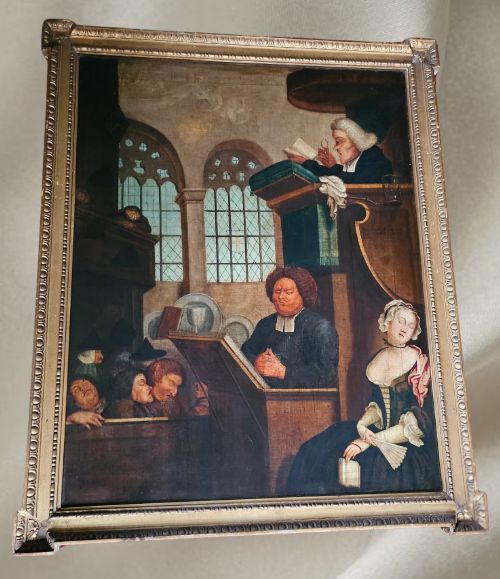
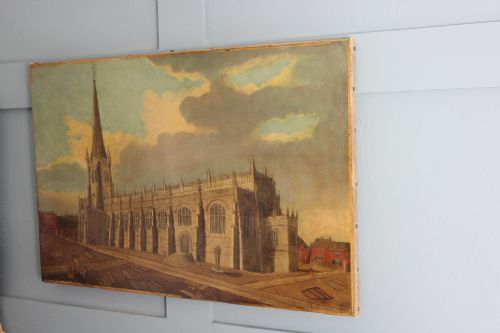
An English church oil painting captures the historic architecture and rural charm of the nation through traditional canvas and wood mediums.
English Church Oil Painting
When you search for an english church oil painting, you encounter works spanning the Regency, Victorian and twentieth-century periods, capturing rural parishes and urban cathedrals across the country.
The subjects range from detailed depictions of specific Yorkshire and London structures to broader English country landscapes featuring distant spires and village churchyards.
Most pieces on this page are framed oil paintings on canvas or board, created by named artists or unsigned British school hands.
Judging Quality
The strength of composition and the handling of light distinguish finer works from standard topographical records.
Untouched condition and period frames that complement the canvas enhance the integrity of the piece.
Kershaw Schofield·John Cawthorn·William Greaves·John Jaques·Frederick Underhill·Stephanie Cooper·Daniel Sherrin·William Marlow·Clement Morris·W J Poole
The English Church Oil Painting Glossary
- Oil paint
- A slow-drying medium made by pigment particles suspended in a drying oil, typically linseed. This allows painters to blend tones and build rich surface textures.
- Canvas
- A heavy woven fabric stretched across a wooden frame to form the foundation for a painting. It provides the standard support for historical oil works.
- Gilded wood
- Wood treated with a thin layer of gold leaf or gilt finish, commonly used for period picture frames. It adds a warm metallic border to the artwork.
- British Impressionism
- A late nineteenth and early twentieth century painting style focusing on light and brushwork. Artists captured everyday English scenes with loose, vibrant strokes.
English Church Oil Painting: Frequently Asked Questions
How do I date an oil painting?
Examine the materials of the stretcher, the canvas preparation, and the framing style, which often reflect the period of creation.
Signatures, artist inscriptions on the reverse, and stylistic traits tied to Victorian or Regency conventions offer further chronological clues.
Where were these churches usually painted?
Artists painted structures ranging from grand London cathedrals and Yorkshire minsters to small village parishes across the English countryside.
Many works record specific local landmarks, capturing the topography and rural life surrounding the churchyard.
What is the difference between canvas and board?
Canvas is a woven fabric stretched tightly over a wooden frame, offering slight give and a textured surface for brushstrokes.
Board provides a rigid, flat support panel that artists frequently used for smaller studies and rural landscapes.