



English China Tea Service
An English china tea service brings centuries of porcelain craftsmanship to the table, offering both decorative charm and a connection to historic social rituals.
English China Tea Service
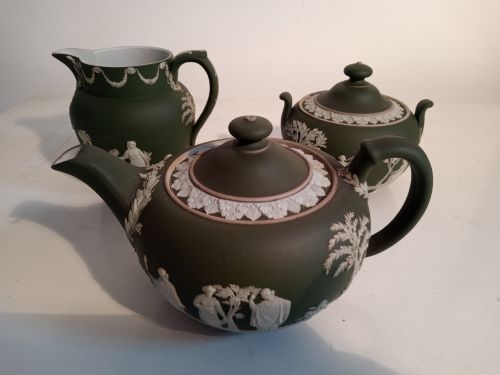
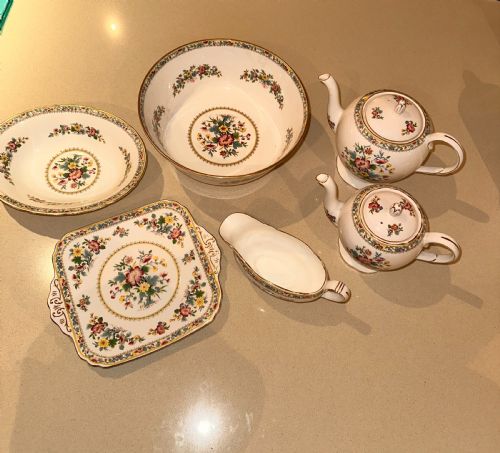
An english china tea service comprises matched or part-matched porcelain vessels intended for the preparation and consumption of tea, appearing across periods from the eighteenth century through the twentieth century. These sets typically include teapots, sugar bowls, cream jugs, and cups with saucers, varying in scale from intimate solitaire sets to large settings for ten or more guests.
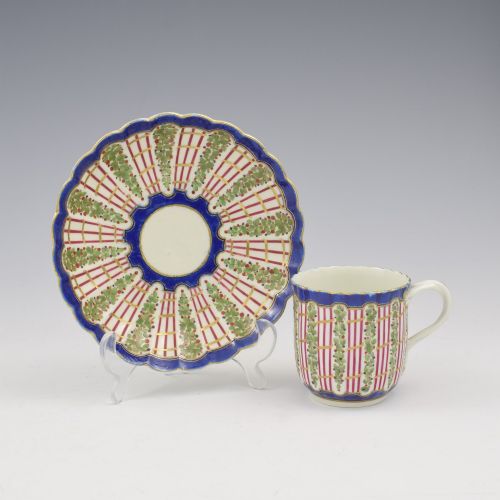
The pieces available span diverse aesthetic movements, including Georgian, Regency, Victorian, Edwardian, and Art Deco designs. Buyers frequently encounter sets featuring hand-painted motifs, transfer printing, or traditional Imari palettes produced by historic English factories.
Materials and manufacture
Potters utilised soft-paste porcelain, bone china, and ironstone to form the body of each vessel, applying specialised glazes before firing at high temperatures. Many items received meticulous hand-painted details or intricate transfer-printed patterns.
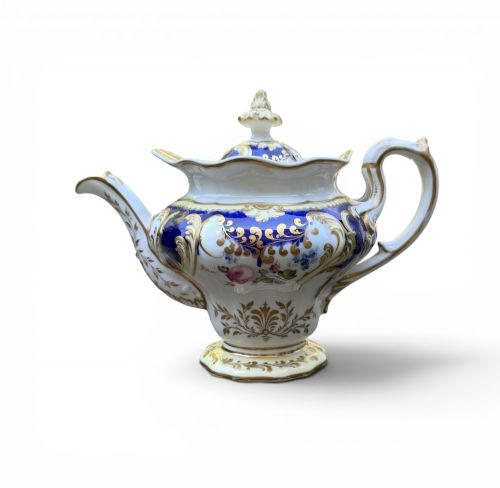
Gilding and gold leaf accents were frequently applied by hand to rims, handles, and borders, sometimes requiring secondary firings to bond the metallic decoration securely to the glaze.
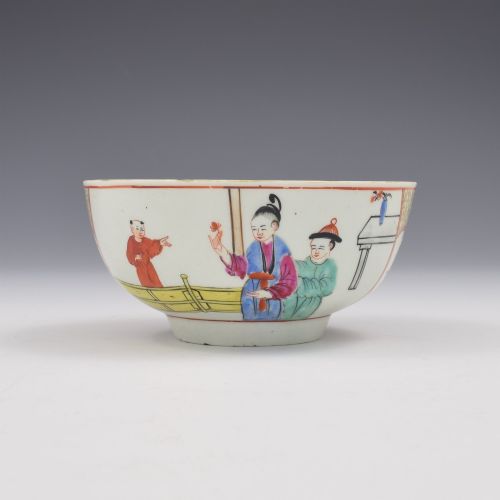
Gentlemen also enjoyed tea, as evidenced by specialised eighteenth-century Worcester slop bowls decorated with Mandarin figures.
Determinants of quality
Quality in these ceramics rests upon the crispness of the moulding, the translucency of the porcelain body, and the precision of the hand-painted or transfer-printed decoration. Early soft-paste pieces and finely potted bone china demonstrate superior craftsmanship through thinner walls and more refined handles.
The artistry of the enamel painting and the density of the gilding further distinguish standard production ware from high-status commissions created by leading porcelain works.
Derby Porcelain·Worcester Porcelain·Wedgwood·Spode·Royal Crown Derby·Coalport·Shelley·Royal Albert·Minton·Copeland Spode·Royal Worcester
The English China Tea Service Glossary
- Bone china
- A type of soft-paste porcelain incorporating bone ash, known for its high strength, opacity, and milky white appearance.
- Sucrier
- A covered vessel designed specifically for holding lump or loose sugar, often matching the teapot in a service.
- Soft-paste porcelain
- An early ceramic composition fired at lower temperatures than hard paste, prized by collectors for its warm glaze texture.
- Imari
- A decorative style characterised by the use of underglaze blue, iron red, and gilt highlights, inspired by Japanese export wares.
- Gilding
- The application of gold leaf or powdered gold to the surface of porcelain for ornamentation.
English China Tea Service: Frequently Asked Questions
What is included in an english china tea service?
A standard set generally comprises a teapot, sugar bowl, and milk jug accompanied by matching teacups and saucers. Larger service configurations may accommodate six to ten or more guests.
Some collections also incorporate slop bowls or cake plates, depending on the period and the specific manufacturer's design.
How do I identify the period of a set?
Dating relies heavily upon factory backstamps, paste composition, and stylistic markers such as Regency neoclassical forms or Art Deco geometric patterns.
Detailed study of the hand-painted motifs and shape profiles helps narrow the decade of manufacture.
Can I use an antique set daily?
Historic porcelain requires careful handling due to the delicate nature of soft-paste bodies and delicate overglaze hand-painted enamels.
Hand washing in warm water without abrasive detergents preserves the glaze and intricate gilding over time.
What is a solitaire set?
A solitaire set is a miniature tea service scaled specifically for a single person, featuring a small teapot, cup, saucer, and sometimes a tiny creamer.
These pieces were typically produced for private use in bedchambers or intimate parlours during the eighteenth and nineteenth centuries.