



English Chiming Clock
An English chiming clock brings architectural presence and mechanical melody into a room through centuries of traditional craftsmanship.
English Chiming Clock
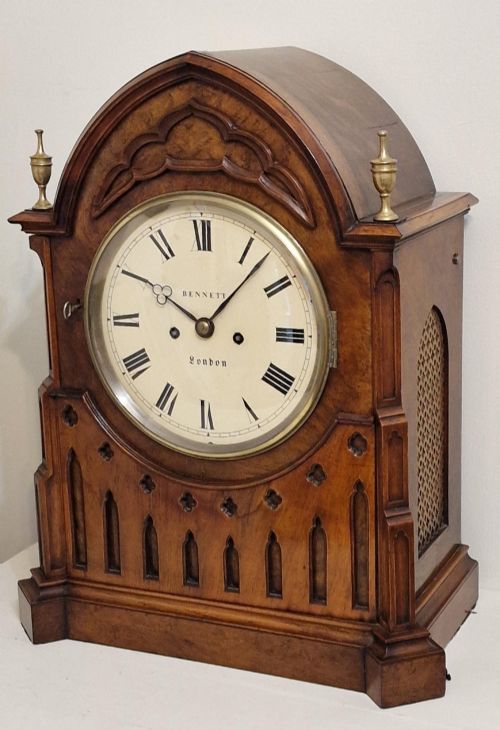
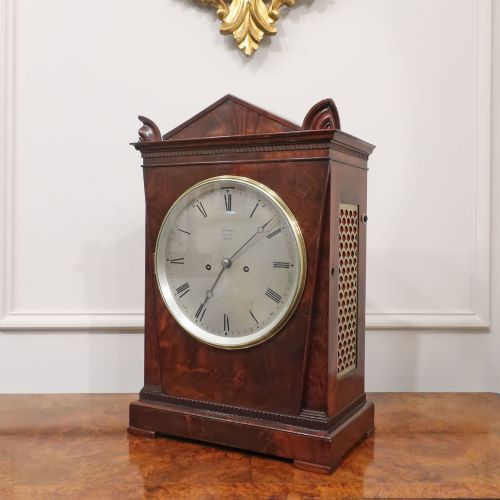
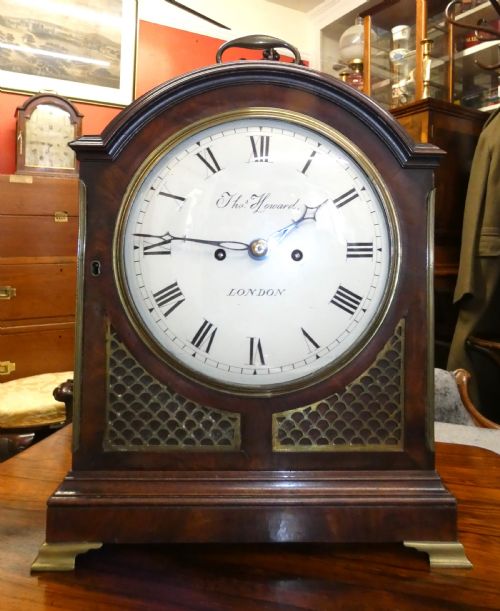
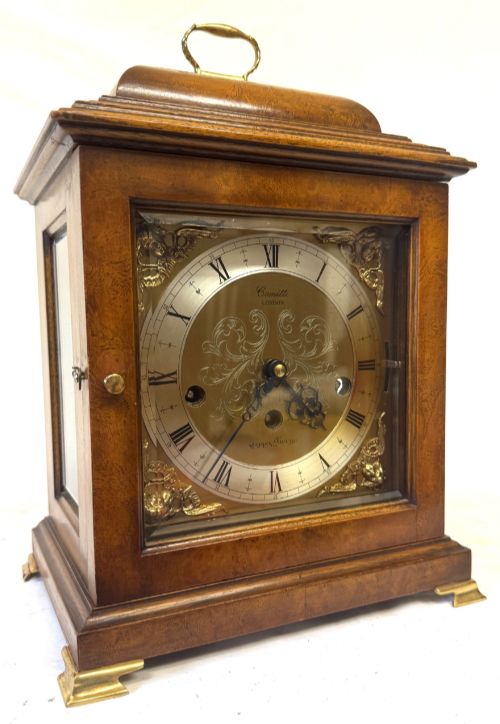
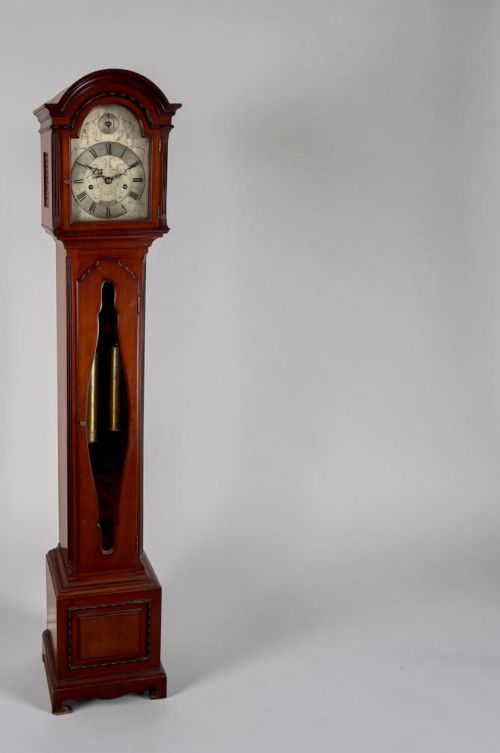
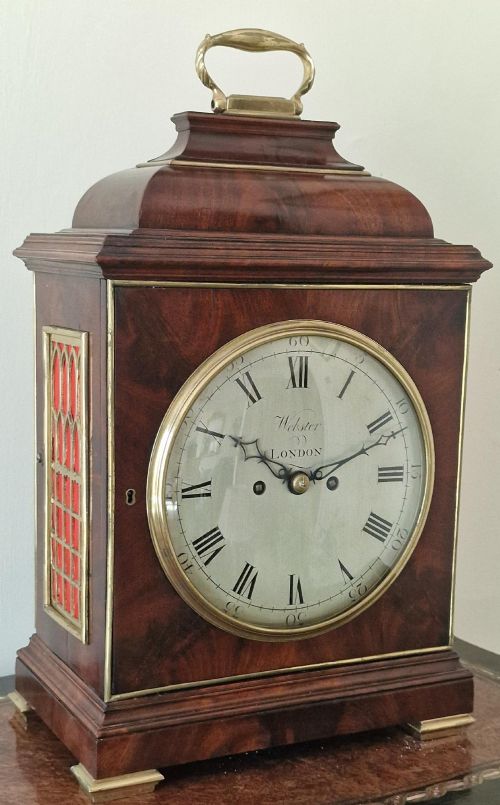
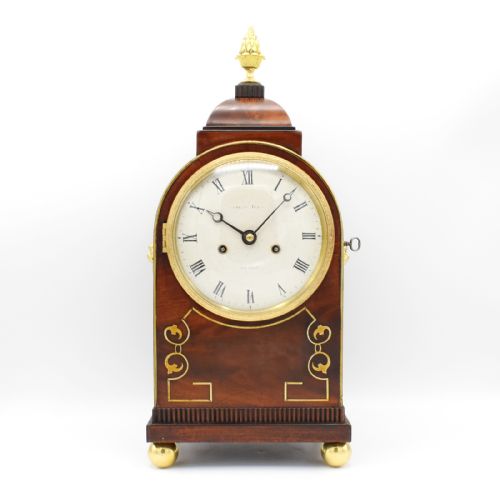
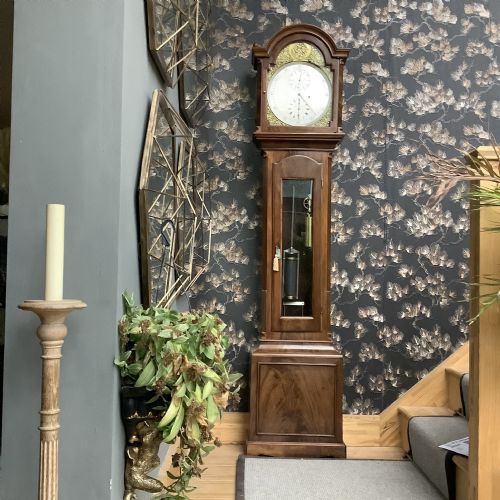
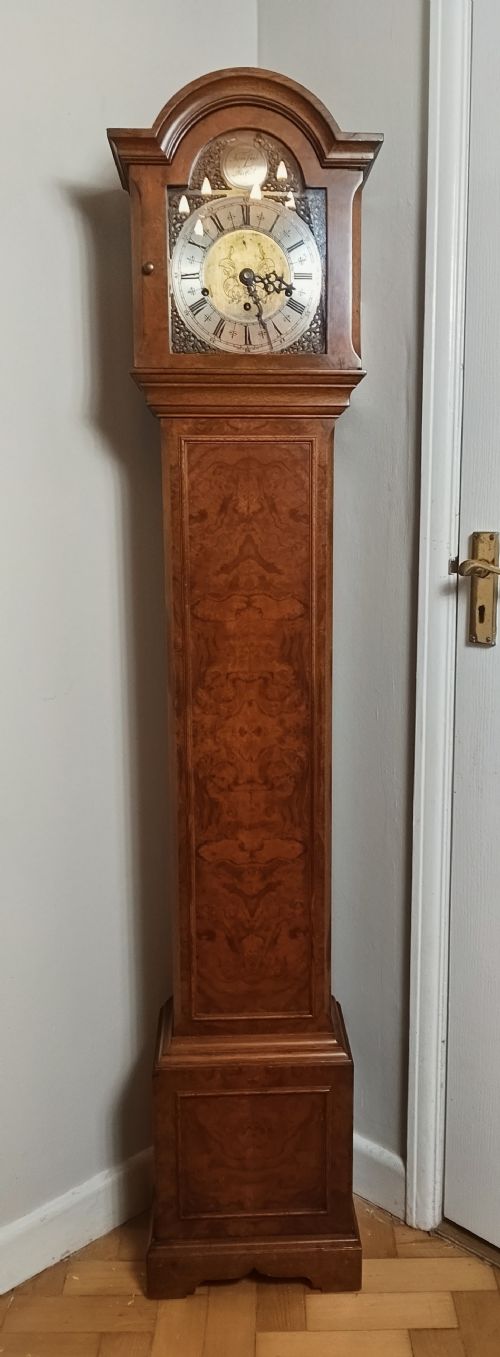
When you search for an English chiming clock, you encounter timepieces ranging from compact bracket and mantel clocks to tall longcase and grandmother clocks. The most common forms on this page include mahogany and burr walnut bracket clocks alongside oak grandfather clocks.
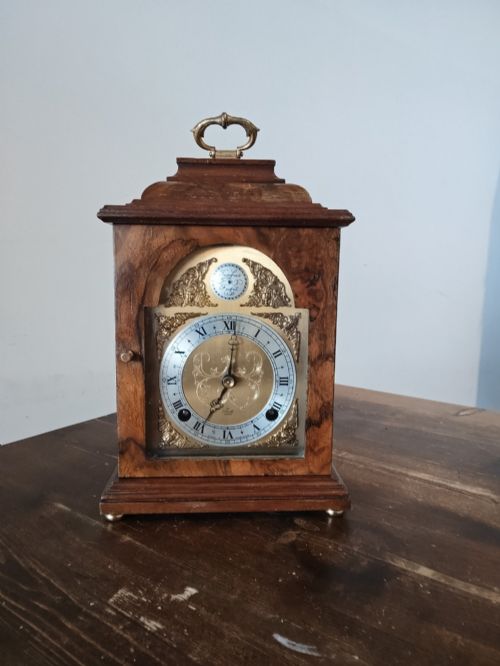
The periods represented span from the eighteenth century through the Georgian, Regency and Victorian eras up to mid-century examples from makers such as Elliott. These pieces served both a practical timekeeping function and a decorative role within period interiors.
Materials and movement construction
The structural casework relies heavily on timbers such as mahogany, oak, burr walnut and ebonised wood, often augmented by brass mounts, silvered dials and glass panels. These materials give the clocks their characteristic weight and durability.
Internally, brass and steel drive the complex mechanisms, utilising fusee movements and multiple pillars to regulate the striking and chiming trains. Enamel dials and engraved backplates frequently accompany these mechanical assemblies.
English Chiming Clock Retail Price Guide 2026
Typical asking prices for english chiming clock among the pieces listed under this phrase on Sellingantiques today, from the lower quarter to the upper quarter. They describe what is for sale here now, not the wider market.
Several clocks include functional alarms, proving that eighteenth-century owners also struggled to wake up on time.
Judging quality in horology
Quality separates through the crispness of the cabinet woodwork, the refinement of the brass dial engraving and the complexity of the movement. Twin and triple fusee setups represent higher mechanical ambition than simpler striking trains.
The integrity of the original components and the precision of the maker's signature on the dial or movement dictate the standing of an individual clock. Signed dials by recognised London makers generally distinguish the superior examples.
Thomas Howard·Gillett & Johnston·Mappin & Webb·Francis Perigal·Cording of London·Taylor of London·J. Condliff Liverpool·Berguer of the Strand·John Taylor·Chater & Son·William Smith·John Ellicott·Richard Peckover
The English Chiming Clock Glossary
- Bracket clock
- A portable mechanical clock originally designed to sit on a wall bracket or table. These spring-driven pieces often feature intricate wooden cases and carrying handles.
- Fusee
- A conical pulley used in spring-driven clocks to maintain an even pull as the mainspring unwinds. This mechanism improves the timekeeping accuracy across the duration of the wind.
- Grandfather clock
- A tall freestanding pendulum clock housed in a wooden longcase. They are also known as longcase clocks and measure significant vertical proportions.
- Quarter repeating
- A complication that sounds the hours and the elapsed quarters when activated by a cord or lever. This function allowed owners to check the time in the dark.
- Twin fusee
- A movement utilising two separate fusee cones, one driving the timekeeping train and the other powering the strike or chime train. It is a hallmark of better quality English horology.
English Chiming Clock: Frequently Asked Questions
Where should I place a bracket clock?
Bracket clocks suit sturdy pieces of furniture such as sideboards, tables or dedicated wall shelves where their visual weight is supported. Ensure the surface is level to keep the pendulum swinging evenly.
Keep them away from direct sunlight and fluctuating heat sources to protect the wooden veneers and delicate internal oils.
How do I wind an antique clock?
Use the correct winding key gently, turning it only until you feel resistance from the mainspring. Overwinding can damage the internal gearing of fusee and spring-driven movements.
Consult the specific requirements of the striking or chiming trains so you do not force the mechanism out of sequence.
What is a Westminster chime?
A Westminster chime is a four-note melody played on bells or gongs to mark the quarters of each hour. It derives its familiar tune from the clock tower at the Houses of Parliament.
Clocks featuring this movement often include a silent lever if you wish to temporarily halt the musical sequence.
How do I date an English clock?
Dating relies on stylistic clues in the wooden case, the shape of the dial, and the signature of the maker inscribed on the brass plate. Georgian and Regency pieces typically show different veneer choices and dial proportions compared to Victorian or Edwardian examples.
Internal movement signatures often provide direct evidence of the maker and active working period.