






English Cased Glass
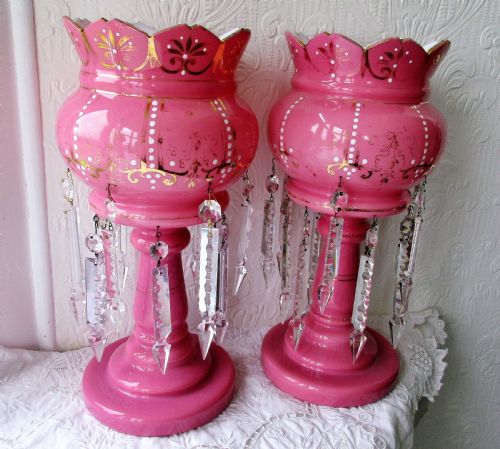
English cased glass brings depth and layered colour to a room through contrasting gathers of fused molten metal.
English Cased Glass
English cased glass pieces span utilitarian items and decorative vessels created to display complex colouration and craftsmanship.
Vases dominate the selection, showing distinct layers of coloured glass fused together during formation.
The objects stem from periods including the late nineteenth century, reflecting Victorian and later aesthetic shifts.
Methods of manufacture
Cased glass involves blowing a primary gather of glass inside or over a second layer of a contrasting hue to achieve a rich internal depth.
Hot-joining enables makers to fuse distinct layers before shaping the vessel on the punty iron.
English Cased Glass Retail Price Guide 2026
Typical asking prices for english cased glass among the pieces listed under this phrase on Sellingantiques today, from the lower quarter to the upper quarter. They describe what is for sale here now, not the wider market.
Vessels often hide their true colours until the light catches the inner core just right.
Assessing craftsmanship
The evenness of the exterior layer relative to the inner core dictates the technical success of the piece.
Depth of colour and clarity within the fused strata separate standard production from superior examples.
Webb's·Dent·William Evans of Handsworth·Clerke·J Hughes London·Short & Mason Limited·W.E. Pain of Cambridge·John Massey
The English Cased Glass Glossary
- Cased glass
- Glass formed of two or more distinct layers of different colours fused together while molten. This technique creates optical depth and allows surface cutting to reveal underlying hues.
- Satin glass
- Glass treated with hydrofluoric acid to produce a velvety, matte finish rather than a high gloss. It appears frequently on Victorian decorative vessels.
- Gather
- A lump of molten glass collected on the end of a blowpipe before inflation. Multiple gathers form the separate layers in cased pieces.
- Punty
- A solid iron rod attached to the base of a blown vessel to hold it during finishing work. It leaves a characteristic circular scar known as a pontil mark on the underside.
English Cased Glass: Frequently Asked Questions
What is English cased glass?
English cased glass consists of items made with multiple fused layers of coloured glass. This construction permits contrasting colours to sit one inside the other.
Craftsmen often cut through the outer layer to expose the contrasting colour beneath, creating patterns and pictorial designs.
How do you clean cased glass?
Clean these items using lukewarm water and a mild detergent to protect the exterior finish. Avoid abrasive pads that might scratch the surface.
Dry the vessel thoroughly with a lint-free cloth to maintain the clarity of the layered glass.
Where should I display cased glass?
Place these pieces where natural light passes directly through the layers to illuminate the interior colours. Cabinets with glass shelves work well for this purpose.
Keep them away from direct heat sources and areas prone to accidental knocks.