

English Captain Chair
An English captain chair brings sturdy domestic seating into the study, combining low-slung comfort with traditional woodworking.
English Captain Chair
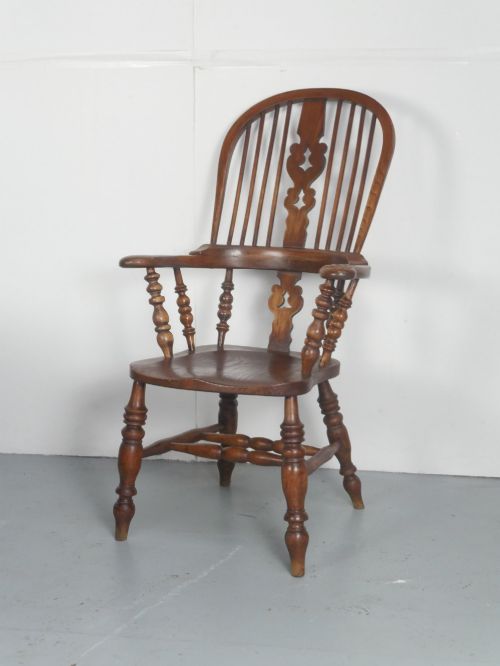
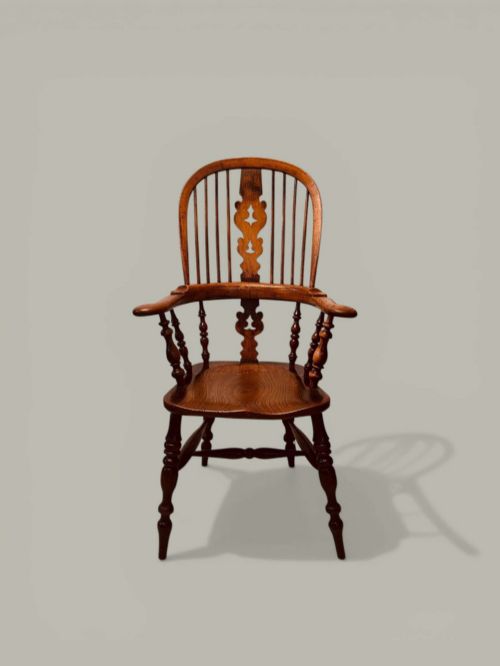
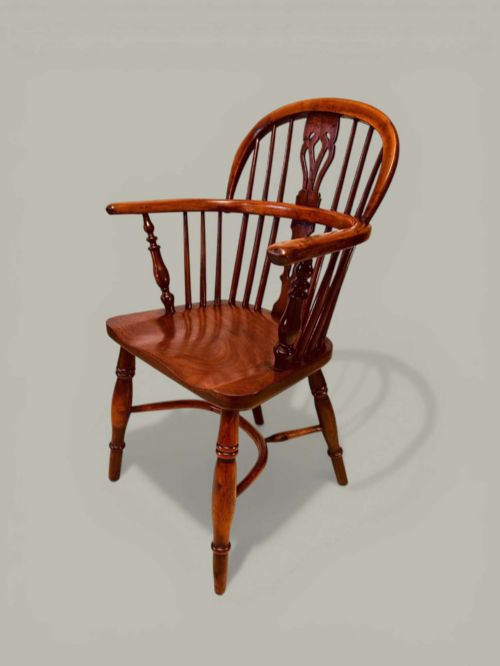
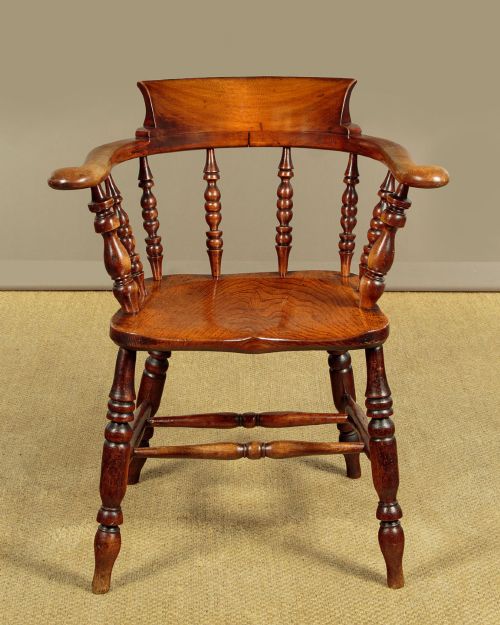
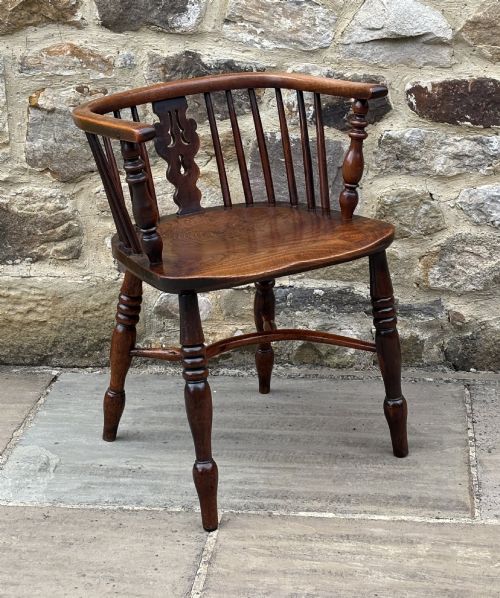
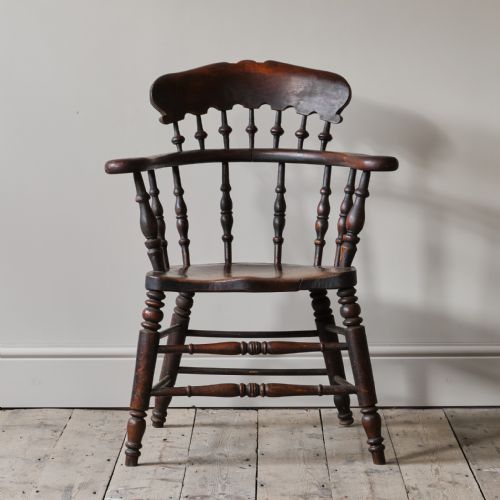
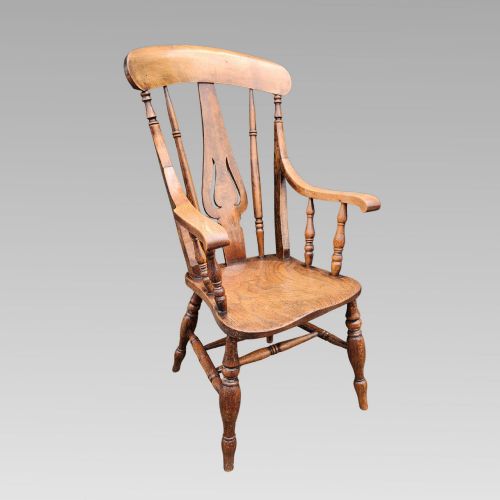
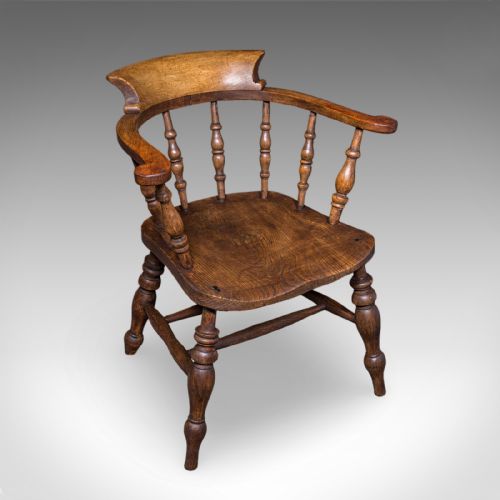
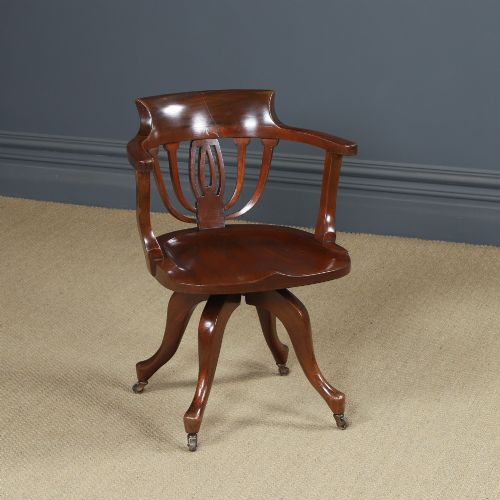
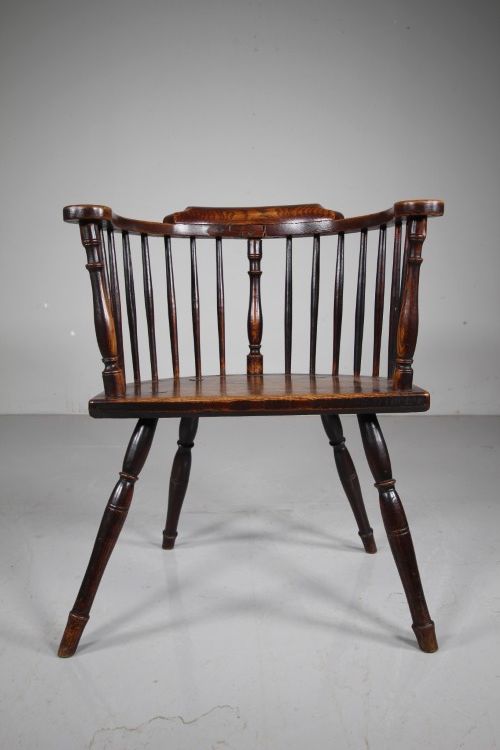
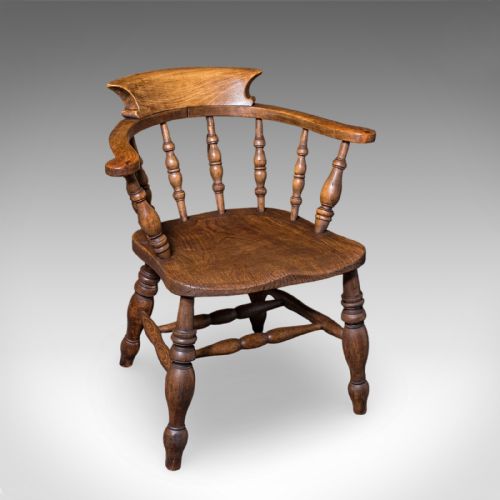
An English captain chair encompasses low-back Windsor variants, smoker's bows, and swivel office seating found across the eighteenth, nineteenth, and early twentieth centuries. Buyers searching this phrase meet robust wooden armchairs designed for offices, studies, and country houses.
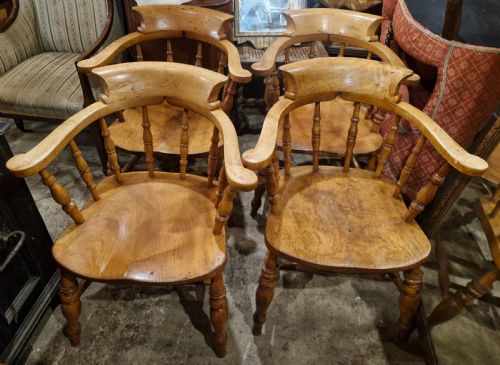
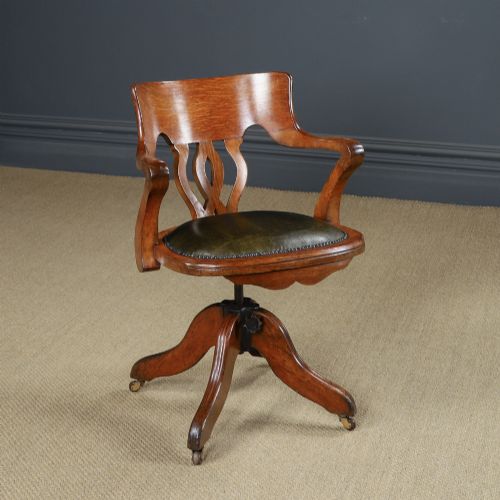
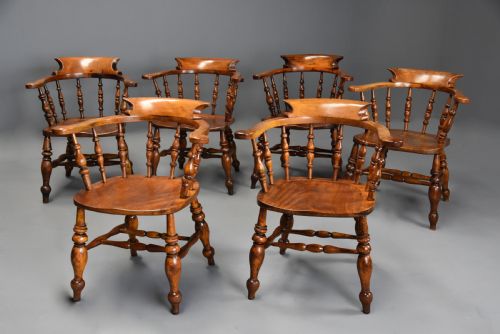
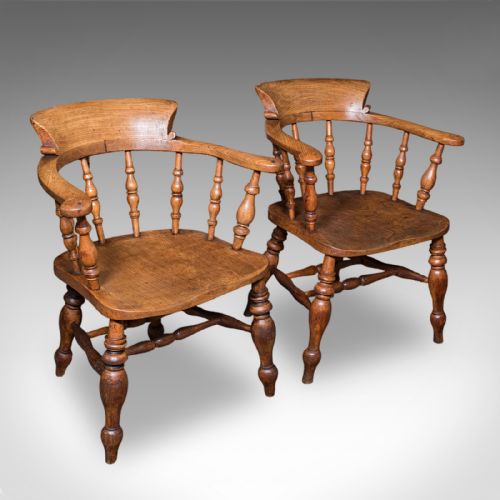
The most frequent version on this page is the nineteenth-century smoker's bow or low-back Windsor armchair, typically constructed with a curved backrest and turned spindles. These utilitarian forms also appear as revolving desk chairs upholstered in green leather.
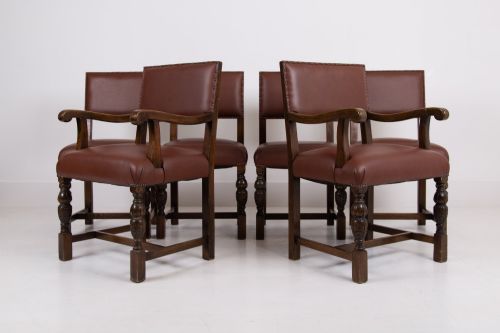
Origins span vernacular English country workshops alongside formal cabinet makers, utilising regional timbers like elm, ash, beech, and yew. Pieces range from seventeenth-century Cromwellian oak designs to Edwardian and George V office seating.
How they were made
Construction relies on traditional timber framing, pairing solid elm seats with bentwood ash or yew armbows and turned beech or fruitwood spindles. Cabinet makers used steam bending to shape continuous wooden rails for the arms and backrests.
Joinery incorporates wedged tenons and mortise joints to secure the legs and spindles directly into thick saddle-shaped wooden seats. Office variants integrate brass swivel mechanisms and green leather upholstery pinned with studs.
English Captain Chair Retail Price Guide 2026
Typical asking prices for english captain chair among the pieces listed under this phrase on Sellingantiques today, from the lower quarter to the upper quarter. They describe what is for sale here now, not the wider market.
Listings feature English captain chairs spanning from the 17th century through the Georgian, Victorian, and Edwardian periods.
What varies in quality
The selection of timber dictates the distinction between standard utilitarian seating and high-end cabinet work, with figured yew wood and wide one-piece elm seats marking superior examples. Grain pattern, timber density, and the patination accumulated over centuries elevate specific pieces.
Refined turning on spindles and well-balanced proportions separate workshop pieces from mass-produced variants. The retention of original swivel hardware and undisturbed leather on office models alters the overall character of the chair.
Fred Walker Rockley
The English Captain Chair Glossary
- Smoker's bow
- A low-backed wooden armchair with a turned rail running around the top of the spindles, commonly associated with nineteenth-century English pubs and parlours.
- Windsor chair
- A chair built with a solid wooden seat into which the legs and back spindles are bored directly, often featuring a bentwood bow back.
- Cromwellian
- A style of mid-seventeenth-century English furniture characterised by straight lines, oak frames, and leather upholstery fastened with brass nails.
- Broad arm
- A chair design featuring an enlarged flat wooden armrest intended for writing or resting books, frequently seen on nineteenth-century captain chairs.
- Carver chair
- An eighteenth or nineteenth-century term for an armchair used at the head of a dining table or within a parlour setting.
English Captain Chair: Frequently Asked Questions
What is an English captain chair?
An English captain chair is a sturdy wooden armchair, often taking the form of a low-back Windsor or a smoker's bow, designed for everyday seating in studies or offices.
These chairs bridge the gap between vernacular country furniture and formal library seating, utilising regional timbers like elm and yew.
Are these chairs comfortable for daily desk use?
Many nineteenth-century and Edwardian variants include revolving swivel mechanisms and padded leather seats specifically engineered for prolonged office work.
Wooden saddle seats offer ergonomic support, though adding a small cushion is common for modern daily use.
What woods were used to build them?
English makers relied on native hardwoods, most notably combining elm seats with ash or beech spindles and bent yew armbows.
Oak appears on earlier seventeenth-century desk variants, while mahogany was utilised for formal Regency and Victorian library chairs.
How do I tell an older chair from a later copy?
Examination of the underside reveals tool marks, hand-turned spindle tenons, and the distinct wear patterns associated with age and use.
Timbers shrink unevenly over centuries, causing seats to develop natural undulations and grain separation not found in modern reproductions.