



English Campaign Box
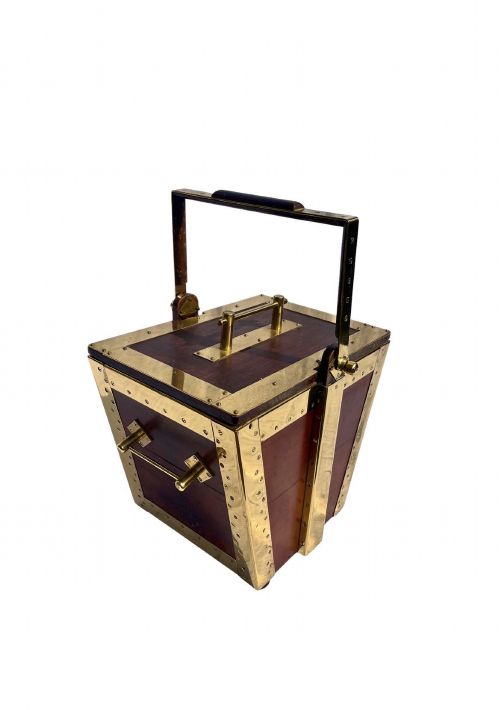
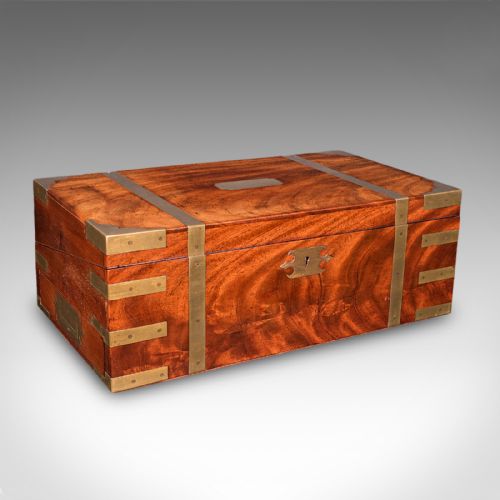
These English campaign box pieces are robust, brass-bound chests and writing slopes made for travel during the Georgian and Victorian eras.
English Campaign Box
When you search for an english campaign box, you are looking at portable furniture built for officers, travellers and officials on the move. The pieces on this page span several decades, reaching from the Georgian period through the Regency era and deep into High Victorian times.
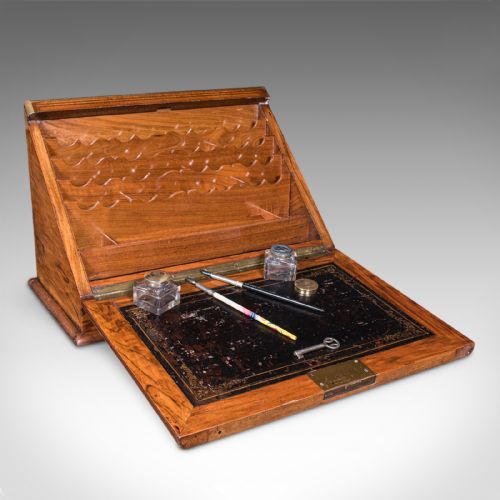
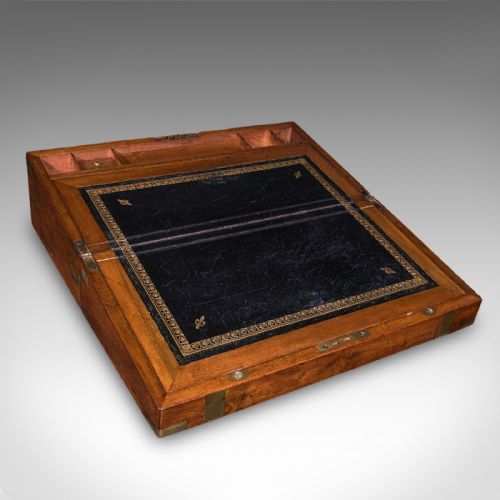
The forms vary widely according to their original use. You will find large camphorwood chests and oak silver trunks alongside compact walnut writing slopes, apothecary cases and fitted stationery boxes.
Most examples originate from the nineteenth century, reflecting the peak of British military expansion and overseas travel. Their practical origins dictate their sturdy construction, flush-fitting brass handles and reinforced corners.
How they were made
Cabinetmakers built these pieces using durable timbers such as oak, mahogany, walnut, camphorwood and teak. These woods were chosen for their stability and resistance to warping in changing climates.
Makers reinforced the corners and edges with heavy brass or iron mounts to withstand rough transit by sea and land. Flush-fitting brass drop handles and recessed lock plates kept the exterior smooth and prevented snagging during loading.
English Campaign Box Retail Price Guide 2026
Typical asking prices for english campaign box among the pieces listed under this phrase on Sellingantiques today, from the lower quarter to the upper quarter. They describe what is for sale here now, not the wider market.
Listings span from the Georgian period through Regency to the late Victorian era, utilising oak, walnut, camphorwood and brass.
What varies in quality
The standard of a piece depends largely on the complexity of its interior fittings and the precision of its joinery. Superior boxes feature clever secret compartments, folding mechanisms and finely fitted stationery slots that operate smoothly.
Materials also set examples apart, with figured timbers like burr walnut or fragrant camphorwood indicating higher status than plain deal or standard oak. The quality of the brass hardware, from hand-cut screws to engraved escutcheons, marks the difference between standard field equipment and bespoke commissions.
Mappin & Webb
The English Campaign Box Glossary
- Campaign furniture
- Portable furnishings designed to dismantle or fold for military officers and travellers on active service.
- Writing slope
- A portable box with an angled, hinged writing surface that lifts to reveal storage for paper and ink.
- Escutcheon
- A protective plate surrounding a keyhole, usually made of brass on these pieces to prevent the surrounding wood from splitting.
- Camphorwood
- An aromatic timber frequently used for campaign chests because its natural oils deter insects.
- Secret drawer
- A concealed compartment hidden behind removable panels or triggered by a hidden spring catch.
English Campaign Box: Frequently Asked Questions
What is an english campaign box?
An english campaign box is a portable piece of furniture designed for travel by military officers and officials during the Georgian and Victorian periods. These sturdy chests and boxes were built to withstand rough transport while keeping contents secure.
They often feature reinforced corners, recessed brass handles and fitted interiors for writing materials, valuables or medical supplies.
How were these boxes used?
These boxes served multiple practical purposes for travellers on the move. Writing slopes provided a portable desk for correspondence, while camphorwood chests stored uniforms and blankets.
Other specialised forms included apothecary cases for medicines and silver chests for transporting household valuables safely on long journeys.
How do I date a campaign box?
Dating relies on timber choices, brass hardware styles and construction methods. Georgian examples often feature simpler brass work and different internal layouts compared to heavily reinforced High Victorian pieces.
Maker marks, where present, can also narrow down the production period significantly.
How do I clean the brass?
Brass mounts and handles should be cleaned gently with a soft cloth and mild metal polish if required. Care must be taken to avoid getting polish on the surrounding timber.
Many collectors prefer to leave a natural aged patina on the metal rather than polishing it to a bright shine.
Where should I place one?
These boxes work well as coffee tables, side tables or desktop storage in a study or living room. Their flat tops and sturdy construction make them practical surfaces as well as decorative objects.
Keeping them away from direct sunlight and extreme temperature changes helps protect the antique timber and fitted interiors.