



English Brown Wardrobe
An english brown wardrobe brings rich warmth and honest storage to a room, rooted in centuries of timber tradition.
English Brown Wardrobe
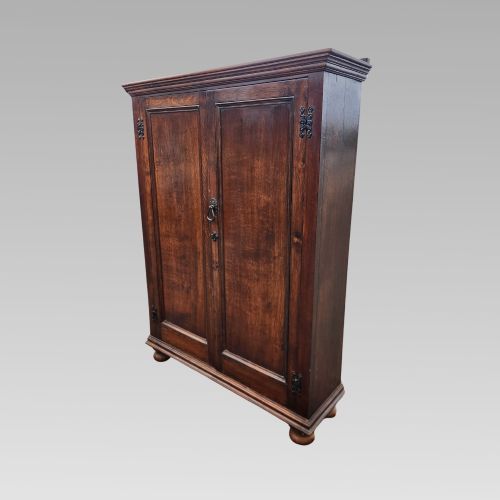
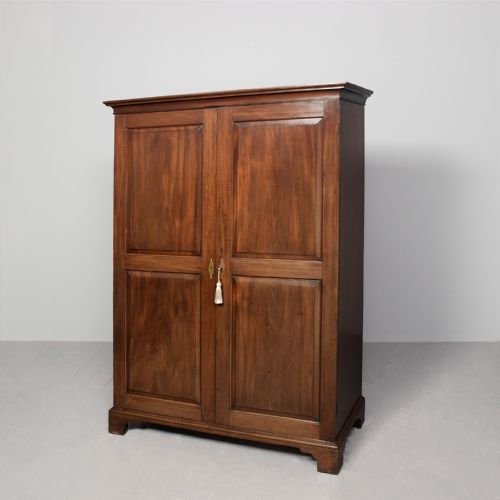
An english brown wardrobe covers large storage furniture built from timber such as oak, mahogany, and walnut across Georgian, Regency, and Art Deco periods. These pieces serve practical needs while anchoring a room with deep natural grain and historic presence.
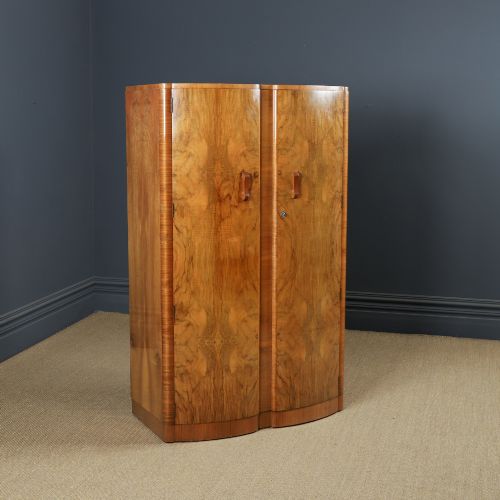
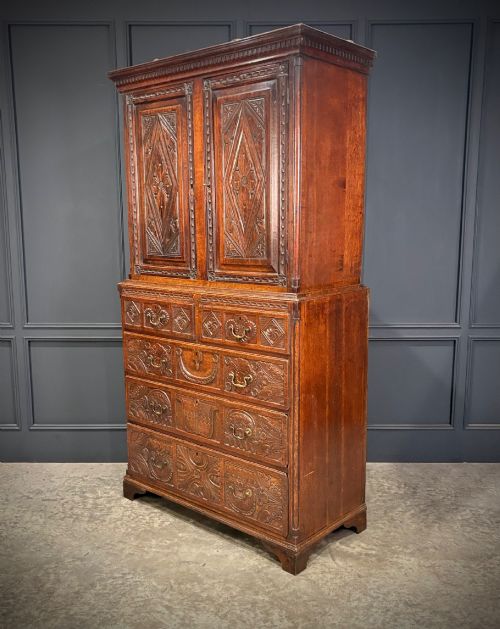
Buyers meet varied forms on this page, ranging from 18th century oak housekeepers cupboards and George III linen presses to 1930s walnut armoires and tallboys. Oak and mahogany dominate the earlier centuries, whilst walnut and flame mahogany define the later Art Deco interpretations.
How they were made
Cabinet makers utilised solid timbers alongside fine veneers like burr walnut and flame mahogany, applying them over sturdy structural frames. Brass hardware such as hinges, handles, and escutcheons were cast and fitted by hand to secure heavy doors and drawers.
Internal construction often featured sliding trays, hanging spaces, or fitted compartments designed for linen and garments. Joinery techniques relied on traditional pegged joints and dovetailing, ensuring the cupboards endured decades of domestic use.
English Brown Wardrobe Retail Price Guide 2026
Typical asking prices for english brown wardrobe among the pieces listed under this phrase on Sellingantiques today, from the lower quarter to the upper quarter. They describe what is for sale here now, not the wider market.
Early housekeepers kept household linens fresh by storing them alongside bundles of dried lavender tucked deep inside the oak presses.
What varies in quality
The choice of timber grain sets the standard, where matched flame mahogany or figured burr walnut elevate a piece above plain boards. The handling of proportions and the subtlety of carved details or brass mountings dictate the aesthetic success of the design.
Integrity of the original internal fittings, such as sliding trays in a linen press or fitted compartments in an armoire, marks the distinction between utilitarian storage and master cabinet work.
The English Brown Wardrobe Glossary
- Linen press
- A tall cupboard traditionally used for storing folded linen, typically featuring sliding internal trays behind upper doors and drawers below. These pieces evolved into general wardrobes as domestic habits changed.
- Housekeepers cupboard
- A large storage piece with deep cupboards and drawers, historically used in country houses to store household provisions and bedding. They are constructed primarily from solid oak with robust pegged joinery.
- Flame mahogany
- A veneer cut from the fork of a mahogany tree where the branches join the trunk, creating a distinct flickering flame pattern. Cabinet makers used this to decorate the primary facade of high-status furniture.
- Burr walnut
- A prized timber veneer derived from the abnormal growth on a walnut tree, yielding complex swirling grain patterns. It appears on sophisticated pieces from the Art Deco period and earlier centuries.
- George III
- A design period spanning the mid to late eighteenth century characterised by classical proportions and refined timber use. Pieces from this era often employ solid mahogany with subtle stringing and brass hardware.
English Brown Wardrobe: Frequently Asked Questions
How do I use a linen press today?
A linen press works well in a bedroom or hallway for storing folded clothes, bedding, or shoes. The internal sliding trays keep garments organised.
Some pieces feature hanging space adapted for modern clothing while retaining their historic exterior appearance.
How do I tell Georgian pieces apart from Art Deco?
Georgian pieces rely on solid mahogany or oak with classical proportions, brass handles, and traditional paneling. They date from the eighteenth and early nineteenth centuries.
Art Deco pieces from the 1930s utilise walnut veneers, curved bow fronts, and streamlined geometric shapes without traditional ornamentation.
Are these wardrobes difficult to maintain?
Maintaining these wardrobes involves keeping them away from direct sunlight and damp conditions to protect the timber and veneers. Regular dusting with a dry cloth preserves the finish.
Applying occasional wax feeds the wood and maintains the natural lustre of oak, mahogany, and walnut surfaces.