


English Brown Desk
An English brown desk anchors a room with solid timbers and functional workspaces designed for centuries of correspondence.
English Brown Desk
An English brown desk encompasses writing surfaces, bureaus, and library tables drawn primarily from the Georgian, Victorian, and Regency eras. These pieces range from substantial mahogany partner desks and walnut escritoires to compact oak lowboys and burr elm kneehole desks.
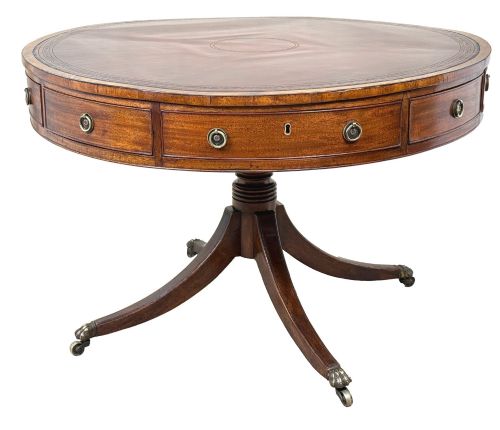
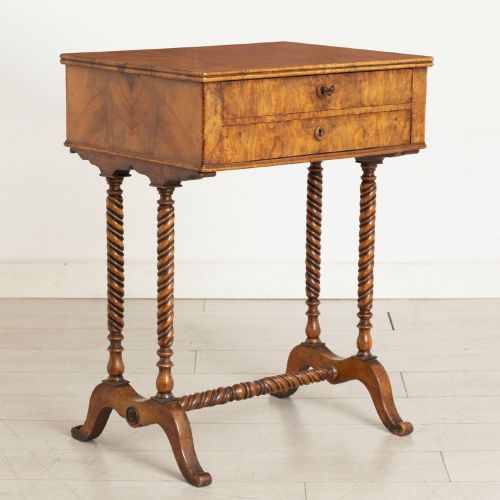
The selection also includes related writing furniture such as Davenport desks, pedestal tables, and drop-leaf work tables adapted for writing. Makers utilised dense native hardwoods to construct sturdy writing surfaces suited for daily domestic and professional use.
Earlier examples display the restrained proportions of the eighteenth century, while later nineteenth-century iterations incorporate deeper drawers and varied timber veneers. Buyers encounter both formal library pieces and simpler country vernacular forms within this selection.
Materials and construction
Cabinet makers constructed these desks using native British hardwoods including mahogany, oak, walnut, elm, ash, and beech, often pairing solid frames with figured veneers. Brass hardware such as drop handles, key escutcheons, and castors functionalised drawers and aided movement.
Leather inserts in red or neutral tones frequently lined the writing surfaces to provide a durable matte texture for pen work. Joinery relied on traditional dovetail techniques for drawer construction and mortise and tenon joints for structural stability.
Listings span the eighteenth, nineteenth, and early twentieth centuries, incorporating oak, mahogany, walnut, and elm across desks, bureaus, and lowboys.
Evaluating construction and finish
Quality rests in the selection of timber, particularly the depth of flame mahogany, burr walnut grain, or figured oak displayed across the primary surfaces. Superior pieces maintain crispness in carved mouldings and precise alignment in drawer dovetails.
The integrity of secondary timbers, original brass hardware, and patinated leather writing surfaces distinguishes standard utility pieces from finer examples. Balanced proportions and undisturbed historical surfaces indicate higher workshop standards.
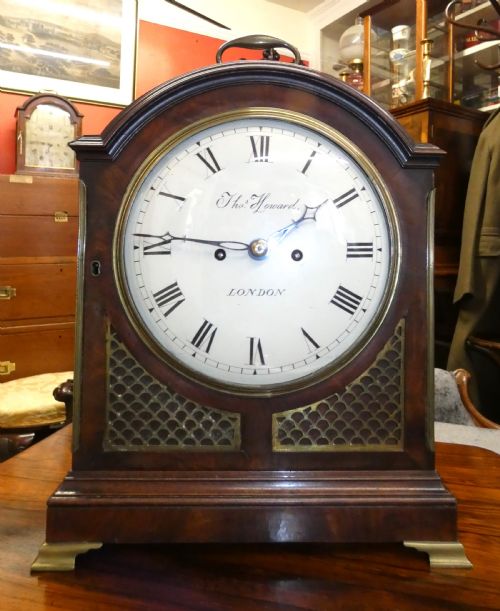
Thomas Howard·Gabbitass of Worksop·Gillows·J Spencer
The English Brown Desk Glossary
- Escritoire
- A tall writing cabinet featuring a fall-front writing flap that conceals an interior arrangement of small drawers and pigeonholes. This vertical form evolved during the seventeenth and eighteenth centuries to store correspondence securely.
- Kneehole desk
- A compact flat-topped desk featuring a central recessed space for the user's legs, flanked by pedestals of small drawers. Early examples in burr elm and walnut date back to the early eighteenth century.
- Lowboy
- A small side table with one or more rows of drawers beneath the work surface, commonly constructed in oak or walnut during the eighteenth century. These versatile pieces frequently doubled as dressing or writing tables.
- Partners desk
- A large double-sided desk designed for two people to work face to face, featuring banks of drawers on both sides of the pedestals. This formal library form gained popularity during the Georgian and Victorian periods.
- Bureau
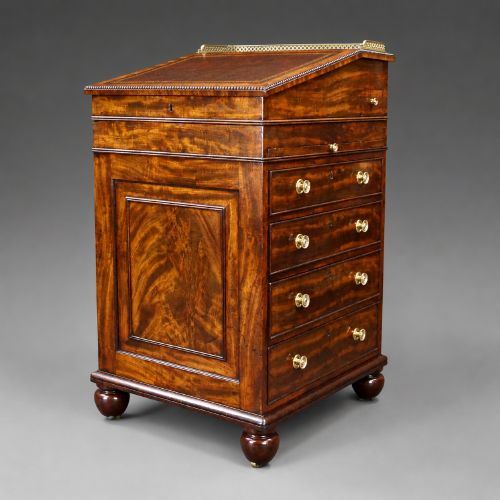
- A desk fitted with an angled sloping flap that opens to reveal a writing surface and internal compartments. These pieces typically sit upon a base of three or four graduated horizontal drawers.
English Brown Desk: Frequently Asked Questions
What is a partners desk?
A partners desk is a large double-sided writing table designed with drawer pedestals on both faces so two people can sit opposite each other. These substantial pieces were traditionally placed in the centre of libraries and studies.
They emerged to accommodate professionals sharing a workspace, offering equal access to storage and writing space without requiring the desk to face a wall.
How do I date an oak desk?
Dating an oak desk involves examining the construction methods of the drawer linings, the type of timber figure, and the style of the hardware. Earlier pieces often display hand-cut dovetails and pegged frame joints.
Secondary timbers like deal or pine inside the drawers can also provide clues, as can the overall proportions and the presence of original brass handles or locks.
What is a lowboy used for?
A lowboy is a small table with drawers beneath the top that served multiple domestic functions including writing, sewing, and dressing. Their compact size allowed them to fit easily into smaller chambers and parlours.
In daily use, the surface provided space for paperwork or correspondence while the drawers held inkwells, quills, and paper.
Are leather writing surfaces original?
Many desks retain period leather writing inserts, though heavy use often necessitated replacement over the centuries. Original leathers typically show a soft, patinated surface with subtle tool-gilded borders.
When replacement is necessary, restorers use traditional vegetable-tanned leather dyed to match the historical period of the desk.