



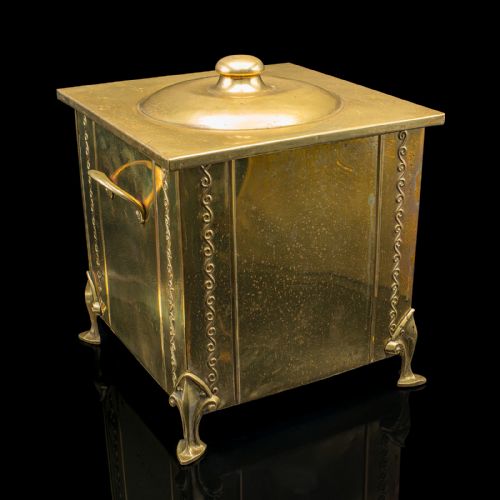


English Brass Scuttle
An English brass scuttle brings bright metalwork and practical hearthside fuel storage to the fireplace, combining utility with decorative presence.
English Brass Scuttle
An English brass scuttle is a fireside accessory designed for holding coal, logs, or kindling near the hearth. The pieces appearing in these listings span the Victorian, Regency, and Edwardian periods, alongside nineteenth-century examples.
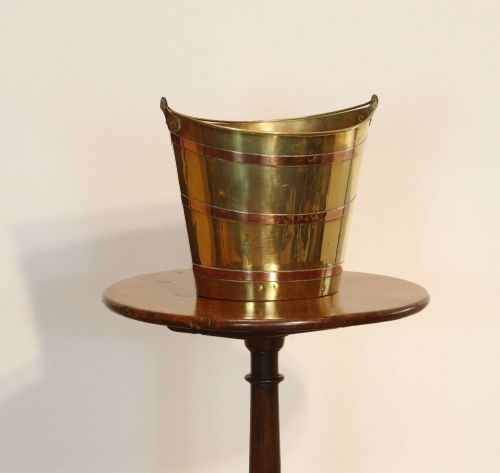
Forms range from traditional lidded coal buckets and coal boxes to purdoniums, peat buckets, and triangular bins. Many examples combine brass bodies or mountings with timber components including mahogany, oak, walnut, and pine.
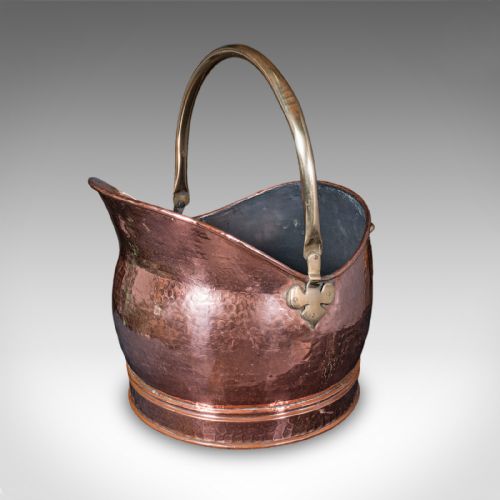
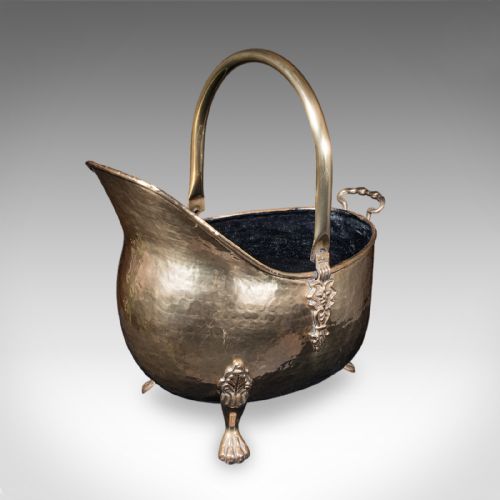
Buyers will encounter items described as fireside stores, log baskets, and coal bins alongside standard scuttles. The aesthetic varies from plain metalwork to handbeaten copper surfaces, ormolu mounts, and brass-bound timber staves.
Materials and construction
Makers utilised sheet brass and copper, frequently pairing metalwork with turned or coopered timbers such as mahogany, oak, walnut, and pine. Iron and metal linings support the fuel storage function within wooden bins and purdoniums.
Techniques range from handbeaten metal shaping to coopered stave construction bound with brass bands. Decorative details include cast ormolu mounts, turned wooden spindles, and hand-finished surfaces dating from the nineteenth and early twentieth centuries.
English Brass Scuttle Retail Price Guide 2026
Typical asking prices for english brass scuttle among the pieces listed under this phrase on Sellingantiques today, from the lower quarter to the upper quarter. They describe what is for sale here now, not the wider market.
Listings feature Victorian, Regency, and Edwardian periods alongside nineteenth-century examples, utilising brass, copper, mahogany, oak, walnut, iron, pine, and metal.
Judging quality in hearthside storage
Quality rests in the integrity of the construction, whether evaluating the tightness of coopered wooden staves or the weight of beaten brass and copper plate. Substantial gauge metal and robust handle attachments separate robust daily use pieces from lighter decorative items.
Finer examples show disciplined finishing in the joinery of mahogany and walnut bodies, precise brass binding, and well-cast ormolu mounts rather than cast-imitation components. Original handles, linings, and operational lids preserve the structural coherence intended by the maker.
The English Brass Scuttle Glossary
- Coal purdonium
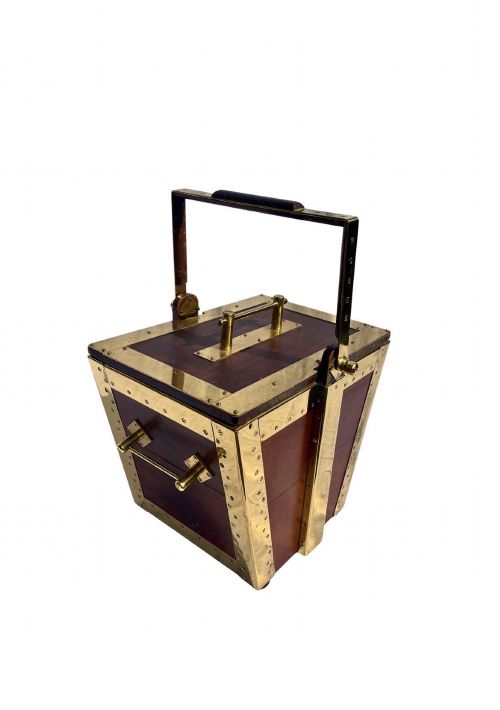
- A specialised lidded box or cabinet designed to store coal beside the fireplace, often featuring a sloping front or drop-down door for easy access to the fuel compartment. These pieces frequently incorporate wooden cabinetry with brass handles and interior metal liners.
- Coopered
- A method of construction where tapered wooden staves are joined side by side and bound with metal hoops, traditionally used for buckets and barrels. This technique appears in nineteenth-century log bins and peat buckets.
- Ormolu
- Gilded bronze or brass applied as decorative mounts to furniture and metalwork. In fireside storage, it provides ornamental detail to the body of the bin.
- Spindle
- A turned wooden rod used as a decorative or structural baluster, visible on certain nineteenth-century peat buckets and baskets. Spindles add open vertical detail to the upper sections of the vessel.
- Aesthetic Movement
- A late nineteenth-century design style emphasising visual beauty over narrative or moral function. Pieces from this period display distinct decorative restraint and material honesty.
English Brass Scuttle: Frequently Asked Questions
What is an English brass scuttle?
An English brass scuttle is a traditional fireside container used to hold coal or fuel for an open fire. These vessels combine functional metal bodies with decorative elements suited to period hearths.
They appear in various forms, including lidded buckets, bins, and purdoniums, often combining brass with timbers like mahogany, oak, and walnut.
How do I date an old coal scuttle?
Dating relies on observing the materials, construction methods, and stylistic indicators such as Aesthetic Movement details or Regency proportions. Nineteenth-century examples often feature handbeaten surfaces, coopered timber staves, or specific brass mountings.
Comparing the fixings, handle construction, and wood types against documented Victorian and Edwardian standards helps narrow the production window.
Where should I place a coal bin at home?
These pieces sit naturally beside an active fireplace or wood-burning stove as practical fuel storage. Their decorative metalwork and timber construction also allow them to function as freestanding log baskets in living spaces.
Beyond fireside use, some owners utilise larger bins or buckets to hold magazines, blankets, or dried botanical arrangements.
What is the difference between a scuttle and a purdonium?
A scuttle typically resembles a bucket or hod with a swinging handle, designed for carrying and pouring fuel onto the fire. A purdonium is a more formal box-like cabinet with a hinged lid or drop-front designed to stay stationary by the hearth.
Purdoniums often feature fitted wooden enclosures and interior metal scoops, whereas traditional scuttles focus on portability.
Are these items still suitable for holding coal?
Many vintage and antique examples retain their original metal linings and remain sturdy enough for daily fuel storage. Checking the condition of the interior base and liner ensures the vessel can safely contain solid fuel or logs without marking floors.
Lighter decorative pieces or those with delicate wood veneers are sometimes repurposed to hold dry kindling rather than heavy loads of coal.