


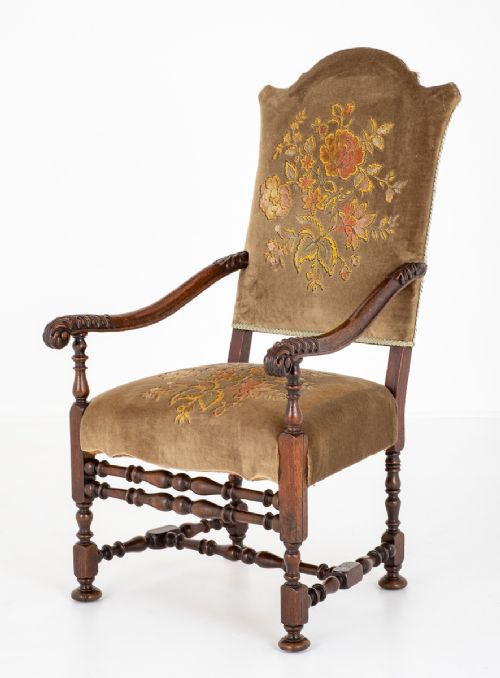

English Bobbin Chair
An english bobbin chair brings turned timber framing into a room, offering sturdy seating shaped by centuries of woodworking tradition.
English Bobbin Chair
An english bobbin chair is defined by its distinctive turned woodwork, where repetitive rounded collars create a profile resembling a string of bobbins or spools. These seating pieces appear primarily as armchairs, side chairs, and occasional daybeds across this selection.
The examples gathered here span centuries of production, originating most frequently from the Victorian era and the seventeenth century. Buyers encounter robust oak and beech frames, sometimes accompanied by cane seats, loose cushions, velvet, calico, or brass details.
Revival movements also shape this category, with Victorian interpretations drawing heavily on Jacobean, Saxon, and Gothic influences. Alongside these, vernacular English country forms demonstrate how traditional turning techniques endured across generations.
How they were made
Makers shaped these chairs using solid native timbers, predominantly English oak and beech, selected for their strength in load-bearing turned members. Lathe work created the sequential spool or bobbin turnings that form the uprights, stretchers, and arm supports.
Joinery relied on traditional peg and mortise construction to lock the turned components firmly into place without modern adhesives. Upholstered variants integrated drop-in seats or squab cushions covered in textiles such as velvet, calico, or cane panels.
English Bobbin Chair Retail Price Guide 2026
Typical asking prices for english bobbin chair among the pieces listed under this phrase on Sellingantiques today, from the lower quarter to the upper quarter. They describe what is for sale here now, not the wider market.
Early turners sometimes spent hours shaping hundreds of identical wooden spools on a foot-powered lathe just to make a single chair arm.
What varies in quality
The crispness of the lathe turning dictates much of the visual merit, with superior pieces exhibiting cleanly carved collars and consistent symmetry along every upright. Timber selection similarly separates workshop output, where dense English oak or carefully chosen beech maintains structural integrity better than softer substitutes.
Originality of surface finish and the retention of early upholstery methods determine the historical integrity of a piece. Chairs that preserve their initial assembly without excessive timber replacement hold greater coherence for a collector.
The English Bobbin Chair Glossary
- Bobbin turning
- A form of woodturning characterised by a series of rounded, spool-like shapes cut sequentially along a length of timber. This technique provided both structural support and decorative rhythm to seventeenth-century and revival furniture.
- Wainscot chair
- An early wooden armchair constructed primarily from panelled oak with solid backboards and arms. These sturdy seats represent significant status in domestic interiors before lighter framed seating became common.
- Farthingale chair
- A wide, un-armed upholstered chair designed to accommodate the expansive skirts fashionable in the seventeenth century. The low seat and upright back offered comfortable posture during formal gatherings.
- Jacobean style
- A heavy, formal aesthetic associated with the reign of James I, marked by dark oak, geometric mouldings, and rigid proportions. Revival iterations of this style reappeared frequently during the Victorian period.
English Bobbin Chair: Frequently Asked Questions
What is an english bobbin chair?
An english bobbin chair is a seat constructed with turned wooden components that resemble spools or bobbins. These pieces range from seventeenth-century originals to nineteenth-century revival interpretations.
The style relies entirely on the lathe work of the frame to create its distinct decorative pattern. Such chairs function as striking accent pieces in both traditional and modern rooms.
How do I identify a seventeenth-century piece?
Seventeenth-century examples display hand-split oak panels, pegged joinery, and patination acquired through centuries of use. The timber often feels heavier and shows tool marks specific to early hand woodworking.
Revival versions from the Victorian period mimic these traits but often reveal machine turning methods or lighter secondary woods underneath. Examining the underside and joint construction clarifies the actual age of the frame.
Where should I place these chairs?
These chairs suit hallways, studies, or corners where their sculptural turned frames remain visible from multiple angles. They act as strong focal points rather than casual lounging seats.
Pairing an armchair with simpler contemporary furniture highlights the intricate woodwork. Placing them away from direct heat sources protects the historic timber and upholstery.
How do I care for the wood and upholstery?
Maintenance involves dusting the turned spindles with a soft brush and feeding dry timber with appropriate wax polish. Excessive moisture will damage both the wood and any cane or fabric elements.
Upholstered variants benefit from gentle vacuuming using a low suction attachment. Keeping the seating out of direct sunlight preserves the colour of textiles and prevents timber splitting.