



English Arts and Crafts Lighting
English arts and crafts lighting combines honest metalwork and warm pottery to illuminate rooms with genuine period character.
English Arts and Crafts Lighting
English arts and crafts lighting encompasses table lamps, floor lamps, lanterns, and candlesticks originating from the Victorian era through the 1930s. When exploring English arts and crafts lighting, buyers encounter sturdy brass standard lamps, bronze lanterns, and earthenware table lamps reflecting movement ideals.
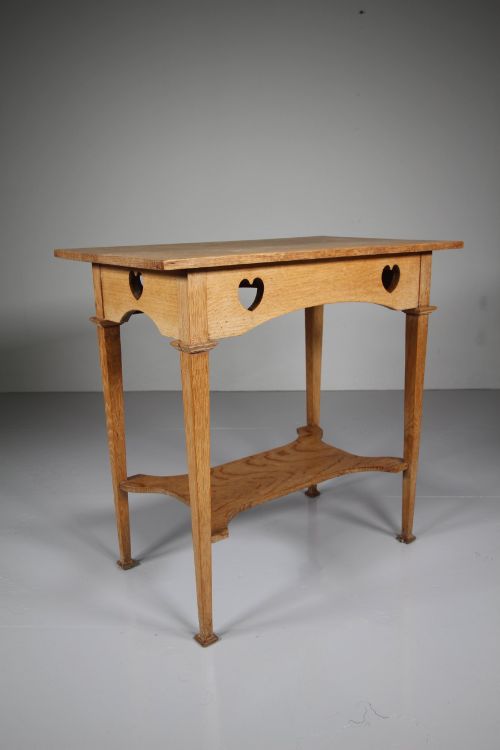
The selections span standard adjustable floor lamps and tabletop pieces, alongside complementary items such as Cotswold School cupboards. These domestic objects bring functional utility together with decorative integrity, grounded in early twentieth century craftsmanship.
Makers and workshops of the period produced works in brass, bronze, pewter, and earthenware, often integrating glass and fabric elements. Pieces frequently bridge arts and crafts, art nouveau, and Edwardian sensibilities.
How they were made
Makers utilised solid brass, bronze, and pewter to construct structural frames and heavy bases for floor and table pieces. Metal components display patinated finishes achieved through hand-working rather than heavy industrial plating.
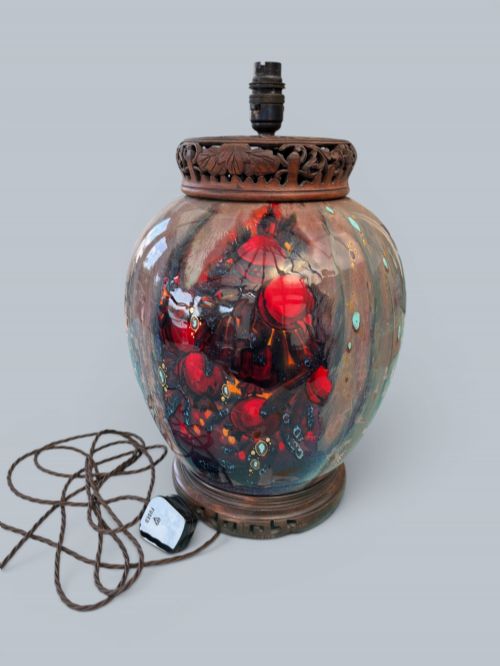
Ceramic bodies utilise earthenware and pottery techniques, seen in Doulton Lambeth and Moorcroft table elements. English oak and mixed woods provide substantial housings and cabinetry where required.
English Arts and Crafts Lighting Retail Price Guide 2026
Typical asking prices for english arts and crafts lighting among the pieces listed under this phrase on Sellingantiques today, from the lower quarter to the upper quarter. They describe what is for sale here now, not the wider market.
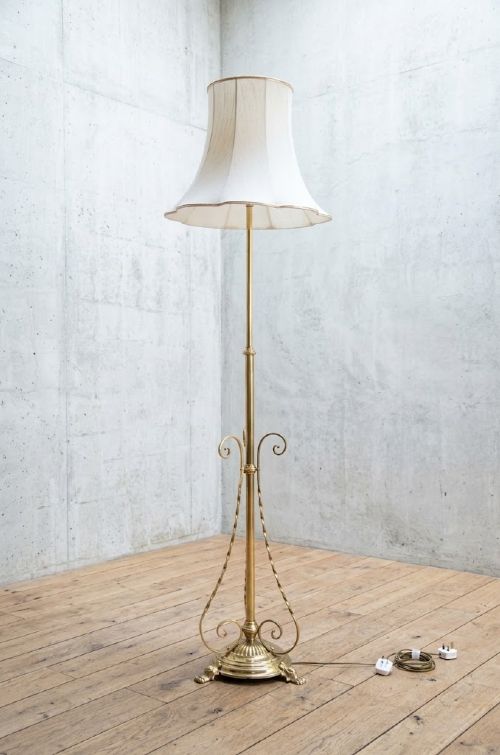
Height-adjustable brass standard lamps let you channel your inner Edwardian reading enthusiast without moving from the armchair.
What varies in quality
The standard of execution separates workshop production from standard commercial manufacturing. Attention to structural joinery and the integrity of hand-hammered or cast metal surfaces dictates the distinction.
Signed or attributed pieces by notable metalworkers command greater interest through documented provenance and refined proportions. Material weight and the preservation of original patination define superior examples.
WAS Benson·Doulton Lambeth·Benhan and Froud·Moorcroft·Decoro England
The English Arts and Crafts Lighting Glossary
- Standard lamp
- A tall floor lamp designed to illuminate a room from a standing position. These typically feature adjustable height mechanisms and weighted bases.
- Cotswold School
- A regional design movement focusing on traditional woodworking and honest construction methods. Furniture and related objects from this circle emphasise visible joinery and plain timber.
- Art Pottery
- Ceramics produced by artistic potteries with an emphasis on hand-thrown forms and distinctive glazes. Pieces often function as lamp bases or decorative candlesticks.
- Patina
- The natural surface change acquired by metals and wood through age and handling. A preserved patina indicates authentic historical use.
English Arts and Crafts Lighting: Frequently Asked Questions
What is english arts and crafts lighting?
English arts and crafts lighting refers to lamps, lanterns, and candlesticks produced from the Victorian era into the 1930s. These items emphasise visible construction and traditional materials over mass-produced ornamentation.
Designs draw on movements like art nouveau and the Cotswold School, utilising brass, bronze, copper, and earthenware.
How do I identify a period lamp?
Dating relies on material characteristics, fabrication techniques, and stylistic markers specific to the early twentieth century. Look for hand-finished brass, heavy cast bronze, and earthenware bodies characteristic of potteries like Doulton Lambeth.
Maker signatures or distinctive workshop designs also help establish the correct era of production.
Where were these pieces used?
These lamps and candlesticks served as domestic lighting in Edwardian and Victorian interiors. Floor lamps provided ambient illumination in sitting rooms, while table lamps and candlesticks lit desks and sideboards.
Their robust construction suited daily use in both urban homes and rural retreats.
How do I care for antique metalwork?
Maintain brass, bronze, and pewter surfaces by dusting with a soft, dry cloth. Avoid abrasive cleaners that strip the historic patinated finish.
Preserving the original surface sheen maintains the visual integrity of the piece.