



English Art Deco Display Cabinet
These English art deco display cabinet examples bring nineteen-thirties geometric form and figured timber directly into a modern interior.
English Art Deco Display Cabinet
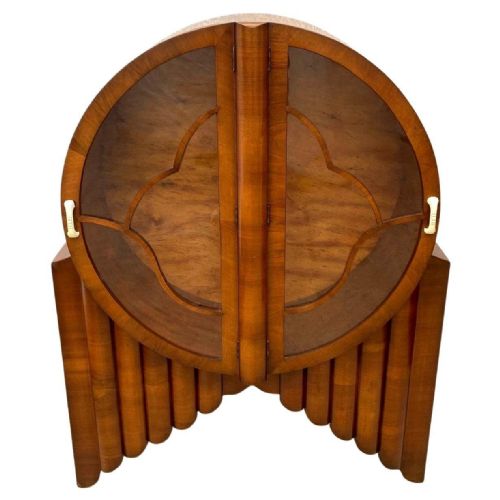
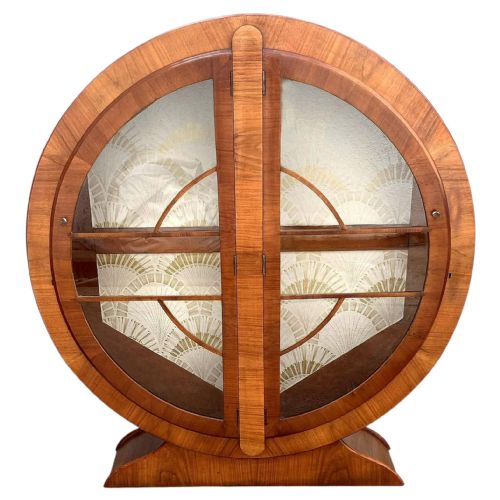
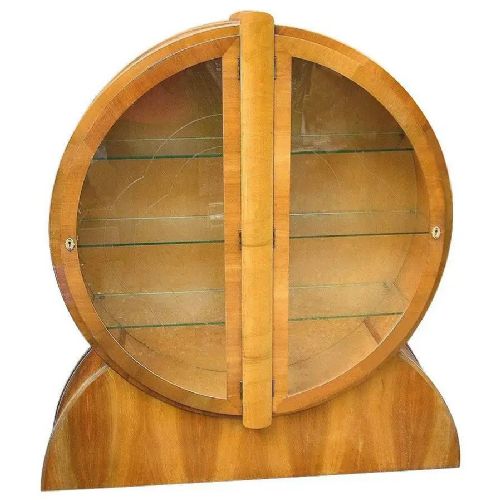
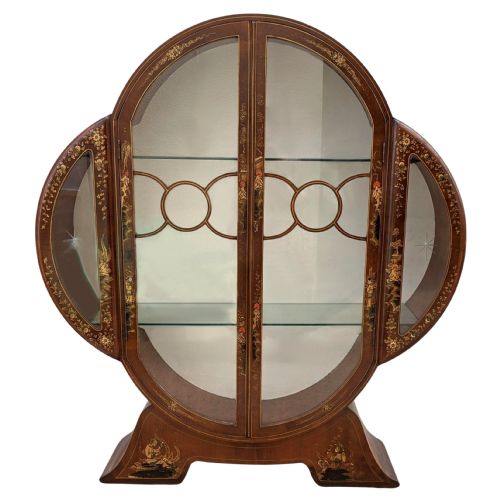
An English art deco display cabinet represents the modernist design ethos of nineteen-thirty British cabinetmaking through purposeful geometry and polished timber. These pieces typically take the form of glazed vitrines or tall bookcases designed to showcase collections while making a distinct architectural statement in a room.
The versions most commonly met on this page are constructed from walnut, burr walnut, and sycamore, often featuring distinctive circular shapes, cathedral arches, or rocket cabinet silhouettes. Alongside these primary display pieces, related modernist forms such as tiered occasional tables occasionally appear within the nineteen-thirty period grouping.
How they were made
Makers utilised timber veneers such as burr walnut and sycamore applied over stable wood foundations to create striking grain patterns across the main bodies of these cabinets. These surfaces were then highly polished to accentuate the natural figures of the wood.
Glazing was integrated using leaded glass sections or curved glass panels that hugged circular and architectural frames, requiring precise joinery to marry wood and glass securely.
English Art Deco Display Cabinet Retail Price Guide 2026
Typical asking prices for english art deco display cabinet among the pieces listed under this phrase on Sellingantiques today, from the lower quarter to the upper quarter. They describe what is for sale here now, not the wider market.
Current listings exclusively feature nineteen-thirty pieces made from walnut, burr walnut, sycamore, and mahogany combined with glass and lead.
What varies in quality
The distinction between ordinary and exceptional pieces lies in the choice and matching of wood veneers, particularly the symmetry of burr walnut figures across curved doors and panels. Superior examples display thoughtful grain continuity rather than random timber application.
Structural ambition also separates standard production from finer work, seen in complex circular forms, rocket cabinet silhouettes, and cathedral arches that demand advanced carpentry rather than simple rectangular box construction.
Hille
The English Art Deco Display Cabinet Glossary
- Burr walnut
- A prized timber harvested from walnut tree growths, featuring swirling, knotty grain patterns that create decorative textures on cabinet doors.
- Vitrine
- A glass-fronted display cabinet specifically built for exhibiting porcelain, books, or decorative objects.
- Sycamore
- A pale hardwood often utilised in nineteen-thirty British furniture to provide a contrasting, lighter tone against darker woods like walnut.
- Leaded glass
- Small panes of glass joined together by narrow strips of lead, forming geometric patterns typical of the period.
- Modernist
- A design movement focusing on function, clean lines, and rejection of historic revivalism, defining the aesthetic of these cabinets.
English Art Deco Display Cabinet: Frequently Asked Questions
What is an art deco display cabinet?
An art deco display cabinet is a nineteen-thirties storage and exhibition piece defined by geometric silhouettes, glazed doors, and figured wood veneers.
These cabinets serve to organise and exhibit prized items while functioning as sculptural centrepieces within a room.
Where should I place a cabinet?
These cabinets suit living rooms, dining spaces, or hallways where their glass fronts can protect collections while remaining visible.
Position them away from direct sunlight to protect the polished walnut and sycamore surfaces from fading over time.
How do I care for walnut veneer?
Maintain walnut veneer by dusting with a soft, dry cloth and avoiding silicone-based polishes that build up residue on the finish.
Keep the timber away from extreme temperature shifts and radiators to prevent the underlying veneer from lifting.
What defines nineteen-thirty design?
Nineteen-thirty British design combined traditional cabinetmaking skills with streamlined circular shapes, rocket silhouettes, and architectural arches.
This era favoured striking wood grains and minimal ornamentation, letting the natural materials and geometry speak for themselves.