






English Air Twist Stemware
English air twist stemware brings brilliant clarity and delicate internal bubbles to the table, offering a tangible link to Georgian drinking culture.
English Air Twist Stemware
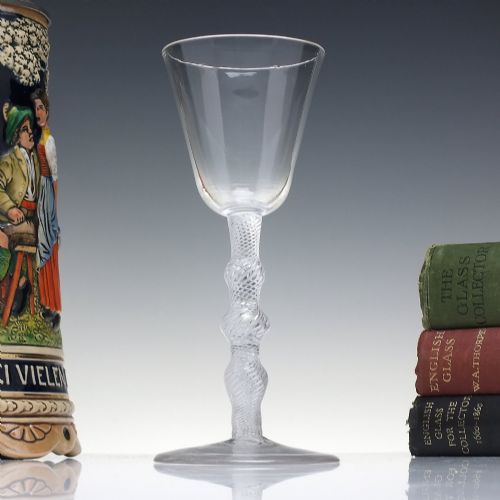
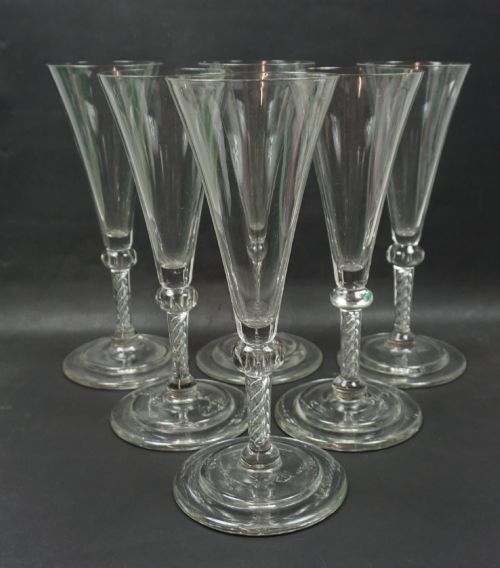
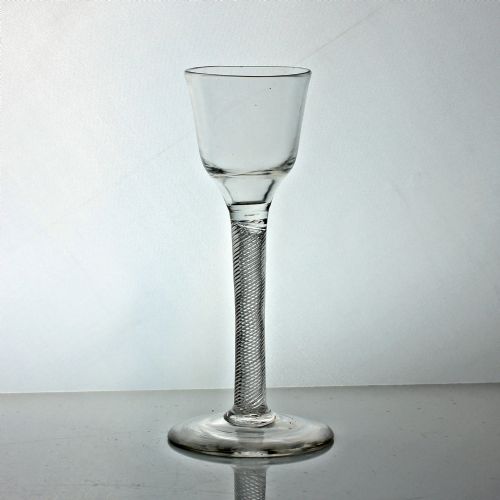
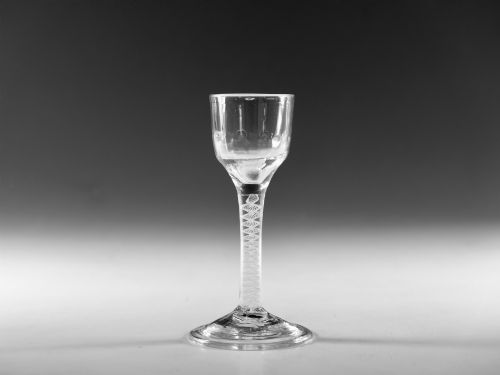
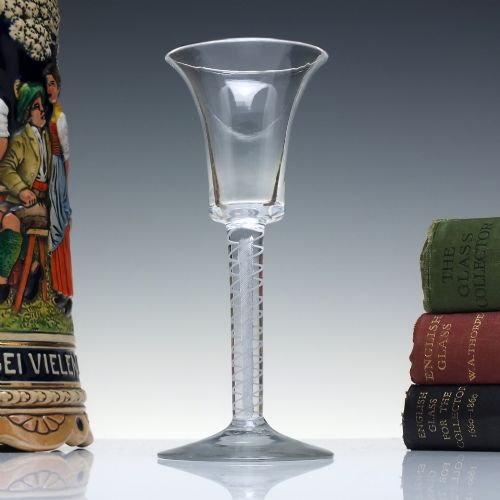
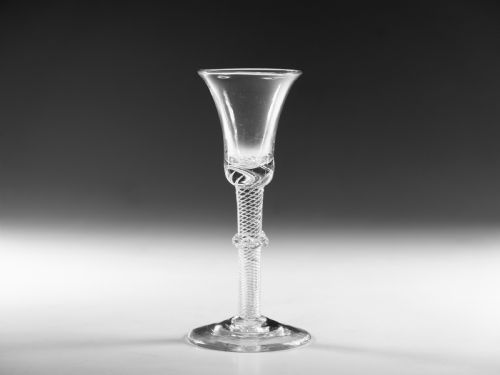
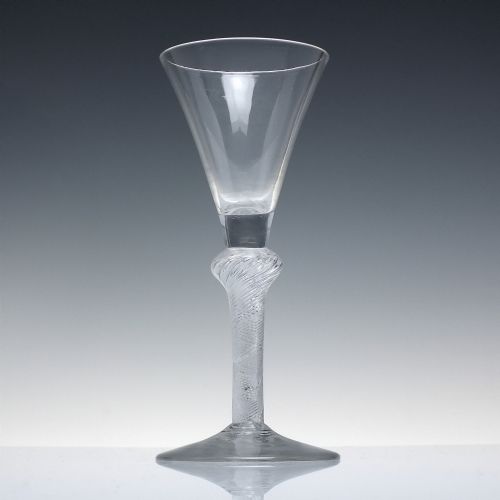
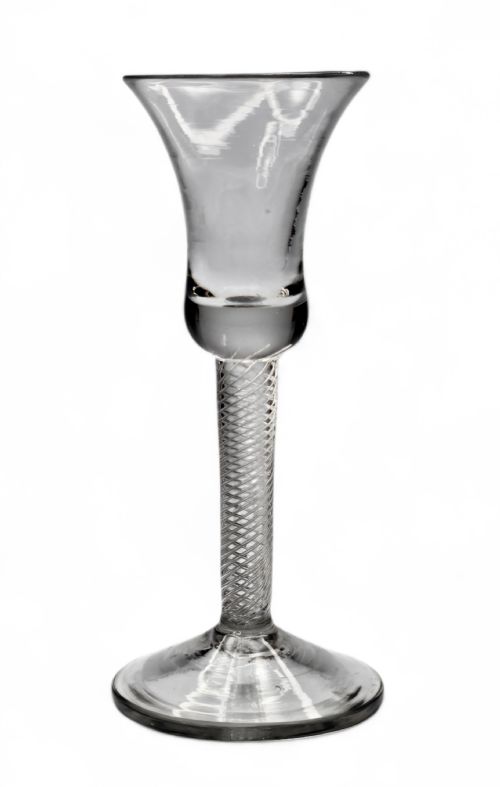
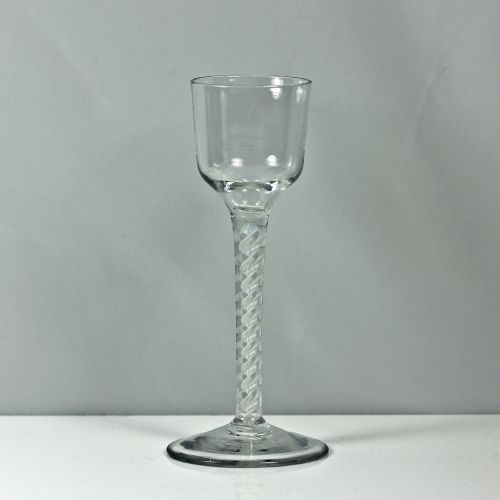
When you search for English air twist stemware, you encounter drinking vessels defined by elongated stems enclosing spiralling threads of air. These pieces emerge primarily from the eighteenth century, encompassing wine glasses, ale glasses, cordials, and champagne flutes.
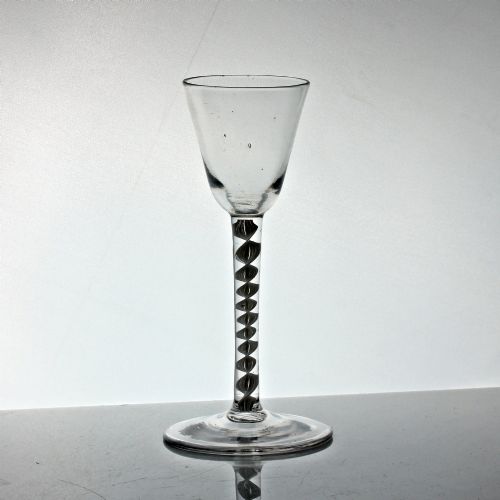
The eighteenth-century items dominate the selection, showing varieties such as multiple spiral air twists, opaque twists, and mixed twist stems. These glasses served functional roles at the dining table, handling wine, ale, and spirits.
Production and Materials
Craftsmen utilised lead glass, lead crystal, flint glass, and hand-blown glass to shape these vessels. The material provided the requisite weight and clarity needed to showcase internal optical effects.
The air twist itself formed through manipulating trapped bubbles within the molten metal during the blowing and drawing process. Glassmakers twisted the stem to stretch these cavities into fine spirals, sometimes combining them with white enamel threads.
English Air Twist Stemware Retail Price Guide 2026
Typical asking prices for english air twist stemware among the pieces listed under this phrase on Sellingantiques today, from the lower quarter to the upper quarter. They describe what is for sale here now, not the wider market.
Some ale glasses feature engraved hops and barley motifs, reminding drinkers exactly what was poured inside.
Evaluating Quality and Form
Quality rests upon the precision and complexity of the internal twist formation, alongside the clarity of the metal itself. Multiple spiral air twists and composite stems demonstrate higher technical ambition than simpler single thread configurations.
The refinement of the bowl shape and the inclusion of secondary elements like vermicular collars, double knops, or folded feet distinguish superior examples. Proportion between the bowl, stem, and foot dictates the visual balance of the piece.
The English Air Twist Stemware Glossary
- Air twist
- A stem containing elongated internal bubbles formed into a spiral thread. This optical effect defines the primary grouping on this page.
- Opaque twist
- A stem incorporating white enamel threads twisted within the glass matrix rather than plain air channels.
- Ogee bowl
- An upward-curving drinking vessel profile resembling an S-shape curve, frequently seen on Georgian drinking glasses.
- Folded foot
- A base edge turned under during manufacture to provide extra weight and strength to the rim.
- Composite stem
- A stem construction combining different twist sections, such as an air twist paired with an opaque twist or knopped element.
English Air Twist Stemware: Frequently Asked Questions
What is an air twist glass?
An air twist glass is a drinking vessel featuring a stem drawn out with internal spiralling air channels. These threads catch the light and create a distinct optical pattern inside the glass.
Most examples date from the Georgian period and include wine glasses, ale glasses, and cordials.
How do you date an air twist wine glass?
Dating relies on examining the bowl form, metal composition, and stem configuration. Eighteenth-century pieces typically display hand-blown lead glass with distinct pontil marks on the base.
Later pieces from the twentieth century show different weight and manufacturing consistency compared to Georgian originals.
What is the difference between an air twist and an opaque twist?
An air twist encloses empty spiralling channels of air trapped during the glassblowing process. An opaque twist incorporates solid white enamel threads within the stem structure.
Both styles emerged during the eighteenth century and served similar dining functions.
Can you use antique air twist stemware today?
These glasses handle gentle use, though hand washing remains essential for preservation. Collectors often display them to appreciate the clarity of the lead glass and the intricacy of the stems.
Careful handling protects the thin walls of eighteenth-century bowls and folded feet.